The Dependency Economy
Leading Through AI, Vendor
Power and Digital
Sovereignty
Rethinking Technology, Dependency and Procurement Leadership.”
Executive Perspective
From Buying Technology to Shaping the Future
This is a book about how organisations make choices that shape technology, markets and society.
Procurement sits at a remarkable intersection: between business ambition and market reality, innovation and responsibility, technology and sovereignty, short-term economics and long-term resilience. In an era shaped by AI, geopolitical fragmentation, powerful technology platforms and growing societal expectations, the choices organisations make about what they buy, whom they buy from and under which conditions increasingly reach far beyond cost.
That makes this relevant not only to the CPO or IT Procurement team. It matters to the CEO deciding where the organisation is heading, the CFO protecting its economics, the CIO shaping its technological future, business leaders seeking innovation—and ultimately to society, which lives with the consequences of those choices.
Procurement cannot own all these decisions. But it can step up, connect the perspectives, challenge assumptions, make consequences transparent and help leadership make better choices. Done consistently and done right, Procurement can become a driving force for responsible innovation, fairer markets, sustainability, digital sovereignty and resilience—and help shape the future rather than simply source it.
We are entering a Dependency Economy.
AI, cloud, software and digital infrastructure are creating extraordinary opportunities.
But they are also concentrating power, increasing supplier dependency and, in some cases, reducing our ability to choose.Dependency itself is not the problem. The problem begins when dependency becomes invisible, difficult to reverse, or when organisations come to believe that credible alternatives no longer exist.
The Dependency Economy explores what business leaders — and Procurement in particular — can do about it.
The Dependency Economy
Leading Through AI, Vendor Power and Digital Sovereignty
Work in Progress - Excerpts
Each chapter will combine real-life experience with three to five concrete suggestions for action—helping you turn the ideas in this book into practice and stay ahead of the game.
Work in Progress shared for Chapters 6, 7, 8, 9 and 10.
The New Executive Reality for Leading Procurement in the Age of AI – Foundations
PART II – AI Changes the Rules
4 - Procurement in the Age of AI: From Process Executor to Business Orchestrator
Artificial Intelligence is more than another technology category to source—it may be procurement's greatest opportunity in decades to climb the value ladder. Positioned across business demand, suppliers, contracts, cost and risk, procurement can become the commercial orchestrator of enterprise AI, connecting innovation with governance and sustainable value. But procurement cannot orchestrate what it does not understand: AI proficiency, new contracting approaches, an understanding of supplier economics and continuous learning are becoming essential capabilities. This chapter explores what procurement must learn, why the function is uniquely positioned to lead—and how doing so can fundamentally elevate its role in the enterprise.
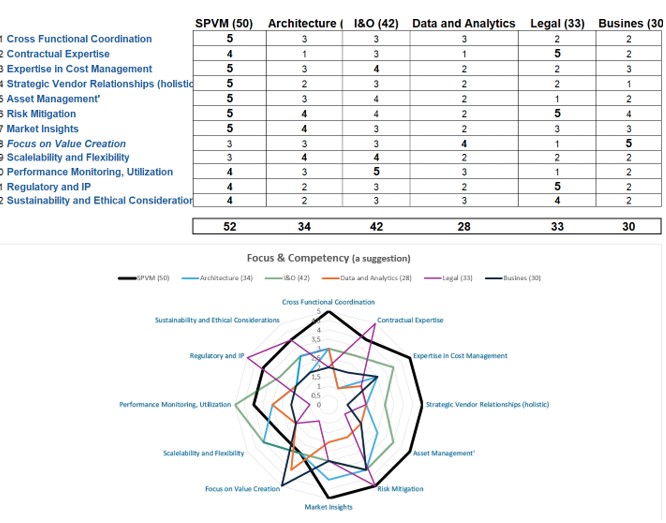
SPVM – Sourcing, Procurement and Vendor Management – Analysis of Functional Fit to address the White Space
5 - The AI Budget Trap
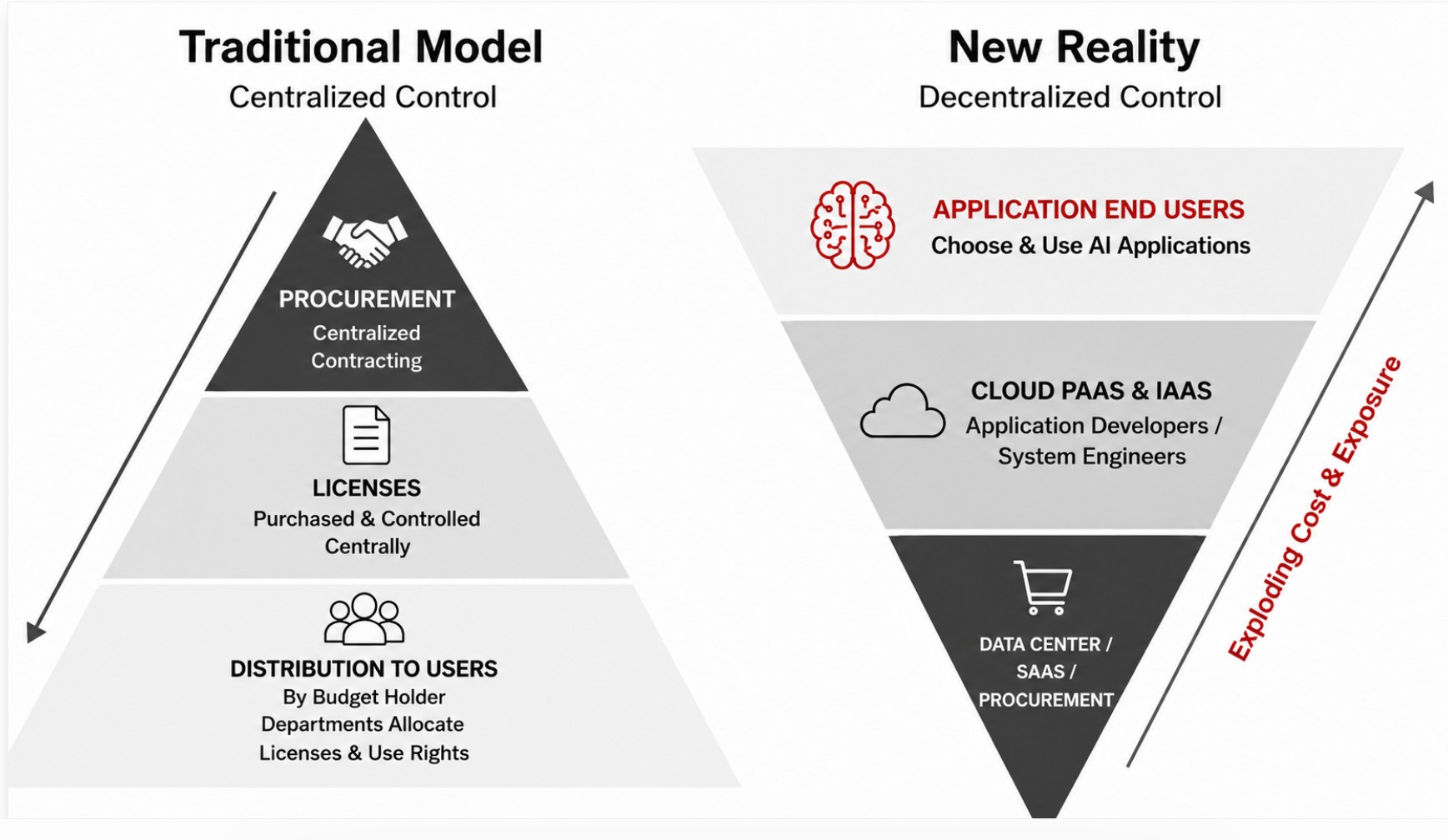
AI is not just changing what companies buy—it is fundamentally changing who makes cost decisions, how consumption grows, and where financial exposure sits. As AI moves decision-making from centralized procurement toward developers, business functions and ultimately individual users, traditional mechanisms for controlling technology spend begin to break down. At the same time, the initial AI licence is often only the visible tip of a much larger cost iceberg: consumption, compute, data, network traffic, integration, governance and organizational change create a growing “white space” of costs that conventional business cases frequently miss. This chapter exposes the AI Budget Trap—and explains why organizations that fail to rethink visibility, commercial governance and accountability risk not only exploding costs, but deeper supplier dependency and solution lock-in.
6 - Human Capital 2.0: The New Competitive Advantage in the AI Era
Foreword
I had originally intended to keep the Human Capital 2.0 framework within the book until publication. I have changed my mind. The reason is simple: I believe there is a window of opportunity now, and waiting until the framework is finished may be less useful than sharing it while organizations are still deciding how to respond.
This chapter is therefore being published as a work in progress, reflecting my thinking as of August 2026. The framework has already been discussed and sound-checked with a number of Heads of Procurement and senior leaders, but I do not regard it as finished. I am publishing it partly because I would welcome challenge, experience and alternative perspectives before the book itself is completed.
The central proposition is straightforward: AI & Digital Readiness needs to become a core procurement capability in its own right.
This is a more fundamental change than adding another technology skill to an existing competency model. Procurement professionals increasingly need sufficient AI expertise to understand the art of the possible, challenge AI-generated output, recognise hallucinations and risk, understand emerging licensing and consumption models, assess implications for the procurement technology landscape and determine how AI changes the economics of the suppliers from whom we buy. At the same time, the shift makes distinctly human capabilities more—not less—important. Judgment, curiosity, critical thinking, ethical reasoning, influence and the ability to connect different disciplines become increasingly valuable as information and analysis become easier to generate.
That is why the Human Capital 2.0 framework developed in this chapter deliberately combines three dimensions: Human Capabilities. Professional Capabilities. AI & Digital Readiness.
The objective is not another competency framework for HR. It is a practical development framework for procurement leaders: make future expectations visible, assess where people are today, identify the gaps and deliberately build the capabilities the function will need tomorrow.
Do not wait for HR to tell you when to begin. If the capabilities required for procurement are changing faster than corporate competency frameworks, developing them is a leadership responsibility. Start the conversation with your people now.
Human Capital 2.0;
The New Competitive Advantage in the AI Era
The previous chapters have argued that Artificial Intelligence is far more than another technology trend. It is fundamentally changing the economics for the enterprise, the way organisations consume technology, and the role procurement should and could play within the enterprise to address the white space and to elevate its role, to even become a steward for a more sustainable future in a time of unprecedented change.
In Chapter 4, we explored why procurement must become AI-literate—not to become software developers or data scientists, but to understand the art of the possible, challenge commercial models, manage emerging risks and guide the business through an increasingly complex technology landscape. Procurement's role is evolving from managing suppliers to orchestrating business outcomes across technology, legal, finance, security and the business itself.
In Chapter 5, we examined one of the consequences of this transformation: the AI Budget Trap and increased Supplier Lock In. As Generative AI, intelligent automation and agentic systems proliferate across organisations, technology spending risks becoming fragmented, opaque and increasingly difficult to govern. Traditional procurement approaches are no longer sufficient. Organisations need new governance models, new executive dashboards and new ways of measuring value beyond licence costs and savings.
Together, these chapters lead to an even more fundamental question.If AI changes procurement... if procurement becomes an orchestrator rather than a transactional function... if technology increasingly performs many of the analytical and administrative activities that once defined knowledge work... What capabilities will distinguish successful procurement professionals and leaders in the future? This chapter argues that the answer is not found in technology alone. It is found in people, and a big challenge is how we develop and maintain skills, both for AI but also how to allow for and build the required skills for the next generation, to be able to ask the right questions.Ironically, as Artificial Intelligence becomes more capable, uniquely human capabilities become more valuable, and here is why… because
Ø Information becomes abundant.
Ø Judgement becomes scarce.
Ø Analysis becomes automated.
Ø Curiosity becomes strategic.
Ø Content is generated in seconds.
Ø Trust, influence and leadership still take years to build and can be destroyed in seconds.
For decades, procurement competency models focused primarily on technical expertise: sourcing methodologies, category management, contract negotiation, supplier management and commercial analysis. These capabilities remain essential, but they are no longer sufficient. Technical expertise is increasingly becoming the baseline rather than the differentiator.The real competitive advantage is shifting towards capabilities that cannot be automated: learning agility, critical thinking, ethical judgement, business acumen, stakeholder influence, creativity and the ability to lead organisations through continuous change. This evolution requires a new way of thinking about talent. It requires what I will call Human Capital 2.0 for Sourcing and Procurement. And I suggest this is as important to other functions, too. Human Capital 2.0 recognises that the future procurement professional creates value not by competing with Artificial Intelligence, but by combining human strengths with AI-enabled capabilities. The objective is neither to replace people with technology nor to preserve existing ways of working. It is to create professionals who understand both business and technology, who challenge assumptions rather than simply accepting machine-generated outputs, and who orchestrate expertise across increasingly complex organisational ecosystems and educate the Stakeholder Community. Same time it raises the question on how we build the skills that are required for in the next generation.
Throughout this book, procurement is suggested to evolve to becoming an orchestrator—bringing together business strategy, technology, suppliers, legal, finance, cybersecurity and risk management to deliver sustainable business outcomes. Becoming an orchestrator, however, is not achieved through organisational design alone. It requires people with the capabilities to operate in that role, and that are recognized and trusted in that very role.
That is the purpose of this chapter. Building on the transformation described in the previous chapters, it introduces the Procurement Human Capital 2.0 Framework™, a practical model for developing procurement professionals in the AI era. Rather than measuring only traditional functional expertise, the framework integrates three complementary dimensions:
Human Capabilities – the personal qualities that determine how individuals learn, adapt, lead and make sound judgements.
Professional Capabilities – the commercial, strategic and interpersonal skills required to create business value and influence organisational decisions.
AI & Digital Capabilities – the knowledge and confidence to work effectively with AI, data and digital technologies while governing their responsible use.
These dimensions are designed to evolve across career stages—from junior professionals to executive leadership. They can be used not only for recruitment and learning, but also for performance discussions, succession planning and capability assessments, helping individuals and organisations identify where they are today, where they need to be tomorrow, and how to close that gap. The organisations that will succeed in the next decade will not be those with the most sophisticated AI platforms or the largest technology budgets. They will be those that develop people who can combine technological intelligence with human intelligence—professionals who ask better questions, exercise sound judgement, build trusted relationships and use AI to amplify, rather than replace, their expertise; because in the age of Artificial Intelligence, technology may become ubiquitous.
Human capability will become the ultimate competitive advantage.Measuring What Matters in the AI Era
One of the greatest shortcomings of many competency models is have seen and witnessed is that they are designed for yesterday's organisation. They reward technical expertise, process knowledge and years of experience. They assess whether procurement professionals understand sourcing methodologies, contract law, supplier management or category strategies. These remain important foundations, but they increasingly describe what people know, not how they create value. Artificial Intelligence changes that equation.When information is available instantly and analytical work can increasingly be generated by machines, competitive advantage shifts away from knowledge. Success depends on how individuals interpret information, challenge assumptions, connect ideas, influence stakeholders and continuously adapt to change.
In other words, the future belongs less to those who possess knowledge than to those who know how to apply it. Same time, without understanding the full context and the basics, the right questions will not be poised and answered.
Traditional competency models therefore require a fundamental redesign. The Procurement Human Capital 2.0 Framework proposes that procurement capability should be assessed across three complementary dimensions, each contributing to an individual's ability to perform as an orchestrator rather than simply an executor.All too often these processes and structures are viewed as core to HR and sitting in HRs responsibility, which in the core sense is true, obviously. I’d argue that the evaluation criteria should change though, and if they do not, we ought to integrate these criteria within our functional processes and personal development discussions. If we wait to be told we may well be too late.
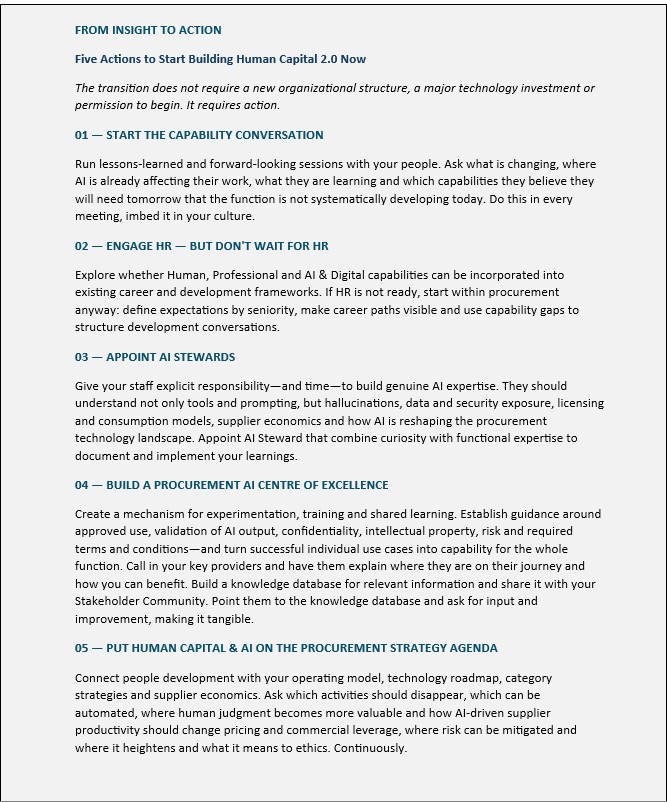
Before exploring the Human Capital 2.0 framework in detail, there are five things every Head of Procurement can start doing now.
START NOW
Talk with your people, discuss and refine what good looks like and build internal expertise. Make expectations visible and start developing against them.
Do not wait for the perfect enterprise framework. The capabilities required for procurement are changing faster than most organizations' competency models. Developing your staff is your leadership responsibility—not simply an HR exercise. Bring it to life.
Dimension 1 – Human Capabilities
Who you are determines how you create value.
The first dimension focuses on the human qualities that become increasingly important as routine work is automated and access to knowledge becomes increasingly democratized through AI. Technical expertise remains important but knowledge alone will differentiate professionals less when information, analysis and increasingly sophisticated recommendations can be generated almost instantly. What becomes more valuable is the ability to question, interpret, connect, decide, influence and act.
Unlike technical knowledge, these capabilities are difficult to automate, difficult to outsource and difficult to replicate through AI. They determine how effectively professionals learn, adapt, exercise judgment, work with others and ultimately lead.
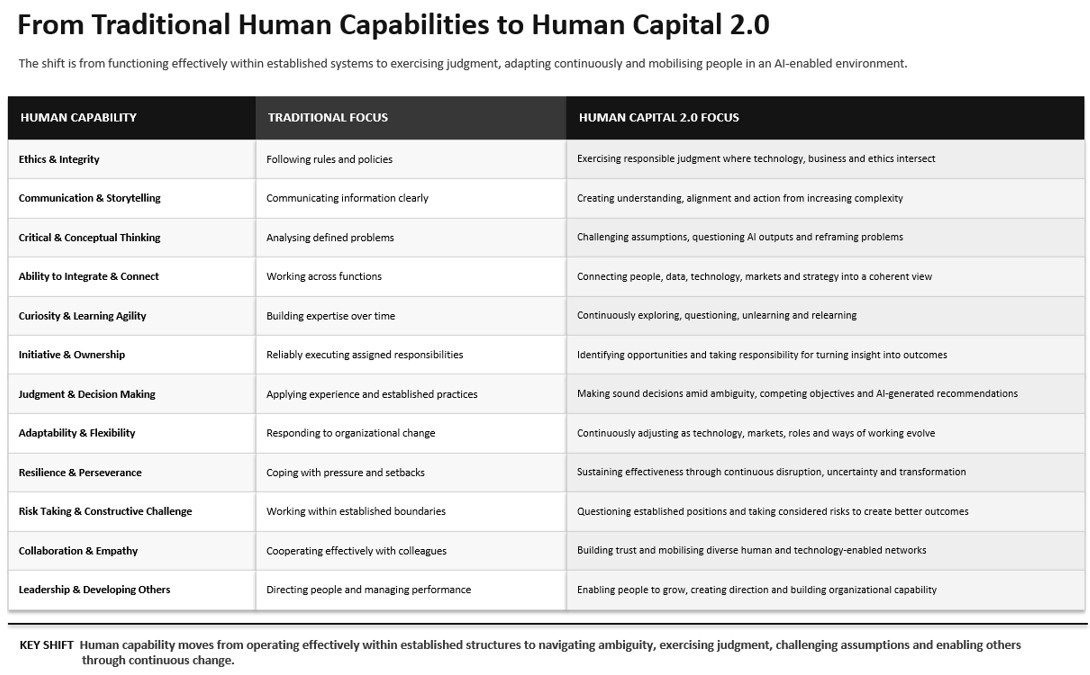
Notice the shift: human capability becomes less about functioning effectively within an established system and more about navigating ambiguity, exercising judgment, challenging assumptions, connecting perspectives and enabling others in an environment where both technology and business models are continuously changing.
AI does not make human capabilities less important. It raises the standard expected of them. As machines become better at providing information, analysis and recommendations, human differentiation increasingly comes from what people do with them—the questions they ask, the connections they make, the judgment they exercise and the responsibility they assume.
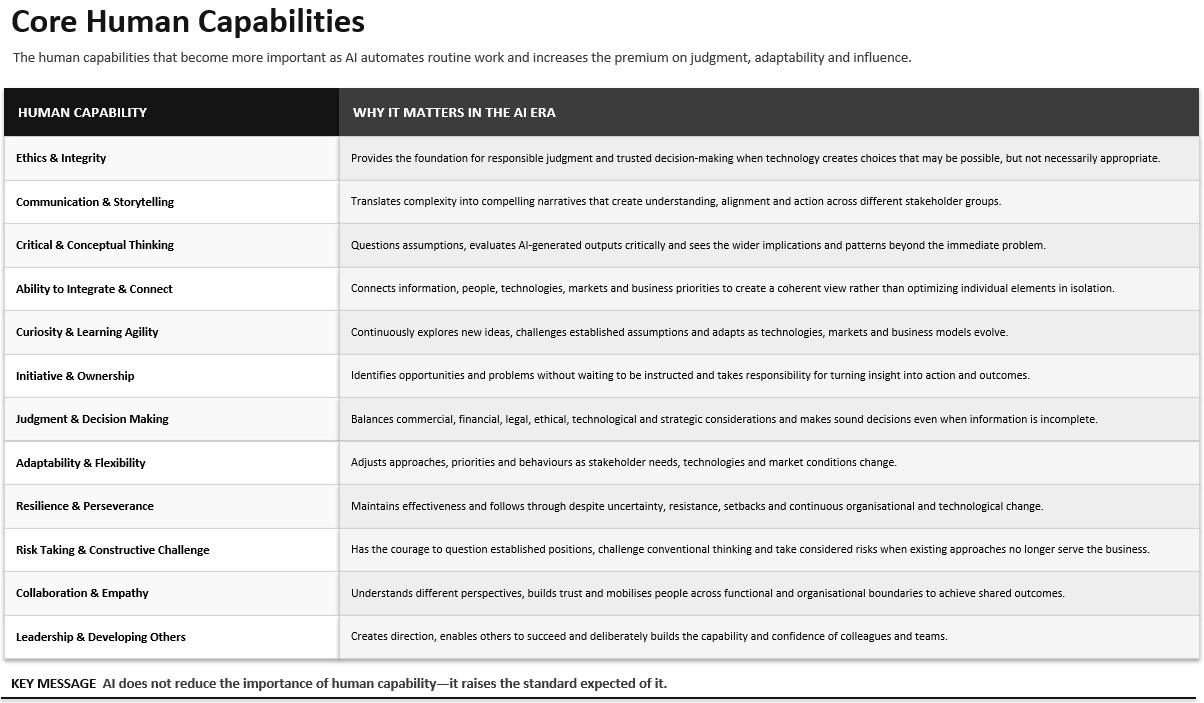
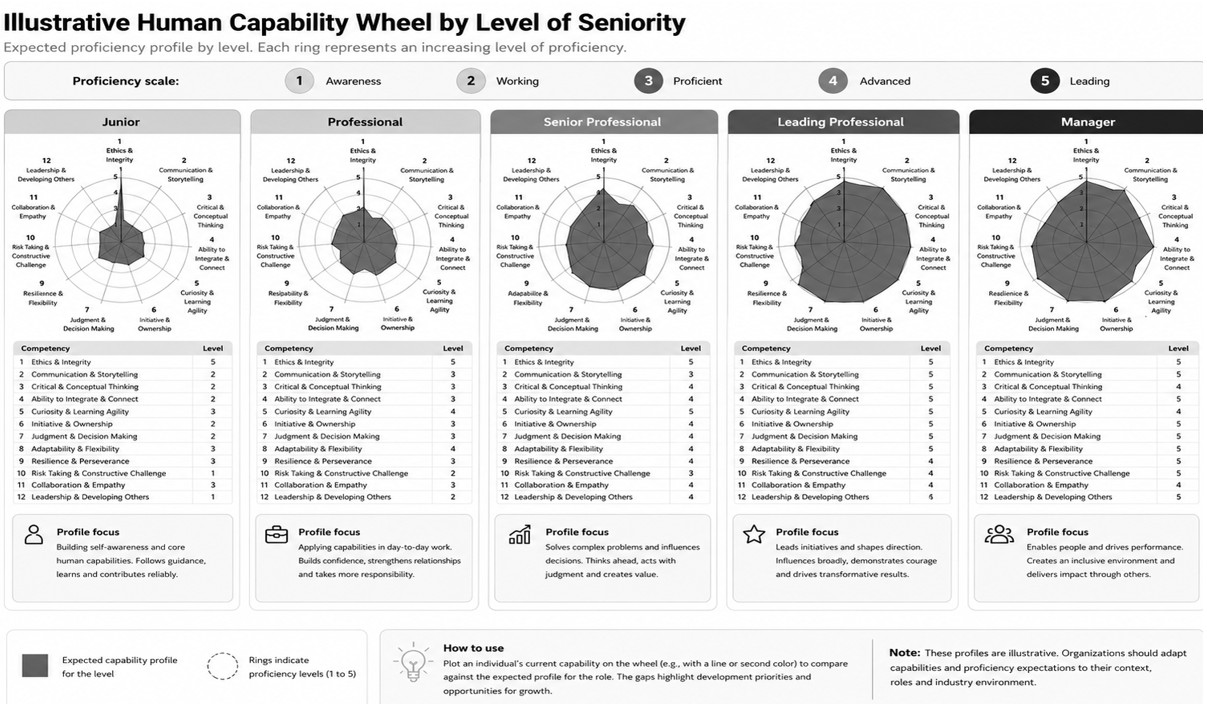
These capabilities cannot easily be certified through examinations or inferred from years of experience. They are demonstrated through behaviour: how people respond to ambiguity, challenge assumptions, interact with others, make decisions and take responsibility for outcomes. Nor should every role require the same profile. A junior professional may be expected to demonstrate strong curiosity and adaptability while still developing judgment, influence and leadership capability. A senior or leading professional will increasingly be expected to integrate complex perspectives, exercise independent judgment, constructively challenge established thinking and influence decisions beyond the boundaries of procurement. For managers, the emphasis shifts further towards enabling others, creating direction and building organisational capability.
This makes the Human Capability Wheel a practical development tool rather than simply a competency model. Expected proficiency can be defined for different levels of seniority—from Junior and Professional through Senior Professional, Leading Professional and Manager—and compared with an individual's current profile. The resulting gaps should not be interpreted simply as deficiencies. They provide a transparent basis for coaching conversations, targeted development and career planning. They can help managers and individuals identify existing strengths, agree priority development areas and assess readiness for future roles.
The twelve capabilities shown here are illustrative rather than prescriptive. Organizations should select, define and weight the human capabilities that matter most in their own environment. What matters is to make expectations visible, discuss them explicitly and use them deliberately to develop people. With applying such process the required culture will be understood and supported.
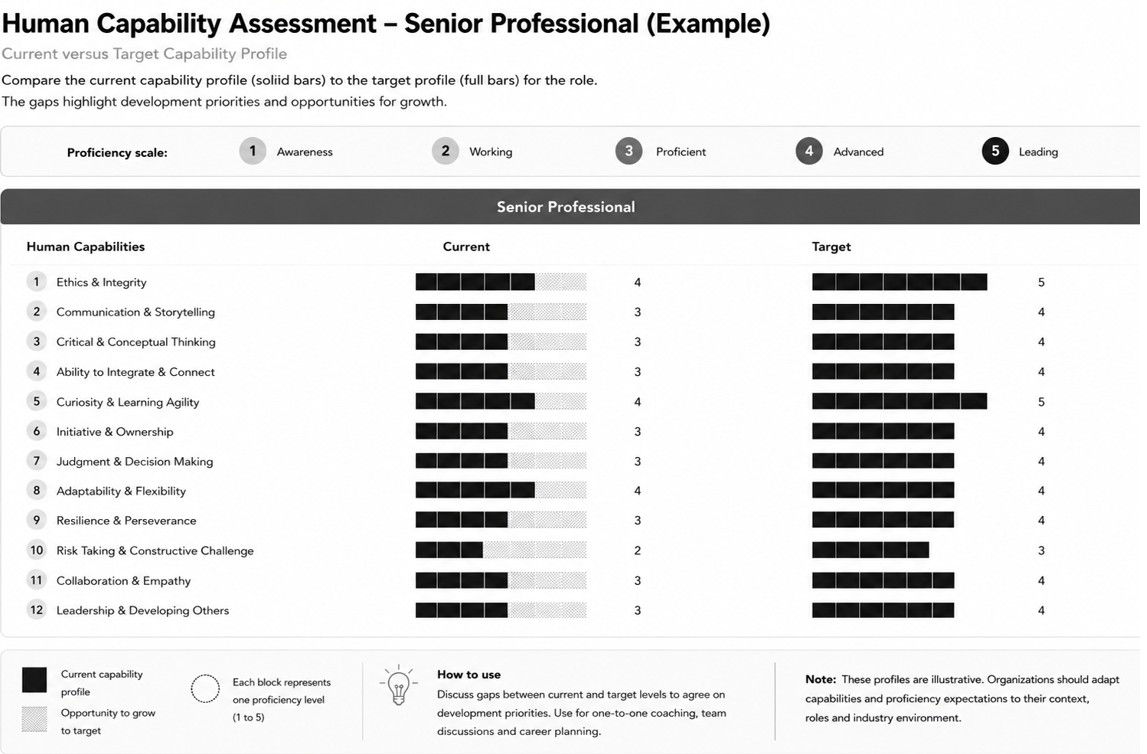
Purpose: Support coaching and development discussions by identifying strengths, development priorities and future role readiness.
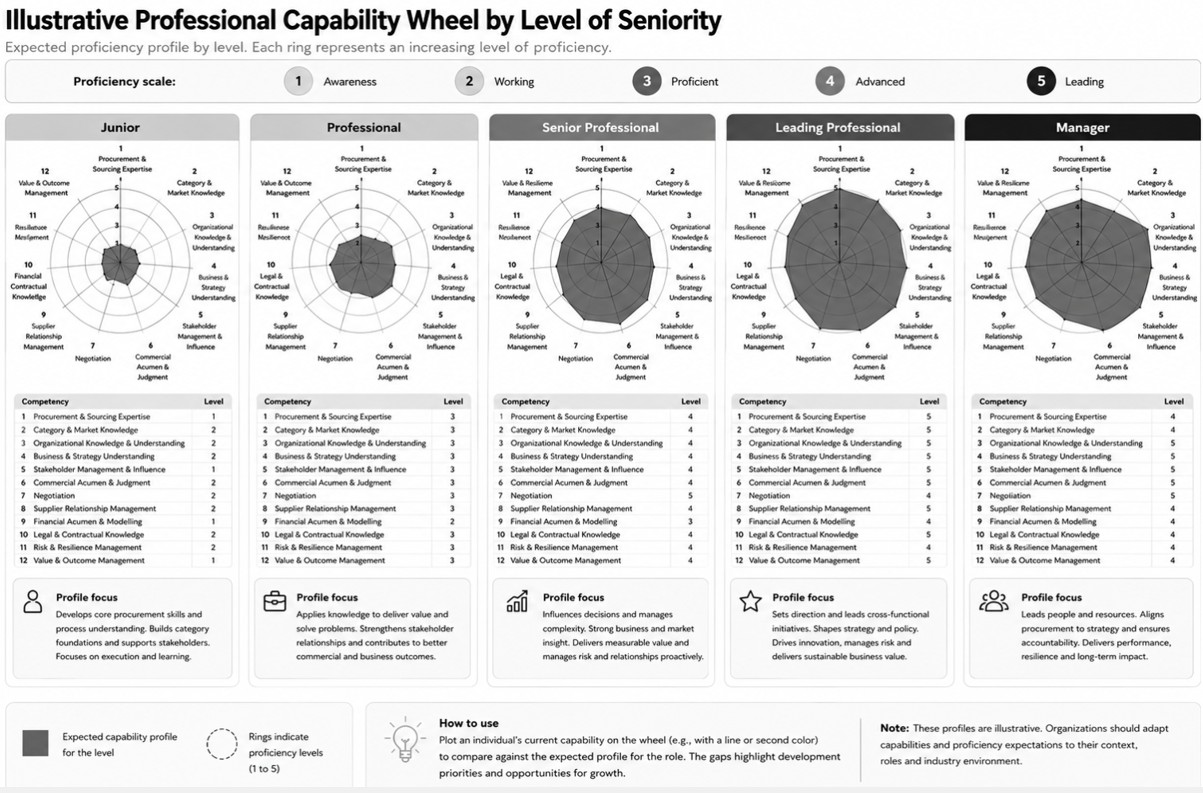
Dimension 2 – Professional Capabilities
How effectively you create business value.
Technical procurement expertise remains essential. However, technical excellence increasingly becomes the entry ticket rather than the primary source of differentiation.
As professionals progress into more senior roles, value creation shifts from executing procurement processes towards understanding markets and the business, exercising commercial judgment, influencing decisions, managing complex relationships and translating procurement expertise into measurable business outcomes. Professional capability therefore extends well beyond knowing how to run a sourcing process or negotiate a contract. It is the combination of procurement expertise, market insight, organizational understanding and commercial judgment that enables professionals to make better decisions for the business.
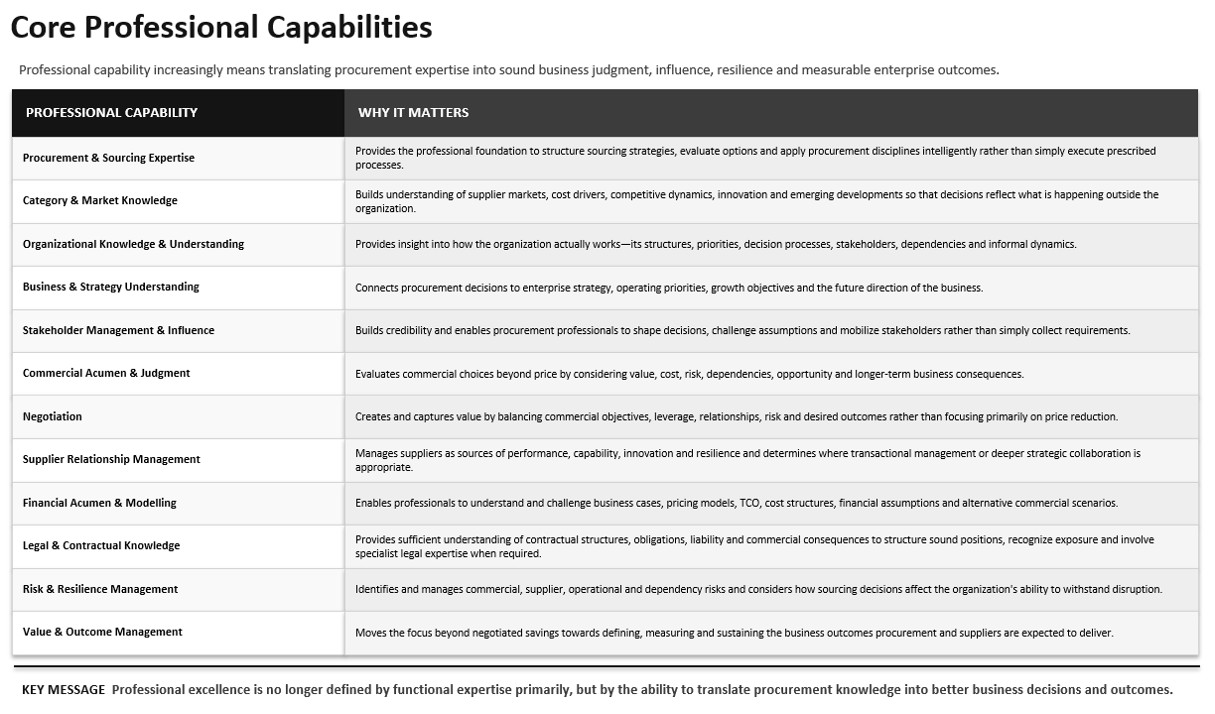
These capabilities illustrate an important shift. Procurement expertise remains the foundation, but the professional increasingly needs to connect that expertise with markets, the organization and enterprise strategy. Organizational knowledge deserves particular attention. Procurement professionals frequently invest considerable effort in understanding external supplier markets while underestimating the importance of understanding their own organization. Yet knowing how the business creates value, where strategic priorities are heading, who influences decisions, where dependencies exist and how stakeholders interact can be just as important as understanding the supply market.
This requirement typically increases with seniority. A junior professional may need sufficient organizational understanding to navigate stakeholders and execute effectively. A senior or leading professional needs much deeper insight to anticipate competing priorities, influence cross-functional decisions and connect external market opportunities with internal business needs. The same principle applies across the capability set. Development is not simply about becoming progressively better at procurement processes. It is about developing a broader and increasingly sophisticated professional profile.
Managers should therefore not simply ask: "Is this person good at procurement?" They should increasingly ask: "Can this person use procurement, commercial and business expertise to influence decisions that shape the future of the business?" The Professional Capability Wheel makes these expectations transparent. Different target profiles can be established for Junior, Professional, Senior Professional, Leading Professional and Manager roles. An individual's current capability can then be compared with the expected profile for the role.
The resulting gaps provide a practical basis for development. For example, a Senior Professional may already demonstrate advanced sourcing expertise and commercial judgment but require further development in organizational knowledge, financial modelling or stakeholder influence. The objective is not to create a perfect score across every capability. It is to identify the capabilities that matter for the individual's current and future role and deliberately develop them. As with the Human Capability Wheel, the twelve capabilities are illustrative rather than prescriptive. Organizations should add, remove, redefine or weight capabilities according to their business, industry and operating model.
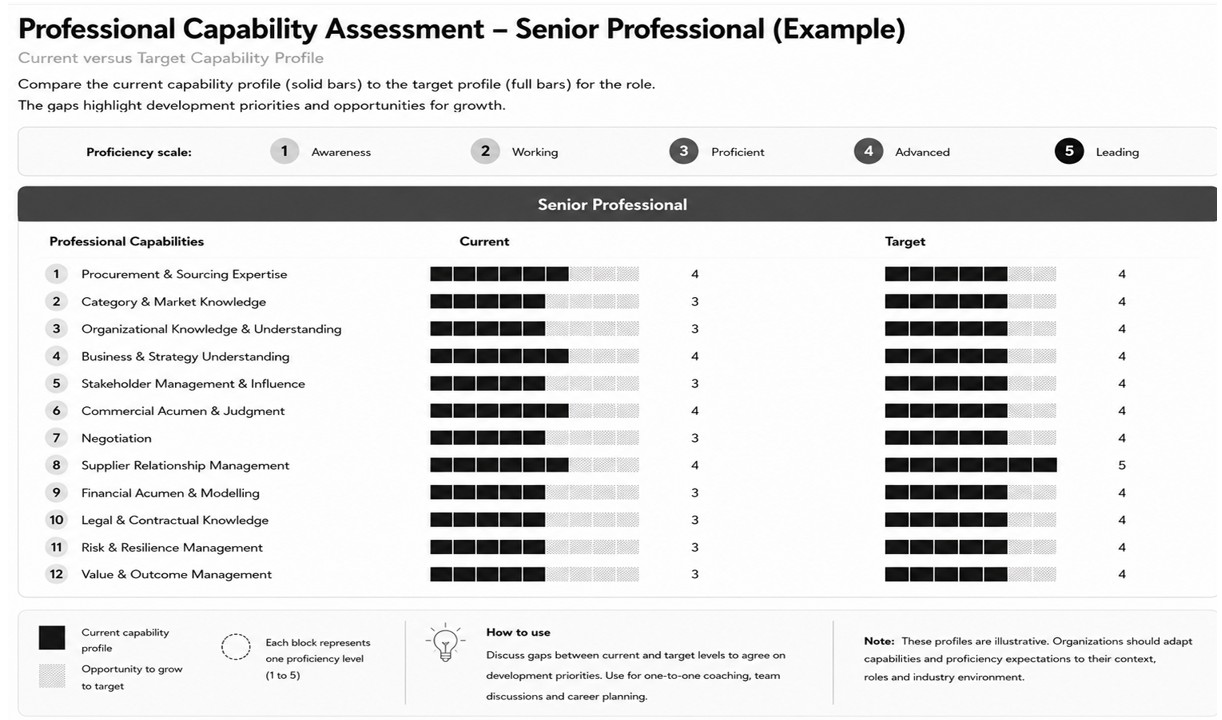
Managers should not simply ask "Is this person good at procurement?" Instead, they should ask:"Can this person influence decisions that shape the future of the business?"
Dimension 3 – AI & Digital Readiness
How effectively you work with intelligent technology.
A misconception surrounding AI would be suggesting that every procurement professional must become a data scientist. They do not. Most procurement professionals will never build machine-learning models, develop sophisticated algorithms or need to understand the underlying technology at an engineering level.
They do, however, need to develop a sound understanding of how to use AI effectively, ask better questions, critically evaluate its outputs, recognise its limitations and risks, and understand where it can change the way work gets done and what risk and opportunity are for the organization.
AI & Digital Readiness is therefore not about technical specialization. It is about developing the capabilities required to work confidently, critically and responsibly with increasingly intelligent technology—and to translate that capability into better business outcomes.
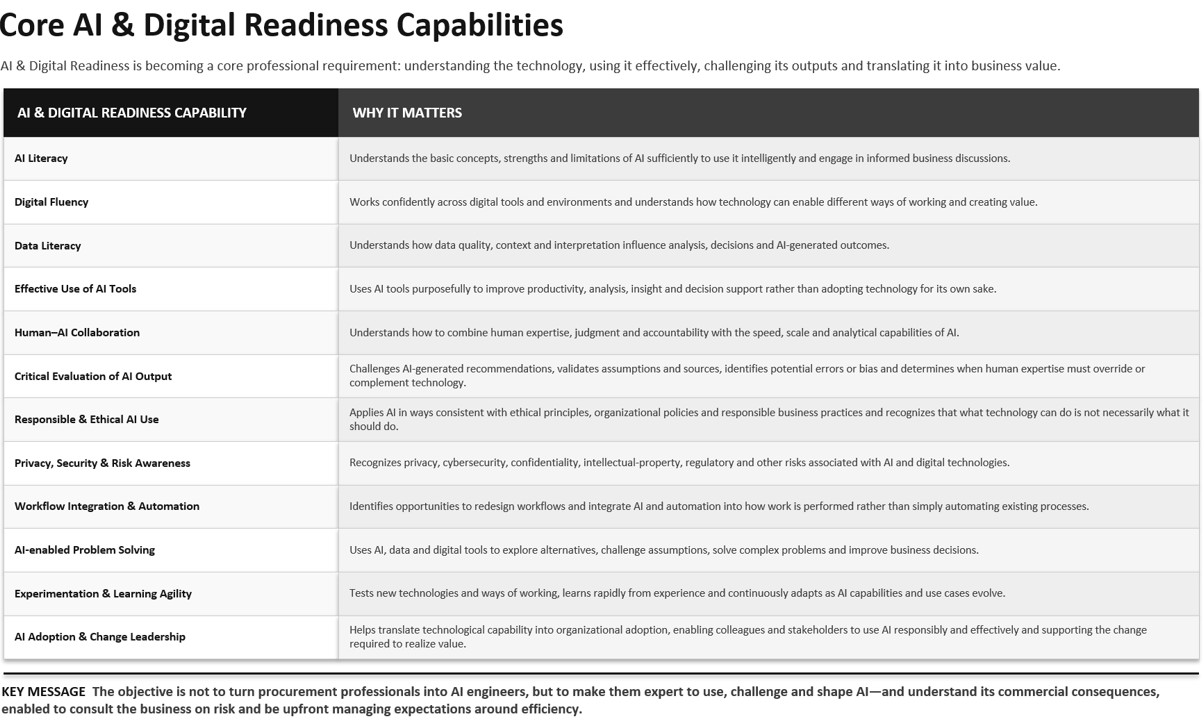
These capabilities focus on working with AI, not competing against it. The objective such is not to turn every procurement professional into a technologist. It is to ensure that professionals have and are recognized for having digital understanding, judgment and confidence to determine where technology adds value, where human intervention remains essential and where its use creates risks that need to be understood and managed.
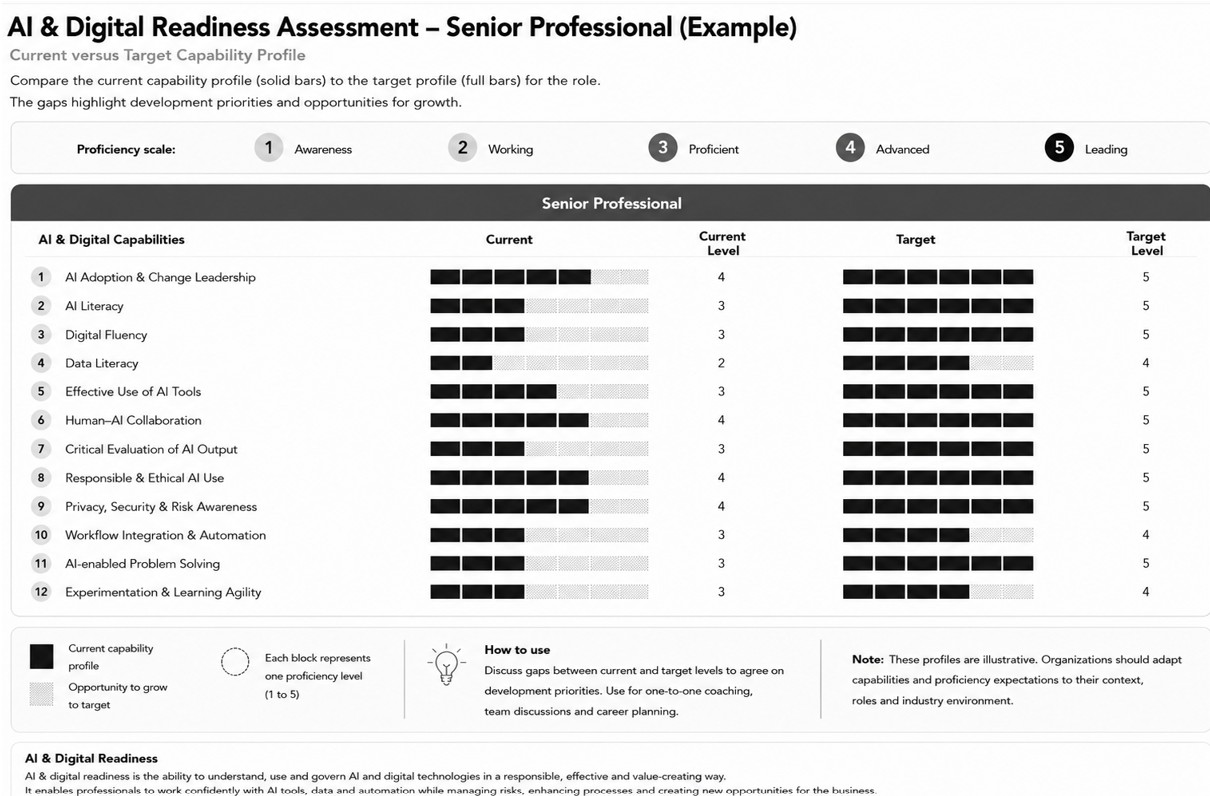
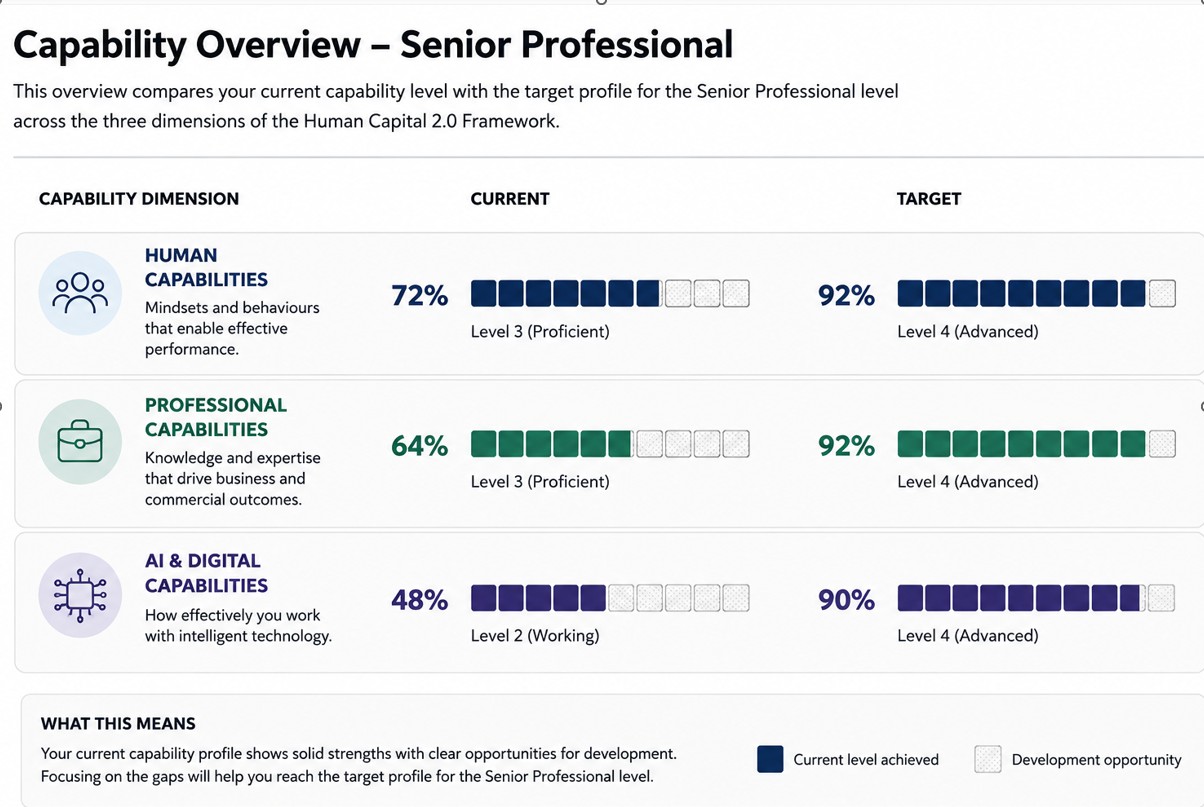
This is not simply the next stage of digital literacy. AI introduces a new professional knowledge requirement for procurement. Procurement needs to become expert users and informed commercial interpreters of AI. Superficial familiarity with prompting or occasional use of generative AI will not be enough.
They need sufficient depth to understand the art of the possible: what different forms of AI can and cannot do, where they can transform processes and business models, how rapidly their capabilities are evolving, and where apparent technological capability may be overstated. That includes understanding the limitations.
AI can produce convincing but incorrect outputs. Hallucinations, bias, poor-quality data, inadequate controls and inappropriate use of confidential information can create significant business exposure. Professionals need to understand when AI-generated analysis can be trusted, when it needs to be challenged or independently validated, and when human judgment must remain decisive. But the requirement goes considerably further than responsible use.
AI is also introducing new commercial and economic models. Licensing, consumption-based pricing, tokens, agents, embedded AI functionality, data and storage requirements, infrastructure consumption and rapidly evolving product packaging can fundamentally alter the economics of technology. What initially appears to be a productivity tool or software feature can create significant downstream cost, dependency and lock-in. Procurement therefore needs to understand not only the technology, but how suppliers monetize it.
At the same time, AI can radically alter the economics of the supplier’s procurement negotiates with. Software developers, consultancies, professional-services firms, outsourcing providers and other knowledge-intensive suppliers may be able to deliver work with significantly fewer human resources and at substantially lower marginal cost. Traditional pricing structures—day rates, effort estimates, development hours and resource-based models—may consequently become increasingly disconnected from the supplier's actual cost of delivery. That creates a new source of commercial leverage. If a supplier can use AI to increase productivity by 20, 30 or 50 percent, the question for procurement is not merely whether the supplier uses AI. It is: Who captures the productivity gain—the supplier, the customer, or both? Procurement professionals who understand these changing economics can challenge assumptions, rethink commercial models, negotiate around outcomes rather than historical effort and ensure that AI-generated productivity does not simply become additional supplier margin.
The implications extend into procurement's own technology environment. AI is increasingly embedded in sourcing platforms, analytics tools, contract management, supplier-risk solutions and enterprise applications. Procurement needs to understand what these tools actually do, what data they use, how decisions or recommendations are generated, what additional costs they create and where automation may inadvertently transfer control or judgment from people to algorithms and technology providers.
This is why AI & Digital Readiness is fundamentally different from traditional technology competence.
The new requirement combines several capabilities that previously could often be left to specialists: understanding AI sufficiently to challenge its use; evaluating data and outputs critically; recognizing privacy, security and ethical exposure; understanding new licensing and consumption models; assessing the implications for supplier economics; identifying opportunities for automation and workflow redesign; and translating all of this into commercial decisions. AI is therefore changing both sides of procurement's mandate:
Ø It changes what procurement buys—and it changes the economics of the suppliers from whom procurement buys it.
Ø It may also turn established approaches to decision-making, pricing, cost management and commercial control upside down.
Without sufficiently deep AI capability, procurement risks arriving at the table after the important decisions have already been made—after the technology has been selected, the commercial model established, dependencies created and the opportunity to shape risk, cost and value substantially reduced. With that capability, procurement can play a very different role. It can challenge technology and business assumptions, expose hidden economics and dependencies, identify new sources of leverage, influence commercial and licensing models, and help determine how AI should be adopted rather than merely negotiate the consequences afterwards. That is what is genuinely new. AI expertise is no longer optional specialist knowledge for procurement. It is becoming a prerequisite for having a credible seat at the table where the next generation of technology, cost, risk and business decisions is being shaped.
What Is Actually New with this framework?
AI & Digital Readiness becomes a new professional requirement in its own right, Procurement ought to become an Orchestrator, more than ever before. Procurement has always needed strong negotiators, commercial thinkers, curious minds, sound judgment and people capable of building relationships. What is new is the combination, the relative importance and the level at which these capabilities will now be required. Traditional procurement capability models have tended to place professional expertise at their centre: sourcing methodology, category knowledge, negotiation, contracting, supplier management and process execution. These capabilities remain essential—but they are no longer sufficient.
Human Capital 2.0 broadens the definition of what it means to be an outstanding procurement professional across three interconnected dimensions. Human Capabilities become more important as routine analysis and execution are increasingly supported or performed by technology. Critical thinking, judgment, curiosity, adaptability, empathy, constructive challenge and the ability to connect different perspectives become greater sources of differentiation. Professional Capabilities shift from executing procurement processes towards applying commercial expertise to business decisions. Market knowledge must connect with organizational knowledge. Negotiation must connect with outcomes. Supplier management must encompass innovation, dependency and resilience. Financial, legal and commercial understanding must come together to enable better business judgment—not simply better procurement execution.
AI & Digital Readiness become a professional requirement in own right. Procurement professionals need sufficient depth to understand the art of the possible, critically evaluate AI-generated outputs, recognize hallucinations and limitations, understand data and risk, navigate emerging licensing and consumption models and assess how AI changes technology architectures, supplier economics and commercial leverage. Without that knowledge, procurement risks losing its seat at the table precisely when some of the most consequential technology, cost and dependency decisions are being made.
The fundamental change is therefore not simply the addition of new competencies. It is a rebalancing of what creates professional value. The strongest future procurement professionals will be those capable of connecting all three dimensions—bringing human judgment to professional expertise and amplifying both through technology. This also changes the meaning of seniority. Progression can no longer be defined primarily by knowing more, managing larger categories or supervising more people. Increasingly, it will be demonstrated by the ability to deal with ambiguity, connect disciplines, challenge established assumptions, make sound decisions with imperfect information and mobilise expertise beyond one's own functional boundaries. This is where orchestration emerges—not necessarily as another competency to add to the framework, but as the outcome of bringing the three dimensions together.
Tomorrow's procurement leaders will not succeed because they personally possess every answer. They will succeed because they know which questions to ask, which expertise to involve, which technology to use, which assumptions to challenge and how to turn complexity into decisions and action.
The shift can therefore be summarized as:
- From functional expertise to enterprise influence.
- From using technology to understanding and shaping its commercial consequences.
- From individual capability to connecting people, expertise and technology around business outcomes.
- From process execution to business orchestration.
- From accumulated knowledge to continuous learning and adaptation.
And if, as I argue, these capabilities are required for success, the way organizations assess and develop those capabilities must change with them.
From Competency Framework to Development Framework
Traditional competency models often become static HR documents that are reviewed once a year and then forgotten. The Human Capital 2.0 Framework is intended to be different. It is designed as a living development tool that supports recruitment, onboarding, coaching, succession planning and career progression. The capability wheels make expectations visible across different levels of seniority. But their real value emerges when an individual's current capability profile is compared with the target profile for the current or next role. Strengths become visible, development gaps become tangible and what might otherwise be a subjective discussion can become a much more constructive conversation, it guides career progression and fosters the right culture.
Instead of asking: "How did you perform last year?" leaders can increasingly ask: "Which capabilities will make you successful in your next role—and how do we help you build them?"
Development can then become targeted rather than generic. One professional may need deeper organizational and commercial understanding. Another may need to strengthen judgment and stakeholder influence. A third may already possess strong traditional procurement expertise but require significantly greater AI & Digital Readiness to remain effective as technology, supplier economics and decision-making models change.
Importantly, the objective is not to achieve a score of five everywhere. Different roles require different capability profiles, and those profiles will themselves evolve. The framework provides a common language for making those expectations transparent and for agreeing where development effort will create the greatest value. That shift reflects the central message of this chapter. In the AI era, competitive advantage will increasingly be defined not simply by what professionals know today, but by how effectively they continue to learn, adapt, exercise judgment, influence and orchestrate as the environment around them changes.
Human Capital 2.0 therefore turns capability assessment from a retrospective HR exercise into a forward-looking instrument for building the workforce procurement will need next.
Same time it raises the question on whether we have the right education system to provide for the competencies we need NOW. I am not giving the solution here.
The below Grids do show Evolution and desired Capabilities by Role and Seniority for the Dimensions. This can be used as a great way to visualise status, gaps and with this inform targeted development discussions. It also shows the career progression that goes hand in hand with changing expectations.
“How does this person think, behave, influence and adapt?”
What can this person do?
How effectively you work with intelligent technology?
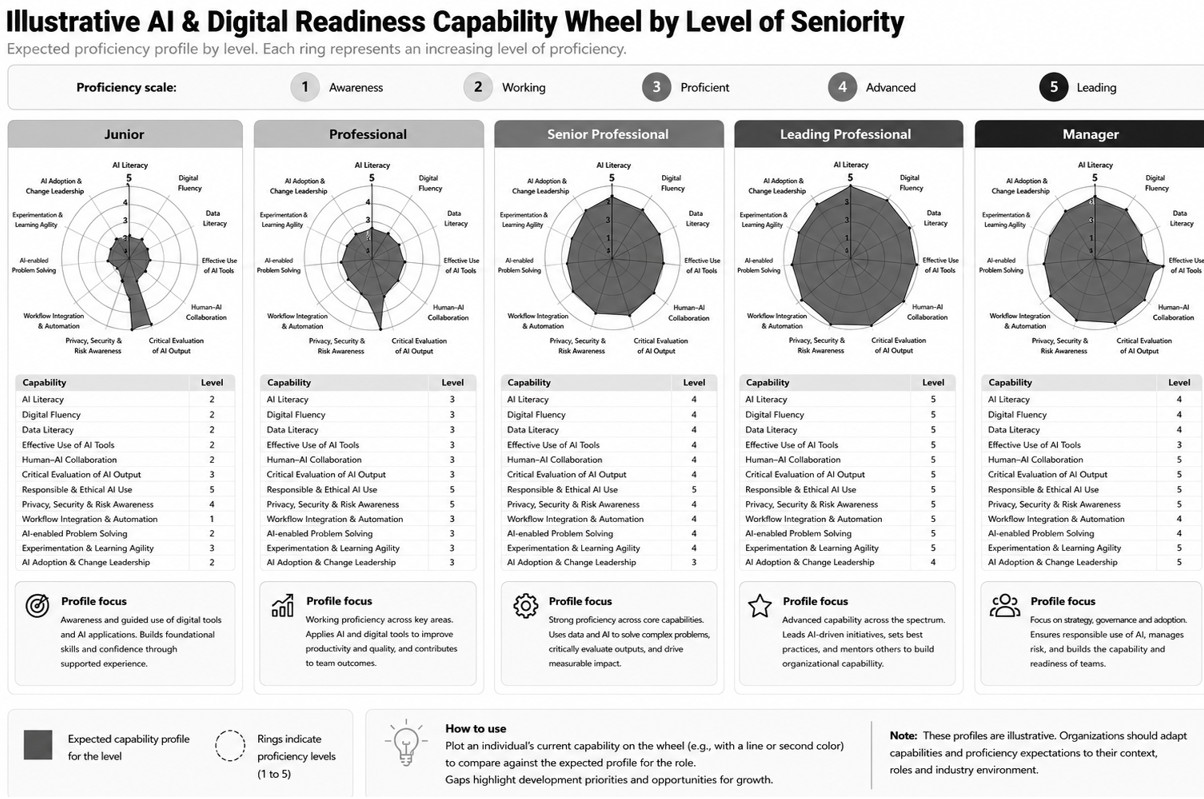
This could be your agreed upon expectations for roles as you describe them. In a second layer you represent the actual status – and from there – agreed the personal development plans for all Three Dimensions in a consistent and transparent way. Keeping track of these wheels will be a great way to see the development of you staff and showcase your staff development approach.
OUTSIDE PERSPECTIVE
HUMAN CAPITAL 2.0 BEYOND PROCUREMENT
- by Gerhard Hietel
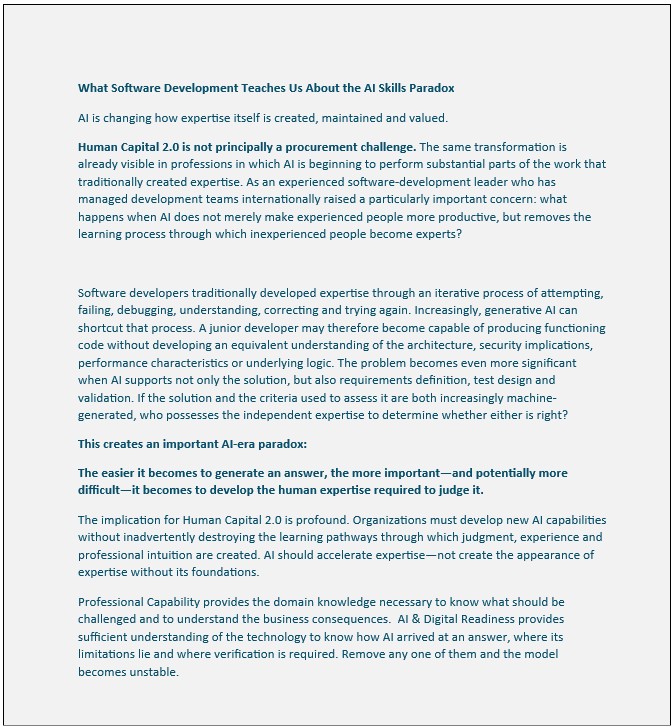
Why This Matters to Procurement Twice
The software-development example matters to procurement in two different ways.
First, procurement faces the same human-capital challenge. As AI increasingly supports market analysis, sourcing strategies, specifications, negotiations, contract analysis, supplier assessments and decision recommendations, procurement must ensure that professionals retain sufficient underlying expertise to challenge what the technology produces. A procurement professional who can generate an impressive analysis through AI but cannot recognise an implausible assumption, inappropriate contractual position or commercially flawed recommendation has gained productivity without necessarily gaining capability.
Second, procurement is buying from organizations undergoing exactly this transformation. If AI fundamentally changes how software is developed, tested, maintained and supported, it must eventually change the economics of what procurement buys. Suppliers may require fewer development hours to produce an equivalent outcome. Traditional effort assumptions, staffing models, rate cards and estimates may therefore become increasingly questionable. At the same time, faster development does not automatically mean better software: quality, architecture, security, maintainability, accountability and the depth of human oversight may become more—not less—important. Procurement therefore needs sufficient AI and technology expertise not only to transform itself, but to understand how AI is transforming the cost, productivity, risk and value structures of its suppliers.These implications extend well beyond workforce development. They affect how procurement evaluates technology suppliers, challenges effort and pricing assumptions, assesses quality and risk, and determines whether AI-generated productivity improvements are being shared with the customer or simply retained by the supplier. Chapter 11 returns to these questions from the perspective of procurement technology, supplier economics and the changing technology landscape.
PART III – Managing Dependency, Risk and Resilience in a Fragmented World
Introduction
PART III — FROM EXPOSURE TO STRATEGIC CONTROL
The Opportunity — and the Price of Getting It Wrong
Procurement has rarely had a greater opportunity to become strategically relevant.
Technology has moved to the centre of almost every business model. External suppliers increasingly provide not only products and services, but critical infrastructure, software platforms, data, artificial intelligence, specialist skills and innovation. Decisions once regarded simply as sourcing decisions can now determine an organisation’s cost base, resilience, speed of innovation and, increasingly, its freedom to act.
That changes the opportunity for Procurement.
A function positioned between the external market and the internal business, negotiating contracts and managing relationships with suppliers on which the organisation increasingly depends, has access to something extraordinarily valuable: a view across demand, supply, commercial dependency and market development.
Used well, that position can take Procurement far beyond the traditional measures of savings, negotiated price and process compliance. It can provide management with insight into questions that increasingly matter at executive level
.
· Where are we becoming dependent?
· Where is supplier power increasing?
· Where are costs developing faster than expected?
· Where are viable alternatives disappearing?
· Are geopolitical developments changing the risk profile of technologies or suppliers on which we depend?
· Are our suppliers consistent with our environmental, social and governance commitments.
· Where could their behaviour create exposure with regulators, customers, employees or investors?
· Are governance requirements protecting the organisation—or inadvertently preventing it from innovating?
These are not Procurement questions alone; they are business questions. And that is precisely the opportunity. But the same position creates exposure. When the price of a critical software platform suddenly increases by 40, 100 or several hundred percent, Procurement will be asked why the organisation has no alternative, and when consumption-based cloud or AI expenditure unexpectedly blows through the budget, Procurement will be asked what happened. When a strategically important technology supplier becomes affected by sanctions, export restrictions or geopolitical tensions, someone will ask whether the dependency was known. When serious labour or environmental practices emerge somewhere in the supply chain, management will ask how the supplier passed due diligence. And when a strategically important AI initiative spends six months navigating Information Security, Privacy, Legal, Architecture, Compliance and Procurement, the business is unlikely to distinguish carefully between the functions responsible for each delay.
It will see something much simpler:
We are exposed, we cannot move quickly enough, and nobody appears to have the complete picture.
That is one of the uncomfortable realities explored in the chapters ahead.
The New Nature of Exposure
Procurement does not own all of these risks. Nor should it.
Risk is organised differently in every company. In financial institutions, sophisticated enterprise-risk organisations may sit under a Chief Risk Officer. Elsewhere, accountability may be distributed across Finance, Legal, Compliance, Information Security, Internal Audit, Sustainability and the business itself. Those accountabilities should remain where they belong. Nor should Procurement attempt to become the expert on cybersecurity, privacy law, geopolitics, sustainability or artificial intelligence. Its opportunity is different.
Procurement can help the organisation see where these different forms of exposure converge in the commercial decision.
This distinction matters because the nature of supplier risk has changed. A supplier can perform perfectly against its SLA and still represent a serious strategic exposure. The problem may be that its prices are becoming impossible to control, or that switching has become economically unrealistic, or that the organisation no longer possesses the skills, architecture or data portability required to replace it. The supplier may be financially healthy but exposed to geopolitical intervention, it may be commercially attractive but unacceptable from an ESG perspective. A technology may offer extraordinary productivity gains while simultaneously creating new questions around intellectual property, data sovereignty, regulation and dependency.
And sometimes the risk is not the supplier at all. It is us.
Our governance may be so fragmented that the organisation cannot make a decision at the speed the business requires. That is why supplier risk can no longer be understood simply as the probability that a supplier will fail.
The more important question is:
Where has the organisation created exposure—and does management understand it before that exposure becomes a problem?
More Governance Does Not Necessarily Mean More Control
Organisations have responded to increasing complexity by adding controls. Data-protection reviews. Information-security assessments. Intellectual-property checks. Financial-risk assessments. ESG due diligence. AI governance. Regulatory requirements. Legal approvals. Country approvals. Third-party risk processes. Each is legitimate. Collectively, however, they can create a sourcing environment that few people fully understand.
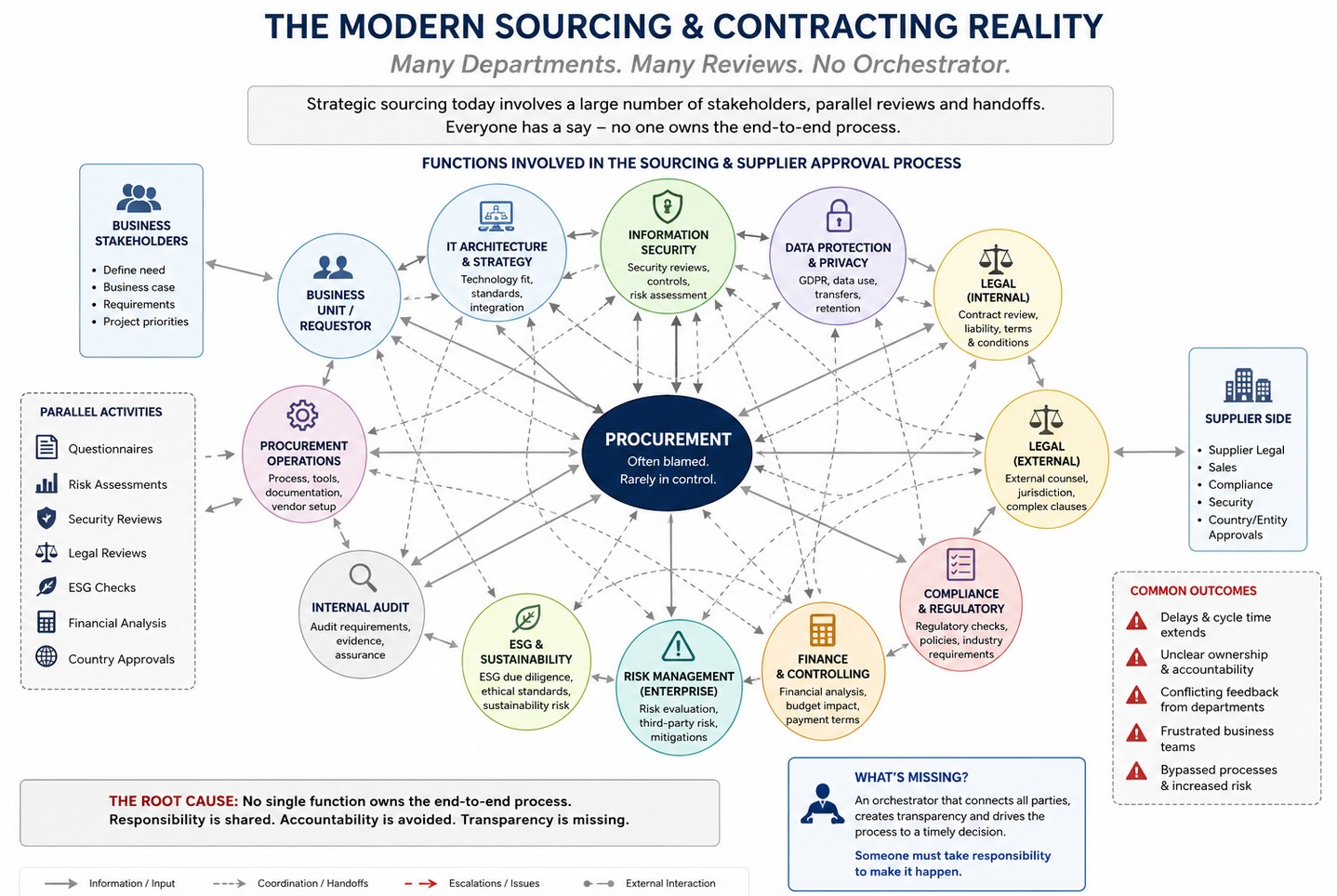
Procurement can find itself at the centre of Business, Architecture, Information Security, Privacy, Legal, Compliance, Finance, Enterprise Risk, ESG, Audit and the supplier’s own approval organisation—connected through numerous reviews, assessments and hand-offs, but without anyone truly orchestrating the whole.
The paradox is striking:
Organisations can have more risk management, more controls and more specialist functions than ever—and still have remarkably little transparency over their actual exposure.
That lack of transparency creates danger in both directions. Too little governance can expose the organisation to financial, operational, regulatory, geopolitical and reputational damage. Too much fragmented governance can delay decisions, frustrate the business and prevent innovation. The answer is therefore not simply to control more.
It is to see earlier, understand better and orchestrate more effectively
From Risk Management to Strategic Intelligence, this is where Procurement can step up, not by taking accountability away from Risk, Legal, IT, Security, Finance, ESG or the business, but by recognising what Procurement can see that few individual specialist functions can see on their own.
Procurement and Vendor Management know the contracts, see the suppliers, understand the market, interact with internal demand, see renewals approaching, can observe expenditure and consumption. They participate when new technologies enter the organisation and remain involved at the boundary where internal business decisions become external commitments.
That boundary matters. It is where an attractive commercial decision can become tomorrow’s dependency. It is where a technology decision can become a geopolitical issue and where an outsourcing decision can become an ESG issue. It is where an AI decision can become a data, intellectual-property or sovereignty issue. And it is where many apparently technical decisions eventually become financial ones.
Procurement therefore does not need accountability for every risk. But it should increasingly accept responsibility for making commercial exposure visible and helping orchestrate the decisions around it. That is a very different ambition. It also changes the Procurement value proposition.
------------------------------------------------------------------------------------------------------------------------------------------------------------------------
Imagine two procurement organisations.
The first tells management:
We negotiated €12 million in savings this year.
The second says:
We negotiated €12 million in savings. But we also have €180 million of expenditure concentrated with five strategically critical suppliers. Two have very limited realistic alternatives. One is exposed to changing geopolitical conditions. Three major software agreements contain cost mechanisms developing materially above market. AI consumption is increasing significantly faster than budget. Two supplier relationships warrant ESG attention. And four strategic innovation projects are currently delayed within internal governance.
------------------------------------------------------------------------------------------------------------------------------------------------------------
Which Procurement organisation would you want advising the executive committee?
The difference is not better reporting, it is strategic intelligence.
From Commercial Exposure to Strategic Control
The chapters that follow examine different manifestations of this same problem.
They begin with commercial exposure: how subscription models, consumption pricing, supplier concentration, switching barriers and contractual structures can quietly transfer power from customer to supplier. The sourcing decision that looks attractive today may be creating tomorrow’s lock-in. That leads naturally to transparency. Exposure cannot be managed if it cannot be seen. Contracts and purchase orders provide only part of the picture. Cost, consumption, supplier performance, service quality, workforce, location, commercial models, market development and business perception must increasingly be connected if Procurement is to provide management with an executive view of what is actually happening.
From there, the lens widens.
Geopolitics, sovereignty, regulation and ESG increasingly determine whether suppliers and technologies remain viable, acceptable and strategically desirable—not merely whether they can continue delivering against an SLA. And running through all of this is artificial intelligence.
AI is simultaneously one of the greatest opportunities available to Procurement and the organisations it serves, and an accelerator of many of the exposures described above: cost, consumption, supplier dependency, data, intellectual property, governance, regulation and strategic uncertainty. These subjects cannot be managed independently because the decisions behind them are interconnected. A cloud decision is also a commercial decision, an AI decision may also be a sovereignty decision, an outsourcing decision may become an ESG decision, a supplier decision may become a geopolitical decision, a governance decision may become an innovation decision, and almost every one eventually becomes a financial decision.
This is why the evolution required of Procurement is larger than adding another risk process or another dashboard.
It is a progression:
from transactions to transparency;
from transparency to understanding exposure;
from exposure to informed intervention;
and from intervention to strategic control.
Strategic control does not mean eliminating risk. That would be neither possible nor desirable. It means knowing where the organisation is exposed, understanding the choices available, making the trade-offs visible and acting while there is still time to act.
The Opportunity, the Risk, the Failure
THE OPPORTUNITY
Procurement uses its position between business and market to turn supplier, contract, cost, performance and market information into strategic intelligence—and helps management see dependencies and choices that would otherwise remain fragmented.
THE RISK
Procurement remains focused on sourcing events, negotiated savings and process compliance while strategic dependencies accumulate outside its field of view.
THE FAILURE
Procurement discovers the problem only when the price increases, the supplier cannot be replaced, consumption is out of control, the regulator intervenes, the project stalls, the reputation suffers—or the CEO asks a question nobody can answer.
Part III is about preventing that moment.
The following chapters move beyond Procurement as a function that buys, negotiates and administers contracts. They explore how Procurement can use its unique position at the intersection of demand and supply to create transparency, challenge dependency, connect specialist perspectives and provide management with insights it may otherwise never see.This is not about expanding Procurement’s empire; it is not about turning Procurement into the Risk function and it is not about removing accountability from the specialists whose expertise the organisation needs. It is about recognising a much simpler reality.In an increasingly interconnected world, someone needs to connect the dots. Procurement is unusually well positioned to do so.And as the consequences of failing to see those connections become larger, doing so is becoming not merely an opportunity for Procurement—but part of its responsibility.
7 - Beyond Traditional Risk Management
Leading Through AI, Geopolitics and Digital Sovereignty
The greatest risks organisations face today are rarely isolated events. They are the consequence of strategic choices made months or years earlier—dependencies accepted without sufficient transparency, governance fragmented across organisational silos, and commercial exposure that remained invisible until options had already disappeared. The role of modern procurement should therefore no longer be to only negotiate better contracts. It is to preserve strategic freedom by making those dependencies visible before they become crises. It is here where we suggest change.
When Everything Goes Wrong at Once
Monday Morning: Everything Was Under Control. Until It Wasn't. Imagine arriving at work on a Monday morning expecting an ordinary executive meeting.Instead, before 10 a.m., six unrelated issues have landed on your desk.
I. The CIO informs you that a major software supplier has announced a 42% price increase for licence renewals. Migration is estimated to take several years, no viable alternative has been evaluated, and the additional cost creates an unexpected multi-million-euro budget gap. As a consequence, strategic programmes now need to be postponed.
II. Almost simultaneously, Legal receives notification that one of the organisation's critical technology providers has become subject to newly introduced sanctions. Existing contracts may no longer be executable. Essential systems remain operational—for now—but there is no contingency plan and no approved replacement supplier.
III. Before lunch, Internal Audit escalates another issue. A strategic services partner is under investigation for systematic false self-employment practices. The organisation faces contractual uncertainty, possible regulatory scrutiny and significant remediation costs.
IV. An hour later, Corporate Communications receives enquiries from journalists after reports emerge that another key supplier has been associated with serious environmental and labour-rights violations. Within days, the organisation is criticised publicly for continuing the relationship despite its ESG commitments.
V. The consequences do not stop there. During the evaluation of a major public-sector opportunity, the company learns that participation may be jeopardised because of its continued engagement with suppliers that fail to meet mandatory sustainability requirements. Years of business development are suddenly at risk—not because of product quality or price, but because of supplier governance.
VI. Meanwhile, an AI innovation initiative that had been expected to transform customer service remains stalled. Not because the technology is unavailable, but because months are spent navigating overlapping approval processes between Procurement, Legal, Data Protection, Information Security, Architecture and Compliance. No single function owns the end-to-end process. Decisions circulate between committees, responsibilities overlap, and accountability becomes blurred. The business begins bypassing established governance simply to move forward.
What a start in the day…! Six Problems. One Cause.
At first glance, these appear to be six completely different problems, a software licensing issue, a geopolitical issue, a compliance issue, an ESG issue, a procurement issue and finally, an innovation issue. Most organisations would assign each to a different department. Yet they all have the same underlying cause.
The organisation has lost visibility over its commercial dependencies.
The Common Thread
None of these situations began on Monday morning. Each had been developing—quietly—for months or even years and compounded.
· A supplier gradually accumulated commercial leverage until price increases became unavoidable.
· Strategic technology dependencies were accepted without understanding their geopolitical implications.
· ESG commitments were treated as contractual clauses rather than continuously monitored risks.
· Supplier concentration increased because no viable alternatives had been developed.
· Governance processes expanded organically without anyone designing an end-to-end operating model.
· Critical commercial decisions became fragmented across multiple functions, each managing its own perspective while no one retained ownership of the overall outcome.
The result is familiar. Every function manages its own risks, no one manages the organisation's exposure.
The Real Problem Is Not Risk
The problem is not insufficient risk management. Most organisations already maintain Enterprise Risk Registers, Cyber Risk Registers, Third-Party Risk Programmes, ESG Assessments, Information Security Reviews, Data Protection Assessments and Internal Audit Programmes. In highly regulated industries—financial services being an obvious example—risk management can involve sophisticated processes and substantial dedicated organisations.
Yet maturity in risk management does not automatically translate into an end-to-end understanding of technology, supplier and commercial exposure. Individual functions understandably view decisions through their respective lenses: cyber risk, regulatory risk, credit risk, privacy, legal exposure, operational resilience or ESG. Their mandate is primarily to identify, assess and control risk—not necessarily to find the best commercial solution or optimise the overall sourcing journey.
That distinction matters.
I have seen individual risk positions amplified to such an extent that the wider business objective almost disappeared from view. In the public sector, I have experienced Legal and Risk effectively taking control of sourcing processes without sufficient consideration of proportionality, commercial implications or time-to-market. In one technology sourcing exercise, a supplier risk assessment for a software solution extended to more than 100 pages of highly technical questions. It may have provided assurance to individual specialists, but it also brought the process close to a halt. Smaller and innovative suppliers can simply decide that participating in such a Request for Proposal is not worth the effort.
This illustrates an uncomfortable paradox:
Governance intended to reduce risk can itself create risk.
Excessive or poorly orchestrated controls can delay innovation, reduce supplier competition, discourage smaller market entrants and frustrate business stakeholders to the point where they look for ways around Procurement altogether. A process can therefore be perfectly compliant from the perspective of each individual control function while producing a poor outcome for the organisation as a whole.
And this is where the bigger problem emerges. Risk is everywhere. Visibility isn't. Organisations may be very good at identifying individual risks, yet still struggle to understand how those risks interact to create overall exposure. Price lock-in, supplier concentration, geopolitical dependency, ESG failures, regulatory requirements, cyber vulnerabilities and innovation delays are frequently assessed and managed independently. But they are not independent. A strategic software supplier, for example, can simultaneously represent a cybersecurity dependency, a data-privacy exposure, a geopolitical concentration risk, a contractual lock-in, an escalating cost position and a critical enabler of business innovation. Looking at any one of those dimensions in isolation tells management only part of the story. Suppliers do not experience your organisation in silos. Neither do the risks associated with them.
Too Much Governance, Too Little Orchestration
This leads to what I believe is one of the central challenges for modern Procurement:
The problem is not necessarily that organisations have too little governance. Many have enormous amounts of it. The problem is that they have too little orchestration
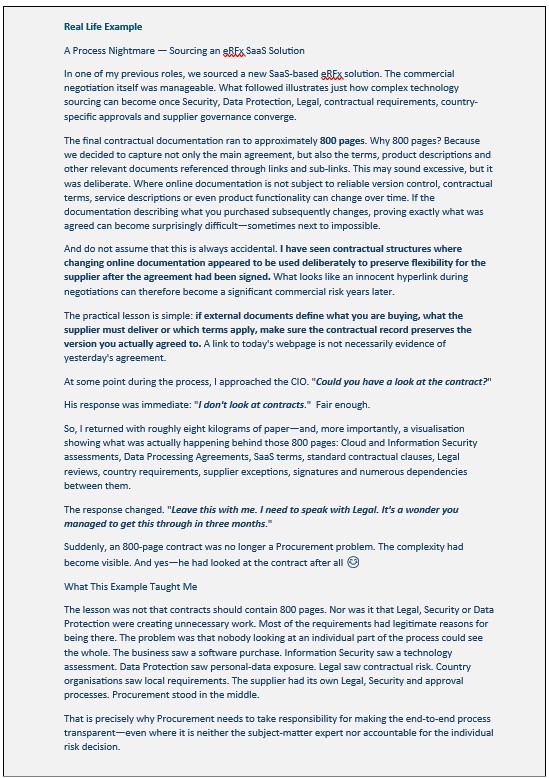
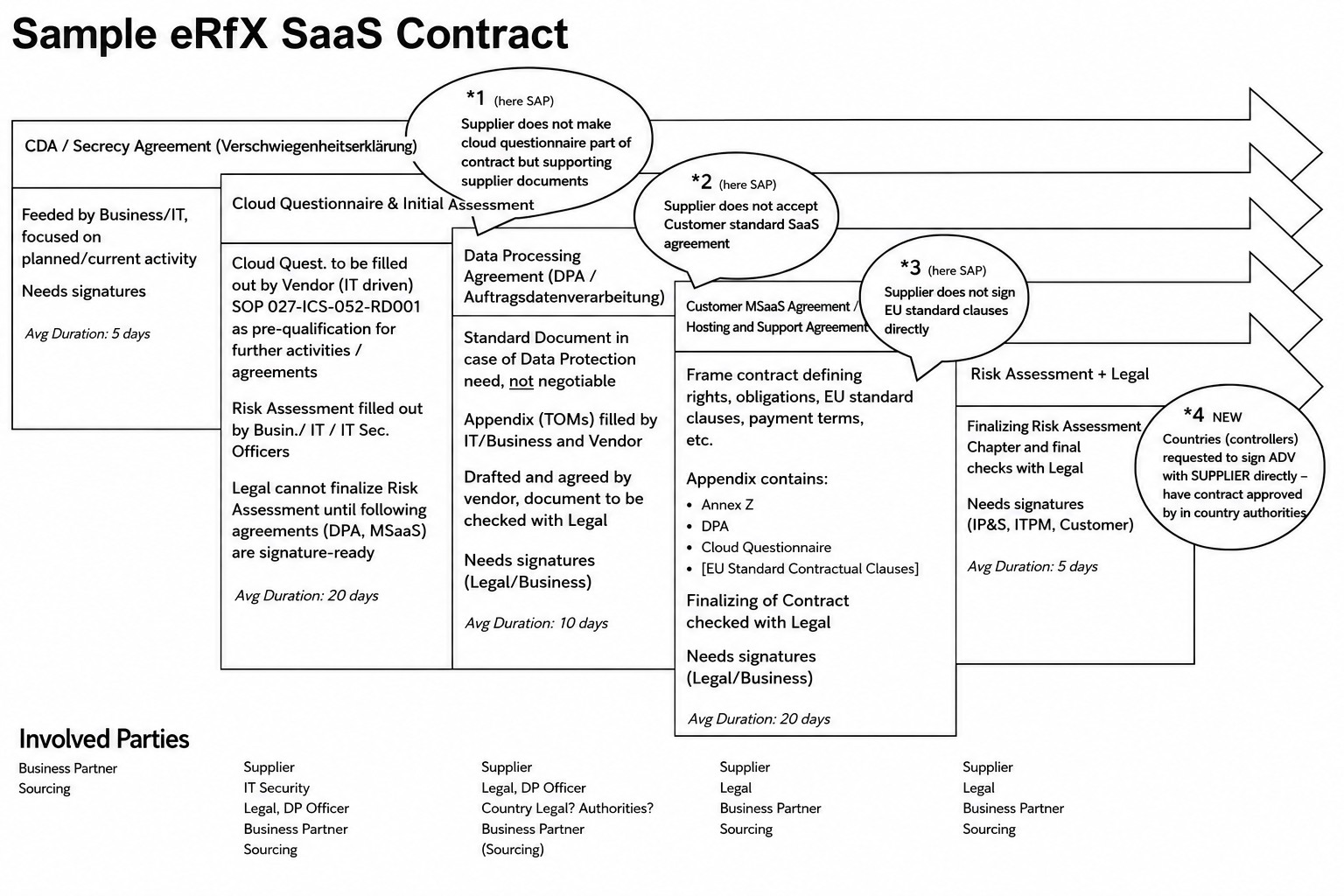
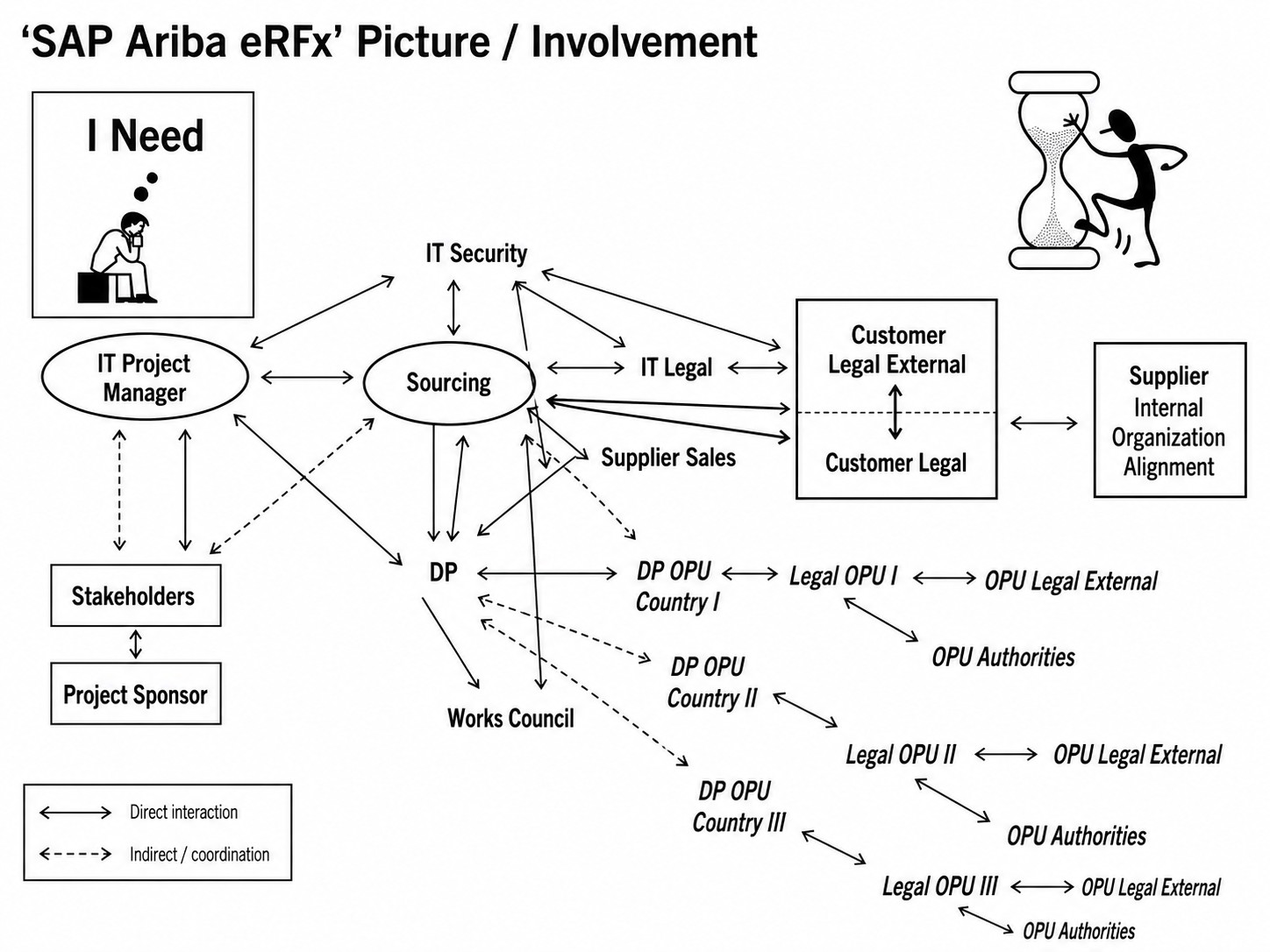
What looks like a single software purchase from the business perspective can involve dozens of interdependent assessments, approvals and negotiations. Without end-to-end transparency, Procurement becomes the perceived bottleneck; with transparency, the organisation can address the actual bottlenecks.
-------------------------------------------------------------------------------------------------------------------------------------------------------
Organizational set-ups are very diverse, by industry and by organization. Some organisations operate mature Enterprise Risk Management functions led by a Chief Risk Officer. Others distribute responsibilities across Legal, Compliance, Information Security, Internal Audit, Privacy, Finance or operational business functions. In highly regulated industries, dedicated risk teams often oversee formal governance and regulatory reporting. In others, risk management remains largely decentralised.
The purpose is not to suggest that Procurement should replace these functions or assume accountability for enterprise risk; it should not!
What Procurement can do, however, is something few other functions are positioned to achieve. Procurement sits at the unique intersection between business demand and external supply. It understands commercial relationships, supplier markets, contractual obligations, renewal cycles, technology dependencies and sourcing decisions. It sees how external market developments intersect with internal business priorities long before they become executive issues. This perspective is increasingly valuable because today's strategic challenges rarely fit neatly within organisational boundaries. A software renewal is simultaneously a commercial negotiation, an architectural decision, a cybersecurity consideration, a legal review, a data protection assessment, an ESG evaluation and, increasingly, a geopolitical question. Each function sees part of the picture.
Procurement is one of the few functions capable of connecting the dots.
That is the emerging role of the orchestrator. Visibility before accountability; the orchestrator does not own every decision, nor does it replace specialist expertise. Instead, it creates the transparency that enables better decisions
.Its contribution is to ensure that critical commercial questions are raised before options disappear.
For example:
· Have we become commercially locked into a single supplier?
· How exposed are we to geopolitical developments affecting this technology?
· Does this sourcing decision create long-term strategic dependency?
· Are there ESG implications that could affect our reputation or eligibility for future business?
· Have we evaluated realistic alternatives before renewing a strategic contract?
· Why has an innovation initiative spent six months navigating governance rather than delivering value?
These are not purely procurement questions. Neither are they purely legal, technical or compliance questions. They are executive questions that require integrated commercial insight.
Why This Matters
Ironically, Procurement is often the function that suffers most when this visibility is missing. It is asked to negotiate price increases after commercial leverage has already been lost. It is expected to identify alternative suppliers after years of technology concentration. It is challenged to accelerate sourcing while approvals remain fragmented across multiple functions; I have witnessed this in all organizations. It is criticised for innovation moving too slowly, despite having little visibility into where decisions are actually delayed or to influence the decision process in ‘black boxes’. Without transparency, Procurement is left reacting to problems it did not create.
With transparency, it becomes a strategic advisor capable of preventing many of those problems before they materialise. That shift fundamentally changes Procurement's value proposition. Rather than being measured solely by negotiated savings or sourcing cycle times, Procurement begins contributing to strategic resilience, innovation enablement and executive decision quality.
The future of Procurement is not owning risk. It is making commercial exposure visible.
----------------------------------------------------------------------------------------------------------------------------------------------
From Invisible Dependencies to Strategic Transparency
If Procurement's emerging role is to orchestrate transparency rather than own risk, the next question becomes obvious:
Transparency into what?
The answer is not a single risk register or another governance process. It is visibility into the commercial dependencies that shape an organisation's strategic freedom. Traditional procurement metrics have focused on spend under management, negotiated savings, sourcing cycle times or supplier performance. While important, these measures provide only a partial view of the organisation's exposure.
Today's executive teams increasingly need answers to very different questions.
· Where have we become commercially dependent on a single supplier?
· Which technologies have become strategically irreplaceable?
· Where could geopolitical developments disrupt our business?
· Which supplier relationships expose us to ESG or reputational risks?
· Which contracts may create unexpected financial liabilities?
· Which innovation initiatives are delayed because governance has become fragmented?
· Where are we gradually losing strategic freedom without recognising it?
These are not isolated risks. They are different expressions of the same underlying challenge:
Commercial Exposure.
Procurement is uniquely positioned to make these dependencies visible because it sits at the intersection of contracts, suppliers, markets and business demand. Visibility does not eliminate risk. It enables better decisions before risk becomes business disruption.
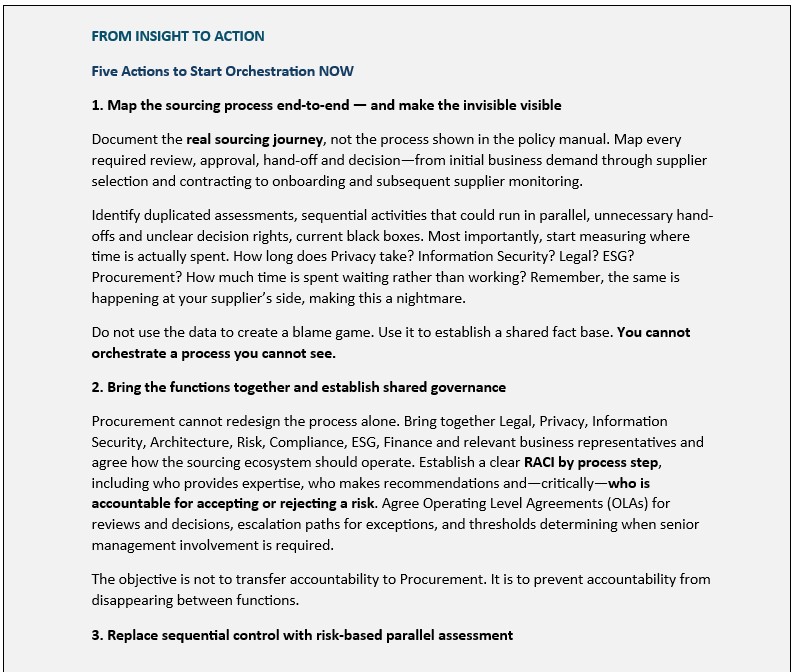
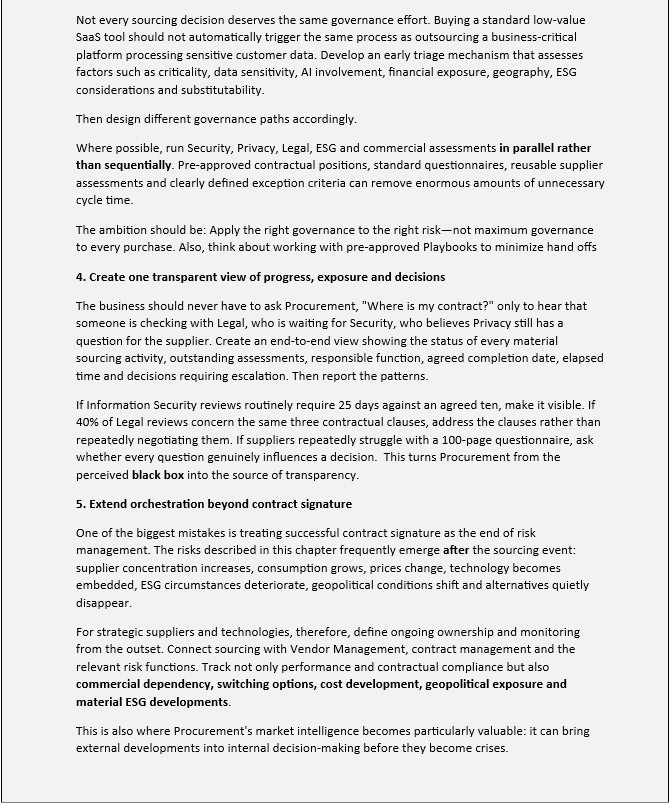
The objective is not to make Procurement accountable for every risk. It is to make Procurement responsible for ensuring that the sourcing process is transparent, orchestrated and capable of reaching timely decisions. Measure the process. Expose the bottlenecks and black boxes. Clarify accountability. Apply governance proportionately. Keep watching after the contract is signed. Because if nobody orchestrates the process, Procurement may not own the problem—but sooner or later it will be asked to solve it.
The following chapters therefore explore three dimensions of commercial exposure that have become increasingly important for executive leadership.
Chapter 8 discusses ‘Making Commercial Risk Transparent; How Procurement Turns Supplier Power into Strategic Decision Intelligence,
Chapter 9 discusses Geo Political Exposure,
Chapter 10 ESG, to conclude with key metrics to demonstrate the state of affairs to senior management and fuel strategic decision making. The key insight is that Procurement should no longer define itself in simply negotiating contracts; it has the opportunity to step up and orchestrate strategic alignment across functions to preserve the organization's freedom to act. It this way is leveraging its unique position and insights, is recognized and has a seat at the table.
8 - Making Commercial Risk Transparent
How Procurement Turns Supplier Power into Strategic Decision Intelligence
Markets are increasingly characterised by supplier concentration, technological lock-in and asymmetric commercial power, savings alone are no longer an adequate measure of value. Organisations need a structured approach to identifying, communicating and governing commercial exposure before it develops into financial, operational or strategic risk. For this some select questions and mitigations are suggested for contracting.
An important principle underpins the below approach: the objective of requesting stronger contractual protections is not necessarily to obtain them.
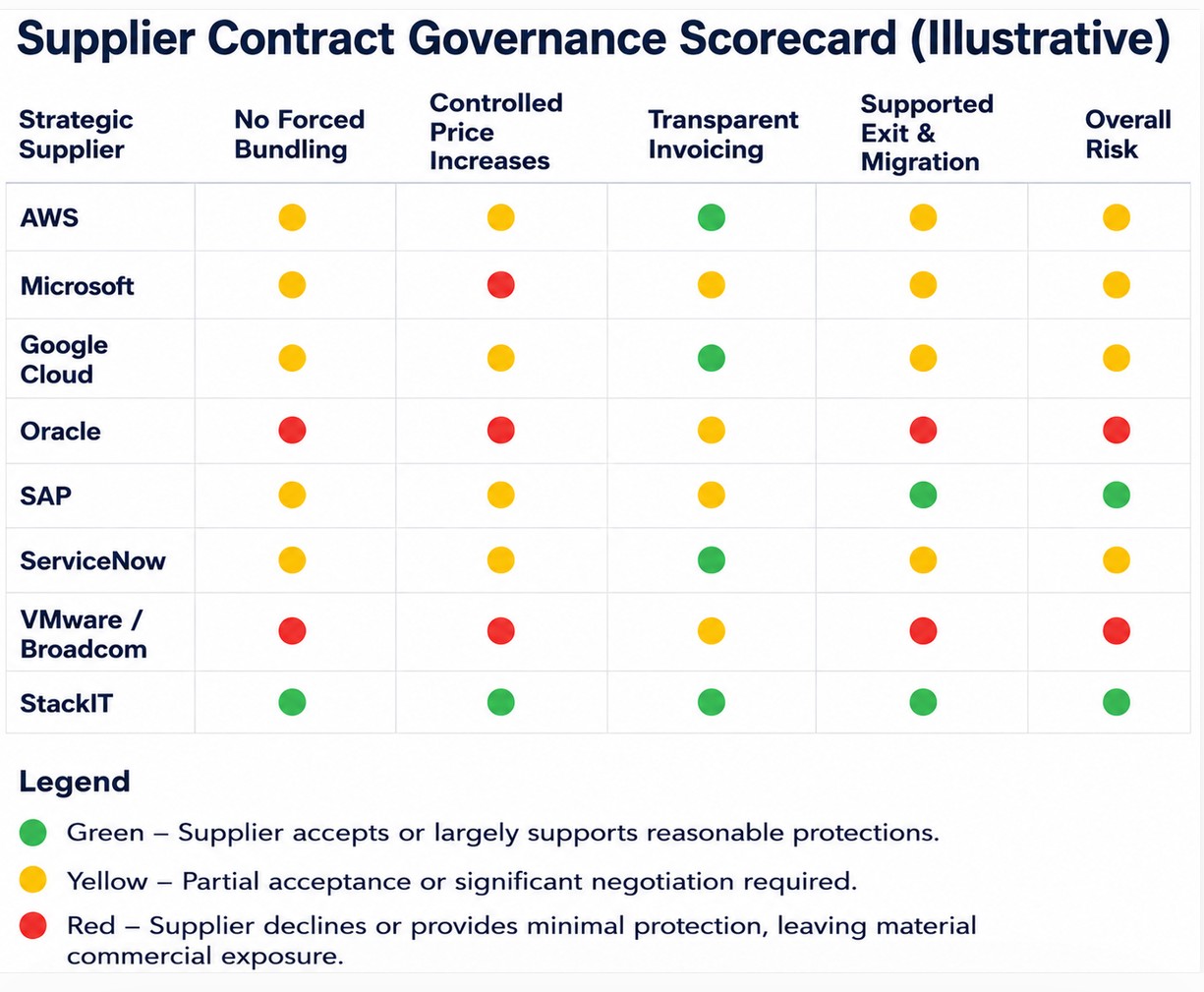
For many strategic suppliers—including Amazon Web Services (AWS), Microsoft, Google Cloud, Oracle, SAP and ServiceNow… — it can be expected that some or even most of the suggested requests will be negotiated down or rejected outright. That is precisely why Procurement should ask.
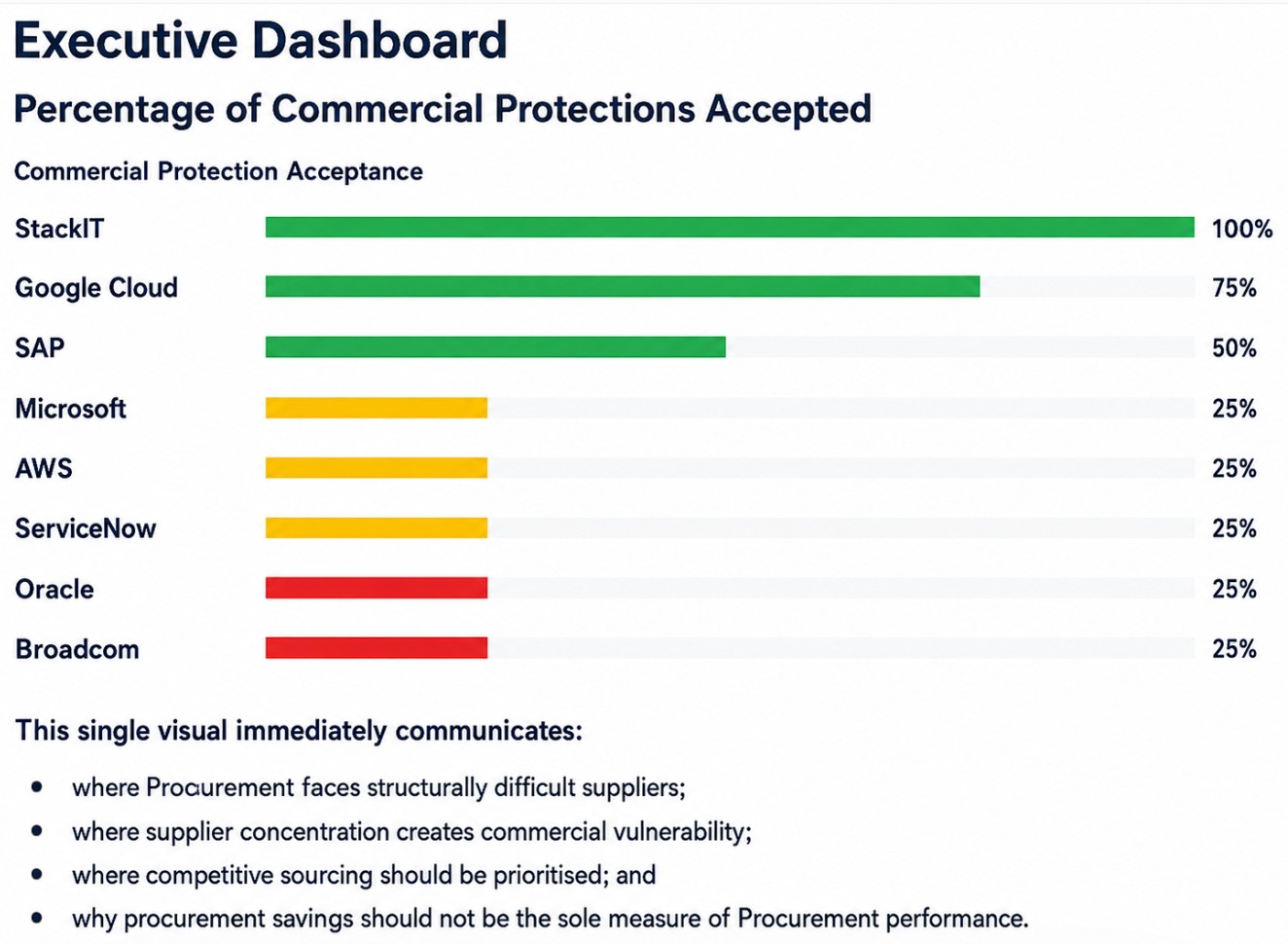
A supplier's willingness—or refusal—to accept reasonable commercial protections provides valuable intelligence about its commercial behaviour, the customer's dependency and the organisation's future exposure. Rather than viewing rejected clauses as unsuccessful negotiations, organisations should recognise them as indicators of strategic supplier risk requiring executive attention.
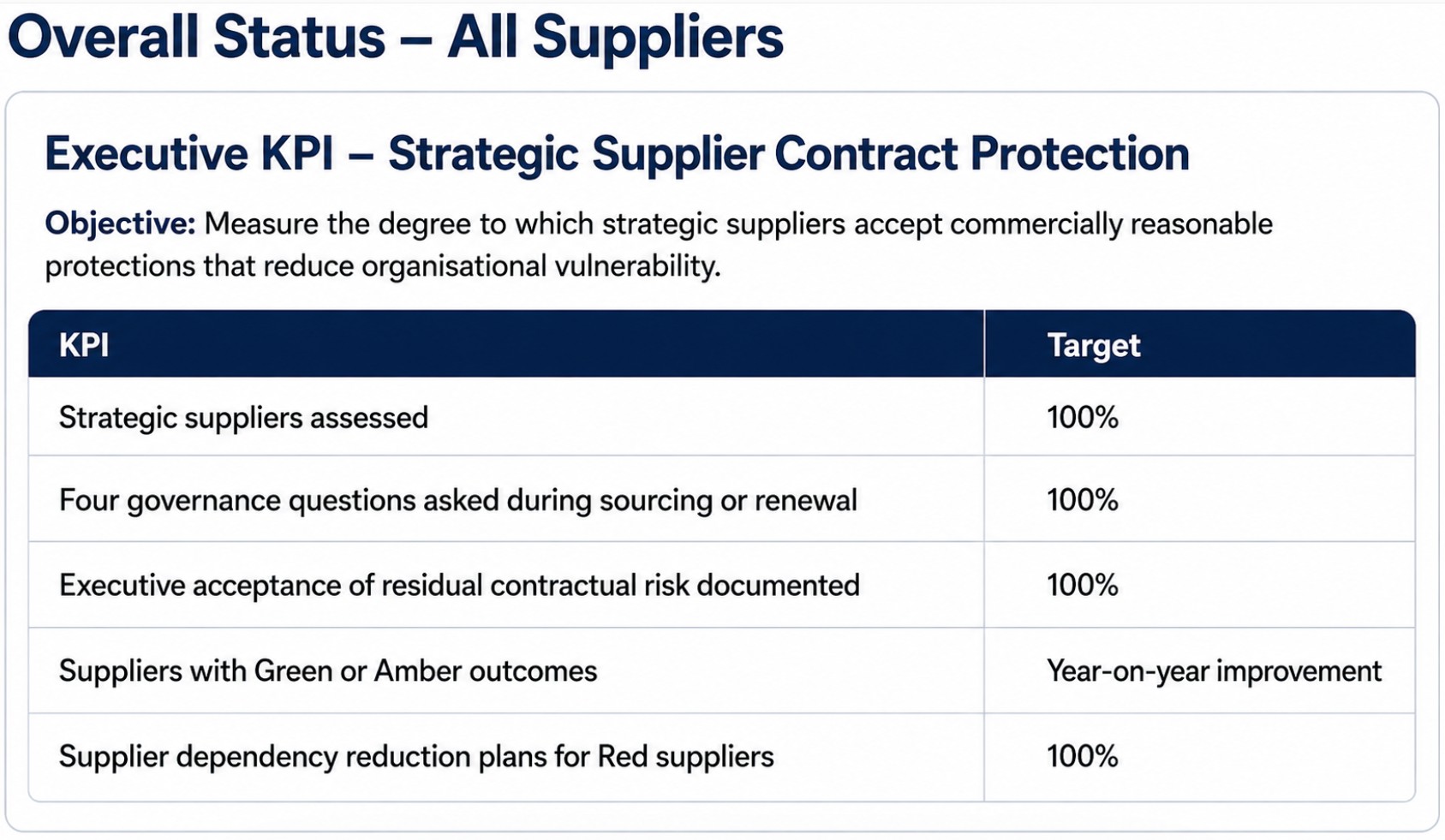
The governance questions, dashboards and KPIs presented in this chapter illustrate how Procurement can communicate these risks in a concise, executive-friendly manner. They raise senior management's awareness of supplier dependency, contractual exposure and emerging commercial vulnerabilities, while laying the foundation for implementing Risk Exposure & Commercial Management (RECM) as an enterprise governance discipline, see Playbook RECM in Chapter 22.
Rather than reporting and having to react on problems after they have materialised, Procurement identifies root causes, recommends mitigation measures and provides leadership with the transparency needed to make informed strategic decisions. This not only reinforces Procurement's role as a strategic value creator, but also helps establish realistic expectations regarding future savings. Once supplier behaviour, commercial exposure and available mitigation options have been made transparent, leadership can consciously balance cost optimisation against resilience, competition and long-term risk reduction.
-----------------------------------------------------------------------------------------------------------------------------------------------------------------
Four Governance Questions Procurement Should Always Ask to Heighten Transparency
Rather than debating complex legal language, Procurement can translate contractual protections into a small number of straightforward governance questions that expose supplier dependency, commercial vulnerability and potential lock-in before they become strategic problems.
The following four recommendations are deliberately practical. I have rarely seen these questions systematically tested in sourcing processes, yet I believe they should be—particularly when selecting technology providers on whom the organisation may become increasingly dependent. Add a few carefully chosen questions to your RFI or RFP, test the supplier's willingness to accept reasonable commercial protections, and record the answers.
Even where the answer is “No”, you have learned something valuable. The supplier's response itself becomes commercial intelligence—and a potential early-warning indicator of tomorrow's lock-in.
1. Prevent forced commercial bundling
Question
Will you commit that future packaging changes, SKU consolidation or mandatory product bundles will not increase our costs unless we explicitly approve the additional value?
Why it mattersMany suppliers increasingly replace existing products with larger bundles, forcing customers to purchase capabilities they neither requested nor require simply to continue operating existing environments.
VMware following its acquisition by Broadcom provides a striking real-world example. The move away from perpetual licences, consolidation of thousands of SKUs into a small number of subscription bundles and changes to licensing metrics left some customers facing dramatically higher renewal costs. Reported increases have ranged from several hundred percent to, in individual cases, as much as 1,200%—potentially translating into millions in additional expenditure for large enterprise environments. Source: ITAM Review: VMware customers face reported 1,200% price rises
This is precisely why Procurement should challenge forced bundling before dependency becomes leverage in the hands of the supplier. Once the technology is deeply embedded and switching costs are prohibitive, the question may no longer be whether you accept the supplier's new commercial model—but whether you can realistically afford not to.
Procurement should establish the principle that the supplier does not determine what constitutes value—the customer does.
If a supplier refuses this principle, leadership should recognise the increased exposure to future commercial lock-in.
2. Limit arbitrary price increases
Question
Will you agree that new functionality, AI capabilities, licensing model changes or packaging changes cannot automatically increase our costs unless we approve both the business value and associated budget?
Why it matters
Subscription licensing has fundamentally altered commercial relationships. Customers no longer purchase software. They rent access—and increasingly depend on services that may be difficult or costly to replace.
Adobe provides a useful recent example. The company renamed its Creative Cloud All Apps offering to Creative Cloud Pro, incorporated expanded generative AI capabilities and (significantly) increased pricing, explicitly explaining that the new price reflected the additional functionality and value being provided. For many customers, however, this raises a fundamental commercial question: What if I did not ask for the additional AI functionality, have not established its business value and have no corresponding budget? A lower-priced Creative Cloud Standard option was introduced for many customers, but with reduced functionality and more limited access to generative AI, web and mobile capabilities. The customer's choice may therefore no longer be between the existing product at the existing price and an enhanced product, but between paying more for additional functionality or accepting a different, reduced offering.
This is precisely the commercial dynamic Procurement should seek to address contractually. Suppliers should not have an unrestricted ability to add functionality, declare that it creates value and then unilaterally convert that asserted value into additional customer spend.
Reasonable annual index-linked increases may be acceptable. Uncontrolled supplier discretion over what constitutes value—and what the customer must consequently pay—is not.
In my professional experience, including discussions with numerous procurement leaders and my work with Gartner research, I have seen growing concern around the commercial implications of AI functionality being incorporated into existing software offerings, often accompanied by changes to packaging, licensing and pricing.
3. Is there full and complete commercial invoice transparency?
Question
Will you provide sufficiently detailed invoicing and usage information that allows every significant charge to be independently verified and allocated appropriately internally?
Why it matters
Large cloud and AI invoices are becoming increasingly difficult to reconcile. Without sufficiently granular consumption and billing data, Procurement and Finance may know how much they are paying without being able to establish precisely what they are paying for, why the cost increased, or who internally caused the consumption.
I encountered a striking example in a client discussion involving Microsoft AI-related services. Monthly charges had increased from approximately €10,000 to €100,000—a tenfold increase. Yet the client told me that the supporting billing and consumption data available to them was insufficient to fully validate the increase or reliably allocate the costs to the internal consumers responsible for generating them. That also meant the organisation could not use chargeback or transparency to influence consumption behaviour.
Making matters considerably more uncomfortable, the budget sat with the CPO, while the CFO was understandably asking questions. According to the client, when greater predictability was sought, the supplier's response was effectively:
“Budget €3 million for next year and you should be safe.
”Safe? Perhaps for the supplier's revenue forecast. Certainly not for Procurement's budget.
The example illustrates why invoice transparency is much more than an administrative requirement. If Procurement owns or influences the budget, it needs the information to validate, forecast, allocate and ultimately influence consumption. A supplier unable or unwilling to adequately explain significant charges should not expect them simply to pass unquestioned through the organisation.
Commercial transparency should therefore be treated as a governance requirement—not an optional reporting feature.
4. Is there exit support if products are changed at will?
Question
If you discontinue, merge, repackage or materially change your services, will you support our migration and share the reasonable costs where your unilateral decision creates the need to move?
Why it matters
Technology suppliers frequently sunset products, consolidate platforms or move customers onto different technical and commercial models. Exit and transition rights should therefore be negotiated before they become necessary. An organisation's ability to migrate—and clarity over who bears the cost—directly affects its negotiating leverage.
I encountered a particularly frustrating example in a client discussion. The organisation was in the middle of planning the rollout of Microsoft Viva project-management functionality when, according to the client, Microsoft informed them that the relevant product functionality was to be sunset. Significant funds and internal resources had already gone into the project, with further rollout activities planned.
Think about the commercial consequence: the customer invests based on the supplier's product offering and roadmap, but the supplier retains the ability to change that roadmap. The customer may then be expected to absorb the resulting stranded investment, replanning and migration costs.
That raises a very simple Procurement question:
If your decision creates my migration problem, why should I automatically pay the entire bill?
This does not mean that every supplier will accept responsibility for those costs. Many will not. But ask the question. Negotiate the protection. Document the answer. And make the resulting exposure visible. A refusal is itself valuable information about the dependency you are entering into.
The best time to negotiate your divorce is before the wedding.
Expect Strategic Suppliers to Say "No"
Large technology vendors have every commercial incentive to preserve flexibility.Typical responses include:"These are our standard terms.""Nobody else asks for this.""Our licensing model doesn't allow it.""This isn't commercially available."These responses should not discourage Procurement. Instead, they provide valuable information.A supplier unwilling to accept reasonable protections against forced bundling, unexplained charges, uncontrolled price increases or supplier-created migration costs is revealing how it intends to exercise commercial power. The negotiation itself therefore becomes a valuable supplier risk assessment.
Suggested Dashboard Structure (sample)
Why These Dashboards Matter
Similar dashboards should become part of regular executive reporting because it delivers far more than legal compliance.
1. Competitive Supplier Analysis
They highlight which strategic suppliers demonstrate greater commercial flexibility and which consistently rely on market dominance. This intelligence can influence future sourcing decisions and supplier selection.
2. Dependency and Digital Sovereignty
Where multiple critical suppliers consistently score Red, leadership gains visibility into systemic dependency. This supports broader initiatives around digital sovereignty, multi-cloud strategy, open standards, data portability and realistic exit planning.
3. Procurement Performance
Perhaps most importantly, the dashboard helps reset expectations of Procurement. Procurement cannot always negotiate better pricing with dominant suppliers, nor can it always secure preferred legal clauses. However, Procurement can identify commercial risk, challenge unreasonable supplier behaviour, document residual exposure and provide management with the transparency required to make informed strategic decisions.
That is measurable value.
This can lead to a better Conversation. Instead of being asked, as Procurement; "How much did we save?", executive leadership will increasingly ask:
Which suppliers refused reasonable contractual protections?
Where are we commercially locked in?
Which dependencies present the greatest strategic risk?
Which suppliers should we actively seek to replace or diversify over time?
Where should architecture, technology and procurement jointly invest to reduce future dependency?
In an era of increasing supplier concentration, Procurement's role extends beyond negotiating discounts. It is about protecting the organisation's commercial destiny through transparency, informed governance and deliberate reduction of dependency.
The four questions are simple. The answers are not.
And those answers may be among the most valuable intelligence Procurement can provide to the business.
They lead to furthered awareness which is required to gain enhanced support for RECM, the Playbook we discuss in Chapter 22, and that needs management attention, support and funding.
Appendix B – Suggested Commercial Clauses (Illustrative Only)
DisclaimerThe following clauses are intended solely as examples of commercial principles that organisations may wish to discuss with strategic software, cloud and AI suppliers.
They are not legal advice, are not intended to be adopted without review, and should always be assessed and adapted by appropriately qualified legal counsel to reflect applicable law, the organisation's risk appetite, regulatory obligations and specific commercial circumstances.
The purpose of these examples is to encourage discussion around commercially reasonable protections—not to prescribe standard contractual wording.
1. Protection Against Forced Bundling
The Supplier shall not require the Customer to purchase additional products, modules, subscriptions, services, packaging changes or functionality as a condition of continuing to use products or services previously contracted. Any proposed increase in scope resulting from packaging changes or SKU consolidation shall require the Customer's prior written approval following demonstration of the associated business value.
2. Protection Against Unapproved Price Increases
No increase in pricing arising from product enhancements, AI functionality, licensing model changes, subscription restructuring or packaging modifications shall apply unless expressly approved in writing by the Customer. Annual price adjustments shall not exceed the agreed contractual index or percentage cap.
3. Billing Transparency
The Supplier shall provide sufficiently detailed invoices and usage reports to enable reconciliation of charges against contracted prices, licences, users, consumption metrics and cost centres. Where adequate supporting information has not been provided, the Customer may withhold genuinely disputed amounts until satisfactory clarification has been received without such withholding constituting payment default.
4. Product Changes and Exit Assistance
Where the Supplier sunsets, discontinues, replaces, materially changes or merges any contracted product or service, the Supplier shall provide reasonable advance notice, continued support during transition, data portability, relevant documentation, API access where applicable and commercially reasonable migration assistance. Where migration is primarily necessitated by the Supplier's unilateral decision, the Supplier shall bear the reasonable incremental costs directly attributable to that transition.
5. Executive Governance Principle
If a supplier refuses one or more of these protections, Procurement should document, the requested protection, the supplier's response, the resulting commercial exposure, proposed mitigation measures and executive acceptance of any residual risk. If there is a sperate and strong enterprise Risk Function this should be fed in as input.The refusal itself should be considered an important input into supplier risk assessment and future sourcing strategy.
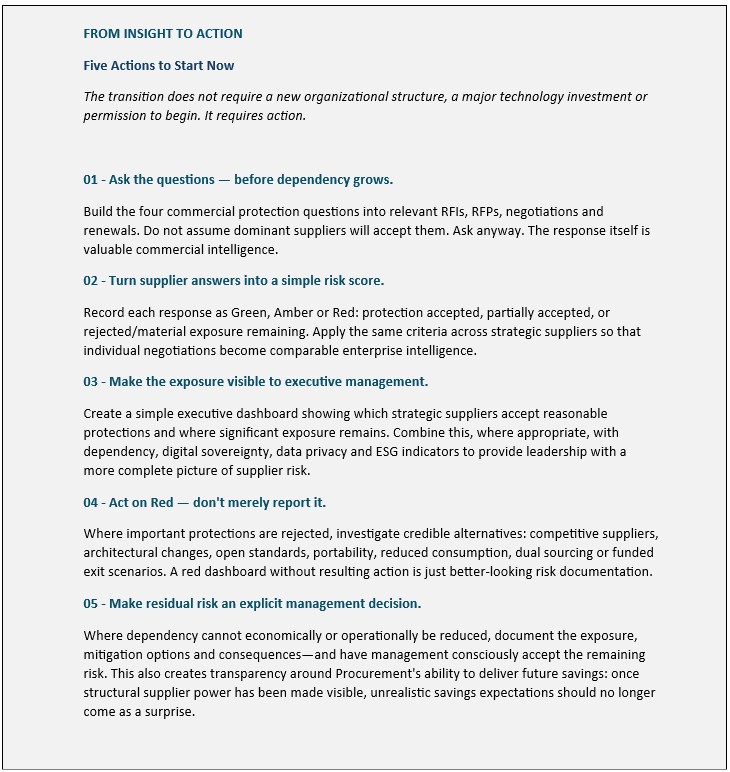
9 - Sovereignty, Geo Risk & Tech Dependency
Why Procurement Must Manage Geopolitical ExposureWhy Procurement Must Manage Geopolitical Exposure
Executive Message
For decades, procurement evaluated suppliers based on cost, quality, innovation, delivery capability, financial stability and operational risk. This is no longer sufficient. Technology suppliers increasingly operate inside geopolitical conflicts where sanctions, trade disputes, export controls, digital regulations and national security policies directly influence commercial relationships. A cloud provider, AI platform, software vendor or telecommunications supplier may become unavailable—not because of technical failure—but because of political decisions made thousands of kilometres away. Technology has therefore become a strategic dependency. Procurement is no longer simply buying technology. It should evolve and assist managing geopolitical exposure.
9.1 Why This MattersDigital infrastructure has become part of national critical infrastructure.Cloud platforms, AI services, Identity services, Email, Productivity suites, Payment platforms, Cybersecurity, Telecommunications are increasingly viewed by governments as strategic assets rather than purely commercial products.The consequence is significant; political decisions now influence technology availability. Examples include export controls, sanctions, cloud access restrictions, software licensing restrictions, technology embargoes, forced localisation, data access requirements, tariff disputes as well as retaliatory trade measures as we have witnessed by the US Admin in response to EU fines for Google breaching competition laws, and this not being the first time.A supplier such may continue operating perfectly from a technical perspective while becoming inaccessible for legal or political reasons.This changes the nature of procurement risk.

You are confident critical Microsoft services will not be disrupted? Bill Gates is not!
Source: https://www.svt.se/nyheter/utrikes/bill-gates-om-europas-techoro-var-saker-fram-till-nyligen
9.2 Technology Has Become a Geopolitical Instrument
Recent years have demonstrated a clear trend. Technology is increasingly used as an instrument of foreign policy. Examples include semiconductor export restrictions, sanctions on financial institutions, cloud service suspensions, restrictions on AI model exports, telecommunications bans, digital service taxation disputes, cross-border data transfer restrictions. These events illustrate that technology providers can become subject to geopolitical decisions outside the control of either supplier or customer. The risk is therefore not necessarily the supplier. The risk is dependency without alternatives.
9.3 The National Security Dimension
The United States National Security Strategy (NSS) explicitly recognises technological leadership, critical infrastructure, semiconductors, AI, cyber capability and economic competitiveness as strategic national interests. Likewise, the European Union's Digital Decade, European Economic Security Strategy, Cybersecurity Strategy, Data Act, AI Act, NIS2, Digital Markets Act all recognise technology as an element of sovereignty rather than merely an economic asset. This convergence is important. Governments increasingly view technology as strategic infrastructure. Consequently, procurement decisions now have implications beyond operational efficiency—they influence organisational resilience and strategic autonomy.
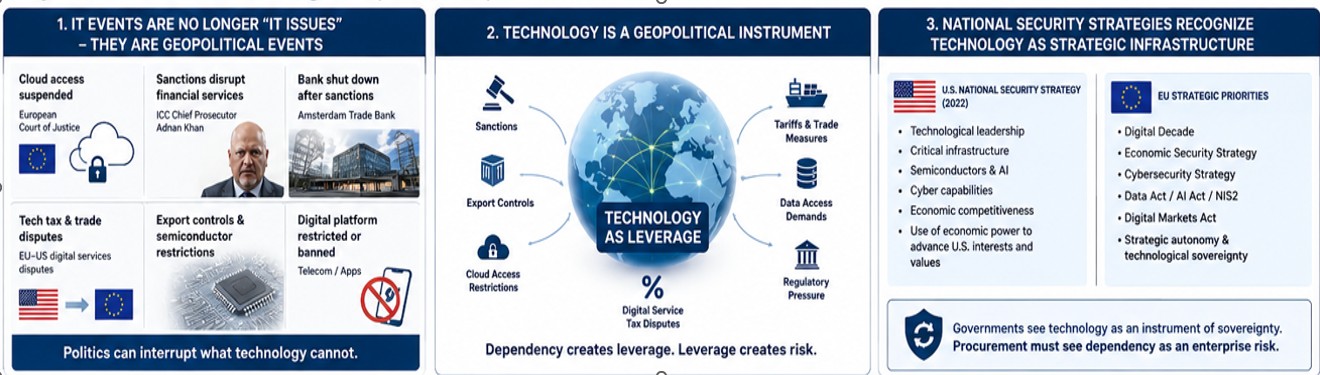
9.4 From Vendor Risk to Geopolitical Exposure
Traditional vendor risk considers questions such as
o Can the supplier deliver?
o Is the supplier financially stable?
o Is cybersecurity adequate?
o Are there operational continuity plans?
These questions remain essential; however, they are no longer sufficient. Organisations must also ask:
o What happens if political developments interrupt access?
o Could sanctions affect service delivery?o Which country's laws ultimately govern our data?
o Could export controls restrict future functionality?
o Could diplomatic conflict interrupt licensing or support?
o How quickly could we migrate?
These questions define geopolitical technology risk.
9.5 Economic Sovereignty — Follow the Money
Technology sovereignty is not only about where data resides or who controls the infrastructure. It is also about where the economic value created by technology expenditure ultimately goes.
A supplier may generate billions in revenue from a country or region while profits, intellectual-property revenues and taxes are recognised elsewhere. For private-sector Procurement this deserves transparency; for public Procurement, where taxpayers' money is being spent, the question becomes even more relevant. Governments should at least understand the economic and fiscal footprint created by major technology awards before committing public funds.
Procurement could therefore ask major suppliers to disclose, where legally permissible and on a consistent basis:
- What are your global and regional revenues?
- What is your global and regional profitability or operating margin?
- How much revenue do you generate in the country in which we are contracting with you?
- How much corporate income tax do you actually pay in that country and region?
- Where are profits generated from our market ultimately recognised and taxed?
- What proportion of the economic value created remains within the region through taxation, employment, investment, R&D and local suppliers?
The objective is not to become the tax authority, nor to accuse suppliers of wrongdoing. Tax optimisation can be entirely legal and still be relevant to a sourcing decision. The purpose is transparency: understanding whether an organisation—or a government—is simultaneously creating technological dependency, transferring substantial economic value abroad and weakening the domestic or regional ecosystem it expects to remain resilient.
Public Procurement should ask not only:
"What does this technology cost us?" but also:
"Where does the money go, what economic value comes back, and what dependency are we financing with taxpayers' money?
Make it a sourcing criterionI
9.6 Procurement's New Responsibility
Procurement cannot control geopolitics—and it cannot predict the next sanction, trade dispute or political intervention. What it can influence is the level of dependency the organisation chooses to create and the transparency surrounding it.
This represents an important evolution of Procurement's strategic role. When evaluating new solutions and managing existing suppliers, Procurement should help identify critical technological, jurisdictional, commercial and economic dependencies, connect the relevant perspectives across the organisation, and translate them into potential business impact. Its role is not to own geopolitical risk, but to make exposure visible and ensure it becomes part of informed decision-making.
The objective is therefore not to predict political events. It is to ask "What if?" before a dependency becomes critical: What if access is restricted, sanctions intervene, regulation changes, costs become unsustainable, or an exit is suddenly required?
Preparing for plausible scenarios gives the organisation something geopolitics may otherwise take away: choice. And preserving choice should become an important consideration in sourcing strategy, supplier selection and ongoing vendor management.
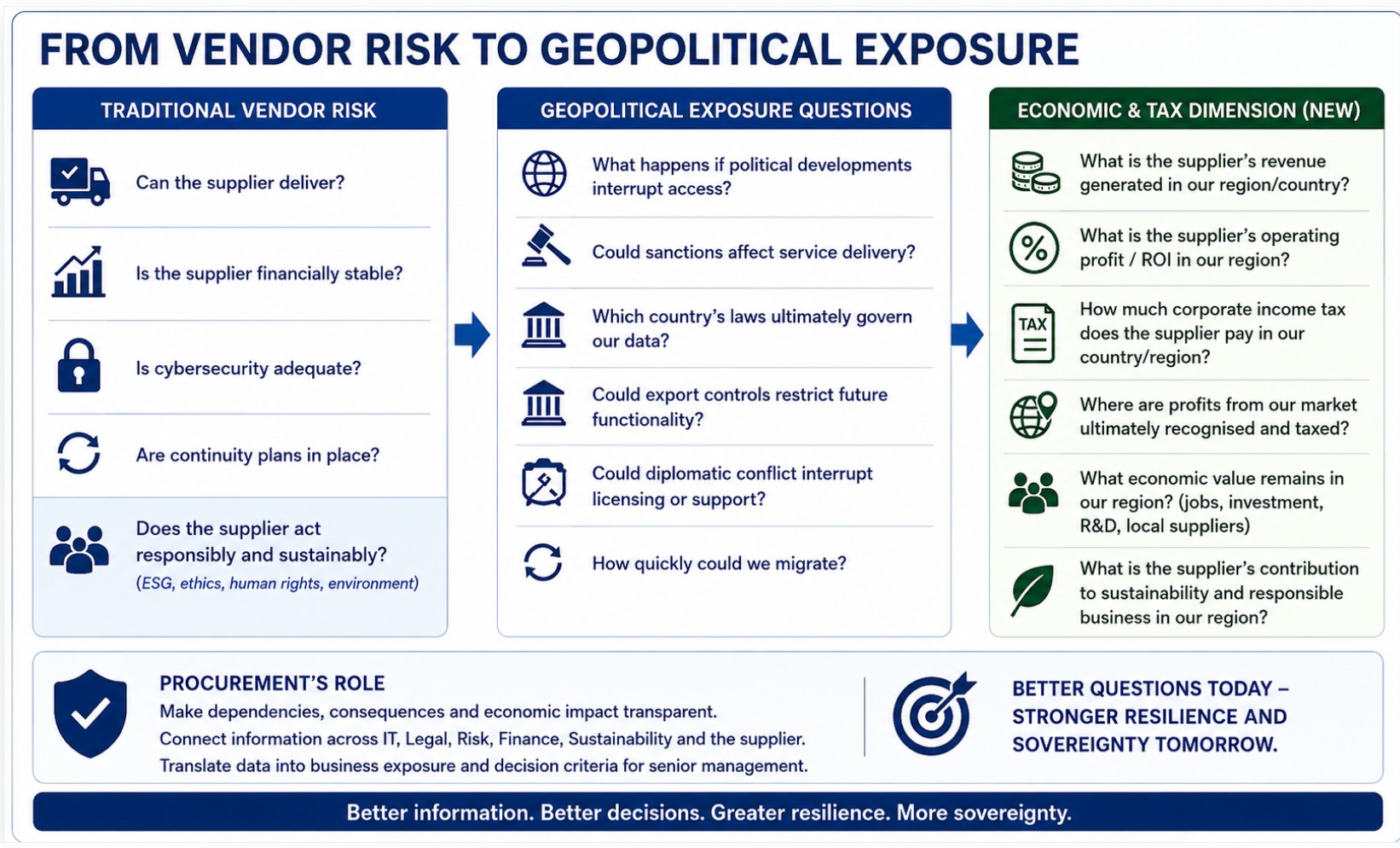
9.7 Building a (Geo-)Technology Risk Register
One practical mechanism is the establishment of a Geo-Technology Risk Register. Unlike technical risk registers, this focuses on strategic exposure. Typical categories include:
Jurisdiction Risk
Which legal system ultimately governs the supplier? Which governments may compel access to data or services?
Sanctions Exposure
Could sanctions affect service delivery, support, software licensing, payment processing, cloud availability
Digital Sovereignty
Where is data stored? Who controls encryption? Who controls identities? Can operations continue independently?
Vendor Concentration
How dependent is the organisation on one supplier? Would switching be feasible? What would migration cost?
Lock-in Risk
Use of proprietary APIs, AI platforms, cloud-native services, licensing, identity systems
Exit Readiness
Has an exit strategy been tested? How long would migration take? Is data portable?
Economic & Fiscal Sovereignty
Where is the economic value generated from our expenditure ultimately retained? What revenues and profits does the supplier generate in our country or region, and where are those profits recognised and taxed? What corporate income tax, employment, investment, R&D and local economic contribution remain in the region? Does our sourcing decision strengthen the regional economic and technology ecosystem—or contribute to economic and fiscal erosion while increasing dependency?
Political Sensitivity
Could the supplier become affected by trade disputes, export controls, new regulations, government investigations…
One practical mechanism is the establishment of a Geo-Technology Risk Register. Unlike traditional technical risk registers, this focuses on strategic exposure across jurisdiction, geopolitics, technological dependency, economic sovereignty and resilience. It does not suggest that Procurement owns these risks; it makes otherwise disconnected exposures visible and translates them into decision criteria for management.
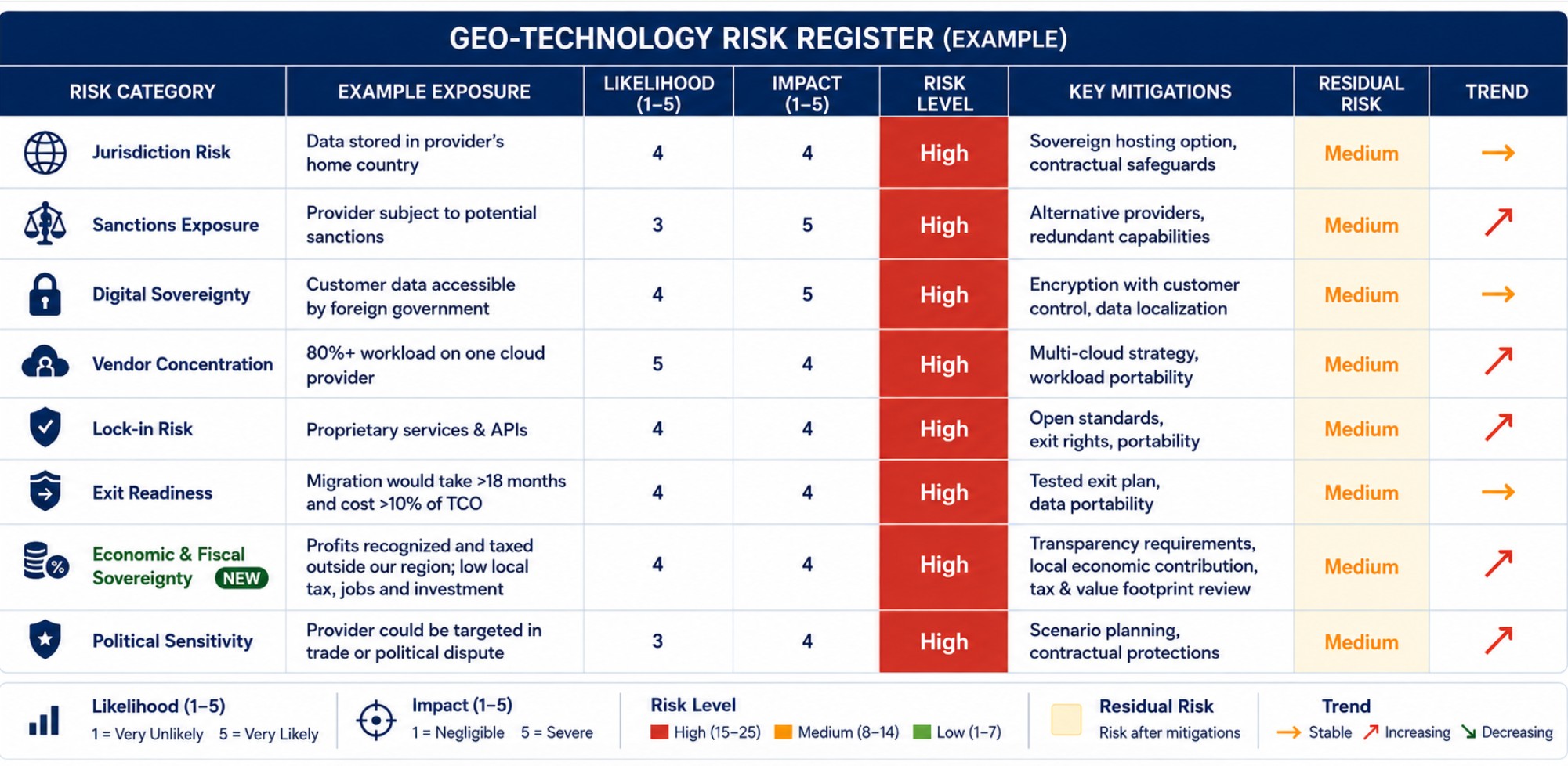
9.8 Translating Technical Risk into Executive Language
One of Procurement's most valuable contributions is translation. Executives rarely need another layer of technical architecture or supplier detail. They need to understand business exposure, potential consequences and the decisions that may be required.
· Instead of reporting: The vendor uses proprietary APIs, Procurement should translate this into: High switching costs could delay migration or recovery by 18 months if geopolitical restrictions interrupt service.
· Instead of: Data is hosted in Region X, report: Critical customer data remains subject to a foreign jurisdiction, creating potential legal, regulatory and continuity exposure.
· Instead of: We operate a single-cloud deployment, report: Revenue-generating operations depend on the continued availability of a single provider and geopolitical jurisdiction.
This transformation turns technical observations into enterprise-relevant decision criteria.
Importantly, this does not mean Procurement assumes ownership of technology, geopolitical, legal or enterprise risk. Its role is to make dependencies and their potential consequences transparent, connect information that often sits disconnected across IT, Legal, Risk, Security, Finance and the supplier organisation, and orchestrate the discussion.
The value lies in transforming fragmented data into information, information into business exposure, and business exposure into decision criteria that senior management can act upon. That is a much more powerful role than simply adding another column to a supplier scorecard.
9.9 Governance, Responsibility — and the Courage to Take a Stance
This chapter is not an argument against any particular country, geography or supplier. It is an argument for governance — but governance alone may no longer be enough. Procurement can step up and become one of the organisation's consciences for a sustainable, resilient and responsible future.
Every major technology decision creates dependencies and, increasingly, consequences beyond the organisation itself. Where our data resides, whose laws govern it, which technology ecosystems we strengthen, how much competitive choice we preserve, what environmental footprint we accept, and whether our investments strengthen or weaken the societies and economies in which we operate are no longer purely technical or commercial questions. They are also questions of responsibility.
This does not mean Procurement should become political, nor does it mean rejecting suppliers because of their nationality. It means having the courage to make the full consequences of a sourcing decision visible — including geopolitical concentration, sovereignty, sustainability, ethical considerations and long-term societal impact — and ensuring that these factors receive a voice alongside price, functionality and short-term convenience.
Good governance recognises dependencies, documents exposure, assesses likelihood and impact, develops mitigation and regularly reviews risk. Responsible Procurement goes one step further: it asks whether creating a dependency is desirable in the first place.
Procurement already connects markets, suppliers, technology, economics, risk and internal stakeholders. That puts it in a unique position to orchestrate perspectives that otherwise remain disconnected. Procurement does not own all these risks, nor should it make societal or geopolitical decisions on behalf of the enterprise. But it can ensure that uncomfortable questions are asked before commitments are made — and that decision-makers understand not only what they are buying, but also what they may be giving up.
That, ultimately, is part of Procurement's responsibility for a sustainable future.
9.10 What Procurement Should Evaluate
During sourcing, contracting and ongoing supplier reviews, Procurement should broaden traditional vendor-risk assessment and ask questions such as:
Jurisdiction & Geopolitical Exposure. Which legal jurisdictions ultimately apply? Which governments could compel supplier actions, restrict access or influence service delivery? Could sanctions, export controls, trade disputes or political intervention affect our ability to operate?
Operational Resilience
Could geopolitical developments interrupt service, licensing, support or access to critical technology? Are contingency arrangements documented and tested? How long could the business continue without the supplier?
Data & Digital Sovereignty
Where are data, identities and encryption keys stored and ultimately controlled? Which jurisdictions can legally access them? Can critical workloads and data remain within required jurisdictions—and under whose operational control?
Commercial Resilience & Exit
What are the real switching costs and timescales? How portable are data, workloads and integrations? What contractual exit rights exist? Do we have a credible alternative—or merely a contractual right to leave that we could never realistically exercise?
Strategic Dependency & Concentration
Does this decision increase or reduce dependency on a supplier, technology stack or geography? Are credible alternatives available? Is interoperability preserved? Are we consciously creating a dependency that may become significantly more difficult or expensive to reverse later?
Economic & Fiscal Sovereignty
How much revenue and profit does the supplier generate in our country or region? Where are those profits recognised and taxed? What corporate income tax and broader economic contribution—employment, investment, R&D and local supplier expenditure—remain within the region? Does our expenditure strengthen the economic and technological ecosystem we depend upon, or predominantly transfer value elsewhere while increasing dependency?
Sustainability & Responsibility
Beyond contractual compliance, does the supplier's behaviour align with our organisation's sustainability, ethical and societal commitments? Are environmental and social impacts transparent and independently verifiable? Are we comfortable with the consequences of supporting this supplier and its ecosystem through our expenditure?
Executive Decision
Finally, bring the dimensions together: If senior management understood the full commercial, technological, geopolitical, fiscal and societal consequences of this decision, would we still make the same choice?
9.11 Key Takeaways
Technology has become strategic infrastructure. As a consequence, geopolitical exposure, digital and economic sovereignty, technological dependency and resilience are Procurement issues just as much as they are technology, risk or boardroom issues.
Procurement cannot predict the next geopolitical crisis, sanction, trade dispute or regulatory intervention. But it can identify dependencies, expose concentrations and lock-ins, assess jurisdictional and economic and fiscal exposure, and challenge whether these are acceptable. Most importantly, it can ensure that decision-makers understand the potential consequences before today's convenient sourcing decision becomes tomorrow's strategic vulnerability.
A Geo-Technology Risk Register provides a practical mechanism for connecting fragmented technical, legal, commercial, geopolitical and economic information and translating it into business-relevant exposure that executives and boards can understand and act upon. It makes visible not only where our technology and data reside, but also where control sits, where economic value flows, and what realistic alternatives remain.
But Procurement's opportunity goes further. It can and I argue it should take a stance. It can advocate for resilience, choice, fair competition, sustainability and responsible technology. It can ask whether our spending strengthens or weakens the economic and technological ecosystems we depend upon, whether an appropriate share of value and taxation remains in the markets generating that value, and whether short-term commercial advantage justifies long-term dependency.
This does not make Procurement the owner of geopolitical, fiscal or societal risk. It makes Procurement an orchestrator, a source of transparency—and potentially one of the organisation's consciences. Its role is to ask the questions others may not ask, make uncomfortable dependencies visible, and ensure that the full consequences of a sourcing decision are understood.
Ultimately, responsible Procurement should help ensure that what we buy today does not compromise our resilience, our sovereignty, or our freedom to decide tomorrow.
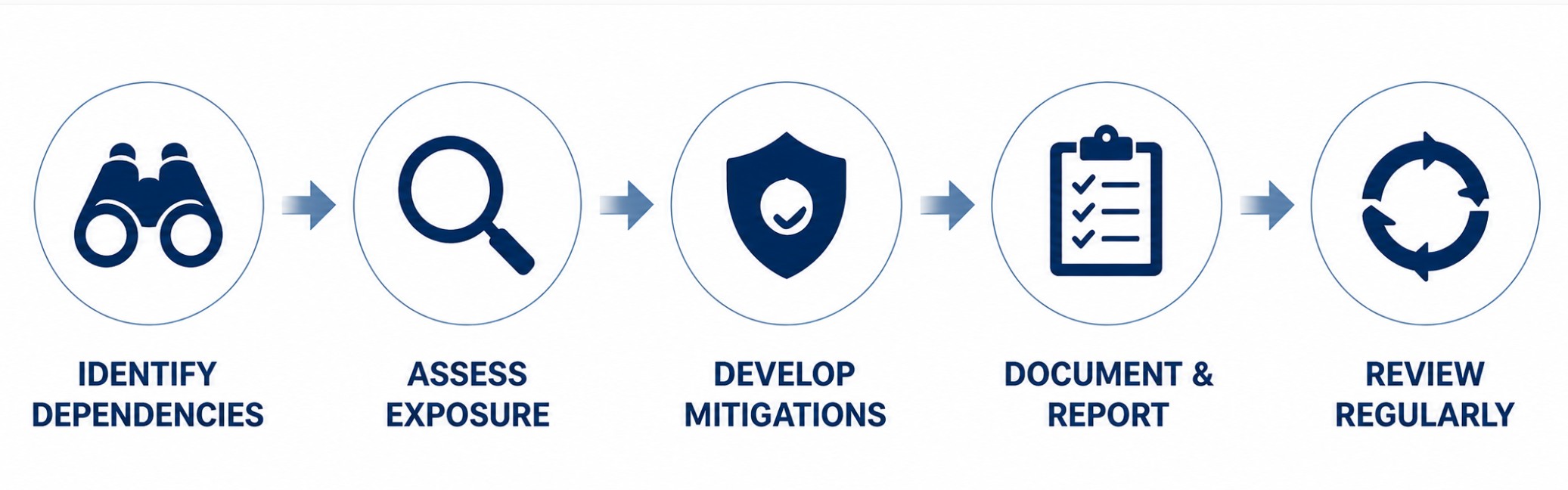
Insights to Action
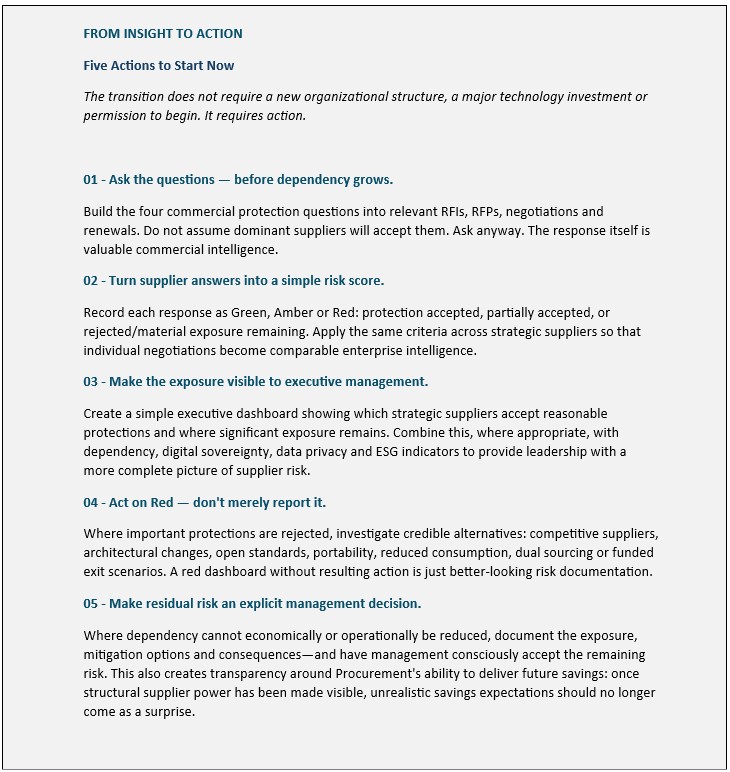
On Request: Sample Geopolitical Risk Assessment Grid - courtesy by Prof. Dr. Harald Wehnes
10 - Procurement's ESG Assurance Model
Procurement: Where Demand Meets Supply
Procurement occupies a unique position within every organization. It sits at the intersection of business demand and supplier capability, influencing not only what the organization buys, but also how global markets respond to that demand. Every sourcing decision sends a market signal. Suppliers invest where customers reward transparency, resilience and sustainability. Conversely, if customers prioritize only price and functionality, markets naturally optimize for those outcomes—even where environmental, geopolitical or social externalities remain hidden. This gives Procurement an opportunity extending far beyond cost reduction. It has the ability to shape supplier behaviour through commercial leverage. Trust Is Important. Verification Is Governance.
The objective is not to assume bad intent. Most suppliers operate within the legal and commercial frameworks available to them. Like every business, they have fiduciary obligations to shareholders and strong incentives to maximise profitability. We should not be naïve: cash is king. The uncomfortable reality is that this also creates incentives to identify and exploit loopholes—commercial, legal, regulatory, tax or reporting opportunities that may comply with the letter of the rules while stretching their original intent. Where significant commercial advantage can legitimately be gained through such a loophole, we should assume that sophisticated organisations will eventually find and use it. That is not necessarily misconduct; it is commercial reality. Procurement's response should therefore not be moral outrage, but transparency, evidence and intelligent challenge.
At the same time, if organisations are serious about ESG rather than paying lip service to it, Procurement must be prepared to look beyond headline commitments and ask more difficult questions. Corporate sustainability reports can tell us a great deal, but they should not be the end of our analysis. Procurement should examine the wider consequences of supplier decisions and ask whether those consequences are adequately recognised in the supplier's own environmental and social commitments.
Consider Windows 10. Research firm Canalys estimated that the end of Windows 10 support, combined with Windows 11 hardware requirements, could leave as many as 240 million PCs without a viable second life, potentially contributing significantly to electronic waste. Microsoft, meanwhile, has ambitious commitments to become carbon negative, water positive and zero waste by 2030 and reports extensively on its Scope 3 emissions. A responsible Procurement function should therefore feel entitled to ask: What environmental consequences arise when software and hardware requirements accelerate the replacement of otherwise usable devices? Where are those consequences accounted for? And what is the supplier doing to minimise them?
The same scrutiny should apply to cloud and AI infrastructure. Querétaro in Mexico has become an important data-centre hub while simultaneously experiencing significant water stress. Reporting has linked investments by major technology companies to the region and raised questions about water and electricity requirements and their impact on local communities. This does not by itself prove irresponsible behaviour by any individual supplier. It does, however, justify Procurement asking: Why was this location selected? How much water and energy will these facilities require? Where will those resources come from? What is the impact on local communities? What mitigation has been implemented—and can the supplier substantiate its claims?
This is where Procurement can make a difference. Sitting at the intersection between organisational demand and external supply, it has commercial leverage and increasingly, with AI, the analytical capability to compare supplier sustainability reports, annual reports, financial disclosures, regulatory filings, independent research and credible media investigations. Do not simply ask the supplier whether it is responsible. Compare what it says with what it does. Where inconsistencies emerge, Procurement should challenge them, request evidence and make unresolved questions visible.
We should not allow ESG to become a marketing competition in which the organisation with the most impressive sustainability report automatically receives the best score. We should ask better questions, demand evidence and make the answers—or the absence of answers—transparent.
Those findings should ultimately feed into the Executive Supplier Risk Dashboard. A Green ESG rating should not mean "the supplier published an impressive ESG report." It should mean: "We have examined the issues material to our relationship, challenged the supplier where necessary, considered credible external evidence and have sufficient information to substantiate this assessment." Conversely, where important questions remain unanswered, the dashboard should reflect that uncertainty rather than reward the supplier for the quality of its reporting.
Procurement does not need to become an environmental regulator, tax authority or moral judge. But it can—and should—provide a counterbalance to powerful commercial incentives by creating transparency where those incentives may otherwise favour opacity. Trust is important. Verification is governance.
If Procurement genuinely wants to contribute to responsible business, that responsibility cannot stop at the contractual boundary.
We have one planet. Responsible Procurement should be prepared to ask the questions that help protect it.That reality makes rigorous procurement governance essential.
Responsible Procurement therefore means verifying—not merely accepting—claims relating to Digital sovereignty, Sustainability, Responsible AI, Supply-chain resilience, Commercial fairness and Long-term customer rights. Trust is important, verification is governance and best practise.
ESG is no Longer an Environmental Exercise
For many organizations ESG has evolved into a strategic risk discipline. Questions around geopolitical dependencies, cloud concentration, resource consumption, forced technology refresh cycles, AI governance, supply-chain resilience, customer autonomy, all directly influence whether an organization can credibly claim to operate responsibly. Corporate values increasingly become procurement requirements. If they are not yet on the corporate agenda, procurement can make them transparent. We have one planet.
If an organization publicly commits itself to sustainability, responsible AI, ethical sourcing or digital sovereignty, procurement contracts should reinforce—not undermine—those commitments.
Procurement Keeps Markets Honest
Markets generally respond to incentives. If customers fail to ask difficult questions, suppliers have little commercial incentive to disclose uncomfortable information. Conversely, when procurement consistently requests:
· country-level energy and water consumption,
· independent ESG audits,
· lifecycle impacts,
· exit rights,
· data portability,
· transparent AI governance,
· sovereign operating models,
· responsible licensing,
these practices gradually become competitive differentiators. Transparency becomes a commercial advantage rather than a compliance obligation. This is how procurement helps raise industry standards.
From Compliance to Stewardship
Responsible procurement should not merely seek legal compliance; it should seek long-term stewardship. That means considering environmental impacts beyond contractual boundaries, geopolitical resilience, customer independence, societal impacts AND future generations.A sourcing decision today may determine infrastructure, emissions, technology lock-in and operational resilience for the next decade. Procurement therefore has a direct influence on both enterprise resilience and sustainable development.
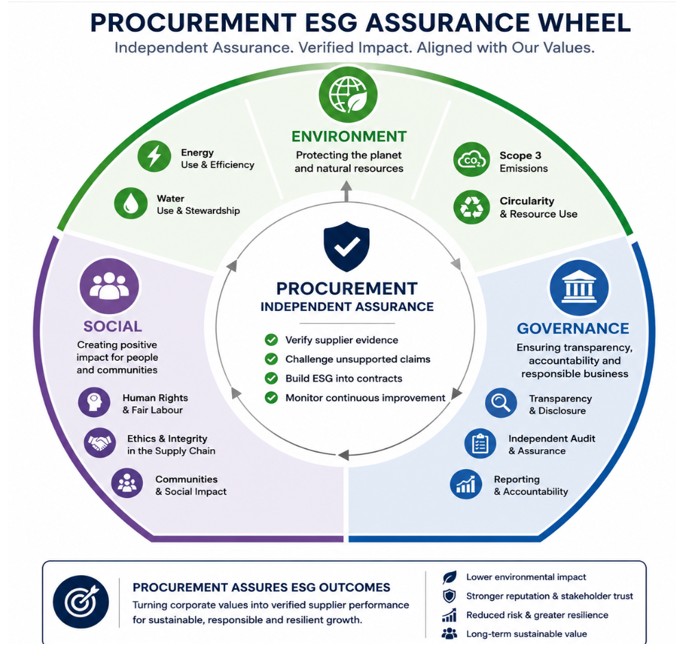
Conclusion
Bringing transparency to drive behaviour and enable educated decision making
For most strategic suppliers, senior management lacks a current, evidence-based view of the organisation's overall risk exposure. Commercial dependency, vendor lock-in, geopolitical developments and ESG risks are typically assessed in isolation, making it difficult to understand the supplier's true strategic risk profile or to prioritise investment and mitigation efforts. To bring this to the attention of senior management an easy to read and understand overview needs to be provided on a regular basis.An illustration for such a report is shown below…
SAMPLE ONLY
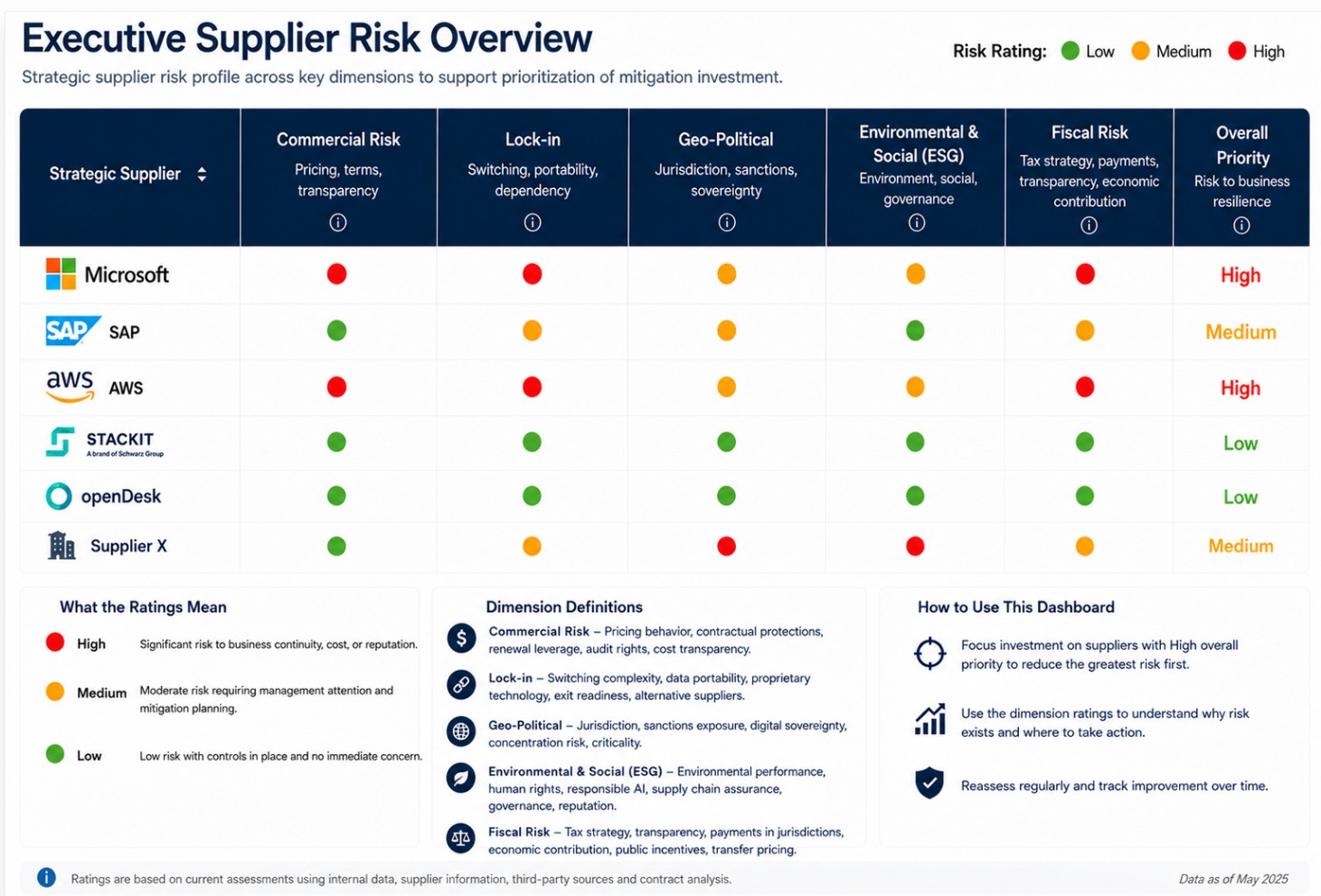
- This assessment provides the evidence needed to support Risk Exposure & Commercial Management (RECM – Chapter 21 ). By making supplier risk visible and comparable, it enables leadership to prioritise funding and mitigation activities based on strategic exposure rather than allowing them to be continually overtaken by short-term operational priorities. Each risk area would use a simple RAG (Red-Amber-Green) rating, but every rating should be substantiated, not subjective, i.e.
1. Commercial Exposure
Pricing behaviour and price escalationContractual protectionsRenewal leverageBilling and cost transparencyAudit and verification rightsSupplier willingness to accept reasonable customer protections
2. Lock-in & Dependency
Switching complexity and costData and workload portabilityProprietary technology and standardsExit readiness and tested migration capabilityAvailability and maturity of alternative suppliersTime required to establish a credible BATNA
3. Geopolitical & Sovereignty Exposure
Applicable jurisdictionsSanctions and export-control exposureData and digital sovereigntySupplier and technology concentrationCriticality to business operationsAbility to continue operations if geopolitical conditions change
4. ESG & Corporate Integrity
Environmental performance and resource consumptionHuman and labour rightsResponsible AISupply-chain assuranceLifecycle and circular-economy impactsReputational exposureConsistency between published ESG commitments and observable behaviour
5. Fiscal & Societal Contribution
Tax transparency and effective tax contributionJurisdictions in which revenues, profits and taxes are reportedUse of tax incentives and public subsidiesTransfer-pricing transparency where materialLocal economic contributionConsistency between corporate-responsibility commitments and fiscal behaviour
The fifth dimension is important because fiscal responsibility should not disappear inside ESG. A company can perform strongly against conventional environmental indicators while legitimate questions remain about where economic value is generated, where profits are recognised, where taxes are paid and what public support has contributed to the business.
Executive Summary
Rather than presenting dozens of KPIs, the dashboard should answer four simple executive questions:
Where are we most exposed?
Why are we exposed?
What evidence substantiates the assessment?
Where should we invest now to reduce future exposure?
For each supplier, include a short narrative such as:
Suplier XYZ – Overall Risk: High - Alternatives & Mitigation Action
Illustrative Example Microsoft
Microsoft — Overall Priority: High
The organisation's dependency on the Microsoft ecosystem creates significant commercial and technological exposure. Pricing developments, contractual flexibility and the difficulty and cost of switching should therefore be assessed together rather than treated as isolated renewal issues. Geopolitical and sovereignty exposure requires continued scrutiny given the strategic importance of Microsoft services and their underlying jurisdictional dependencies.
Environmental and fiscal assessments should go beyond published corporate commitments. Procurement should challenge how the wider lifecycle consequences of technology decisions are reflected in environmental reporting, including hardware replacement associated with technology obsolescence, and seek greater transparency around data-centre water and energy consumption in resource-constrained locations. Similarly, fiscal assessment should examine where economic value is generated, profits recognised and taxes paid rather than relying solely on corporate-level tax and responsibility statements.
The resulting questions should not be treated as allegations. They are matters requiring evidence and substantiation—and unanswered material questions should be visible in the risk assessment.
Priority actions should include strengthening contractual protections, creating transparency over future commercial exposure, investing in architectural diversification and actively developing credible alternatives. Without such investment, dependency is likely to increase and future switching costs may become prohibitive, leaving price increases increasingly difficult to negotiate.
The objective is not necessarily to replace Microsoft. It is to restore choice. Strategic alternatives create leverage even when they are never ultimately exercised.
Why this is valuable
The dashboard changes the conversation from: "Is this supplier risky?" to "Where should we invest our limited funds to reduce our greatest exposure?"
That also is the essence of RECM. The dashboard is not another risk register—it is a decision-support tool that helps executives prioritise scarce resources towards the supplier relationships that most threaten strategic freedom and organisational resilience. This builds directly on your central argument that Procurement creates value by making commercial exposure visible before it becomes a crisis.
Author's Note
Procurement as a Force for Better Markets
For many years, Procurement has been viewed primarily as the function responsible for reducing cost, negotiating contracts and managing suppliers. I believe its future role is considerably more important. Procurement sits at the unique intersection between organisational demand and global supply. Every sourcing decision influences markets. Every contract is rewarding certain supplier behaviours. Every renewal either reinforces or challenges existing commercial practices.
With the analytical capabilities now offered by Artificial Intelligence, Procurement has an unprecedented opportunity to move beyond transactional buying. It can compare annual reports, sustainability disclosures, financial statements, tax strategies, regulatory filings, analyst reports and contractual behaviour at a scale that was previously impossible. Rather than accepting supplier narratives at face value, Procurement can test whether commercial practices align with published commitments and corporate values.
This is not about criticising successful companies. Innovation deserves to be rewarded, and organisations that invest billions in research, infrastructure and new technologies are entitled to earn attractive returns. However, exceptional profitability should never discourage legitimate commercial challenge. When suppliers report record revenues and operating margins while customers face increasing budget pressure, Procurement should feel comfortable asking difficult questions:
- Why are prices increasing beyond inflation?
- What additional customer value justifies those increases?
- Are AI capabilities creating measurable business outcomes or simply higher licence costs?
- Are customers paying for innovation they actually requested?
The same principle applies to sustainability and corporate responsibility.
If a supplier publicly commits to ambitious environmental goals, Procurement should ask how those commitments translate into product strategy and customer impact. If operating-system changes contribute to the premature retirement of millions of otherwise functional devices, how is the associated environmental impact reflected in the supplier's broader sustainability reporting? If cloud providers commit to responsible water stewardship while expanding data centres in regions experiencing water stress, how are those location decisions evaluated, mitigated and communicated? If organisations promote responsible AI, digital sovereignty or ethical sourcing, Procurement should understand how those commitments influence day-to-day business decisions—not simply how they appear in sustainability reports.
We can—and I argue we should—ask highly profitable hyperscalers some uncomfortable but legitimate questions:
- Are you building data centres in regions where local communities already suffer from drought or water scarcity? If so, what measures ensure that your operations do not worsen the situation?
- What is your contribution to the local communities and economies in which you operate—including employment, infrastructure, environmental investment and taxes?
-Where substantial public incentives, infrastructure or scarce natural resources support your operations, how do you demonstrate that the local community benefits as well?
These questions are not accusations. They are examples of responsible commercial governance.
The objective is not to judge a supplier by a single metric, but to understand whether its actions are consistent with its stated commitments—and to make material inconsistencies or unanswered questions transparent.
Equally, Procurement should understand where suppliers create value for the societies in which they operate. Tax transparency, investment in local communities, employment, renewable energy, circular-economy initiatives and responsible supply-chain management all form part of a balanced assessment. Responsible governance is not about looking only for shortcomings. It requires recognising good practice where it exists, while identifying areas that deserve deeper scrutiny.
Artificial Intelligence now enables Procurement to undertake this work at a depth and scale that would previously have required teams of analysts. By comparing supplier commitments with financial performance, contractual behaviour, sustainability disclosures, regulatory information and credible external evidence, AI can help identify inconsistencies, emerging risks and areas requiring deeper dialogue. The objective is not to judge suppliers. It is to replace assumption with evidence.
This is where Procurement's role can evolve from negotiator to orchestrator. By translating complex commercial, geopolitical, fiscal and sustainability issues into clear executive insight, Procurement can help leadership make better-informed decisions. The Executive Supplier Risk Dashboard presented in this book is intended to support precisely that objective: to make exposure visible, challenge where appropriate, recognise good practice where deserved, and ensure that strategic decisions are informed by evidence rather than corporate messaging alone.
Ultimately, Procurement is one of the few corporate functions capable of influencing both sides of the market. It represents organisational demand while influencing supplier behaviour through informed commercial dialogue. Used responsibly, that influence extends far beyond contracts and cost savings. It can help organisations preserve strategic freedom, encourage greater transparency across global supply chains and contribute to markets that reward accountability, resilience and long-term stewardship.
After all, commercial success and responsible business are not competing objectives. On a planet with finite resources, they increasingly depend upon one another.
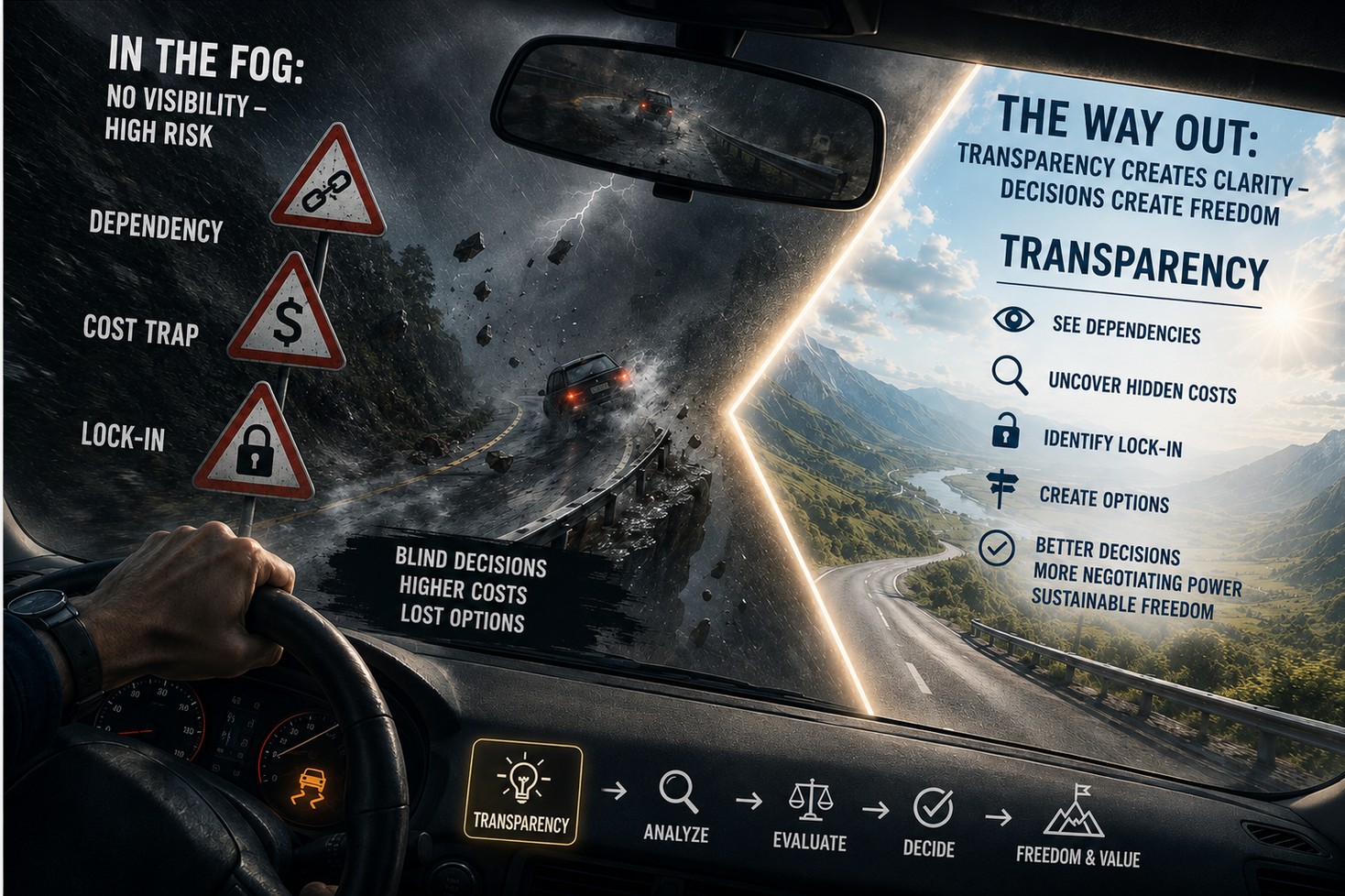
PART IV – Why Good Procurement Still Fails – Practical Observations
11 - One Supplier. Many Owners
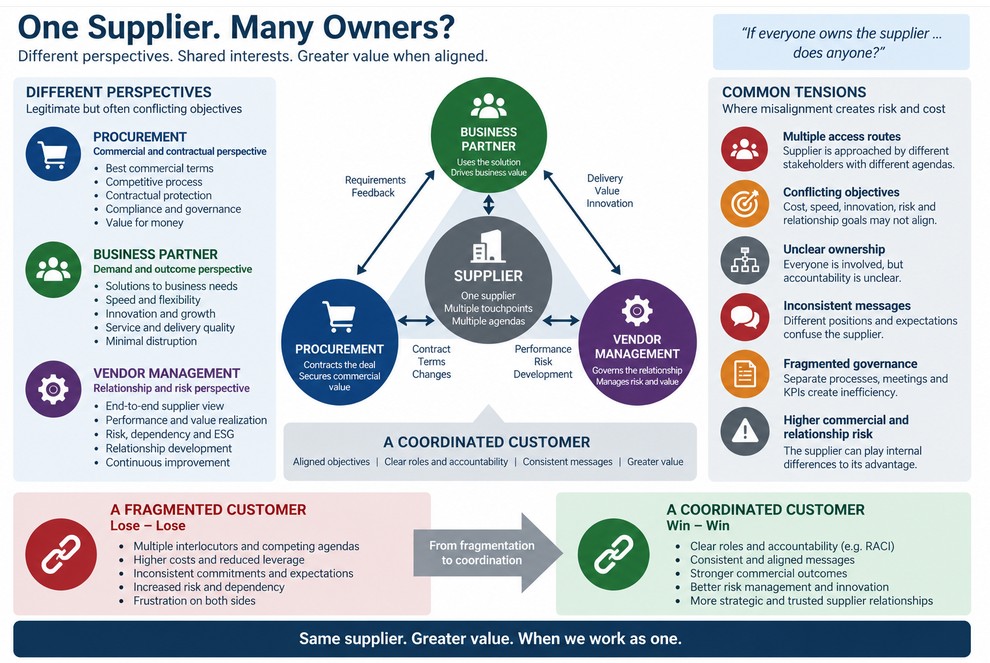
12 - The Artificial Divide Between IT Procurement and Services Procurement
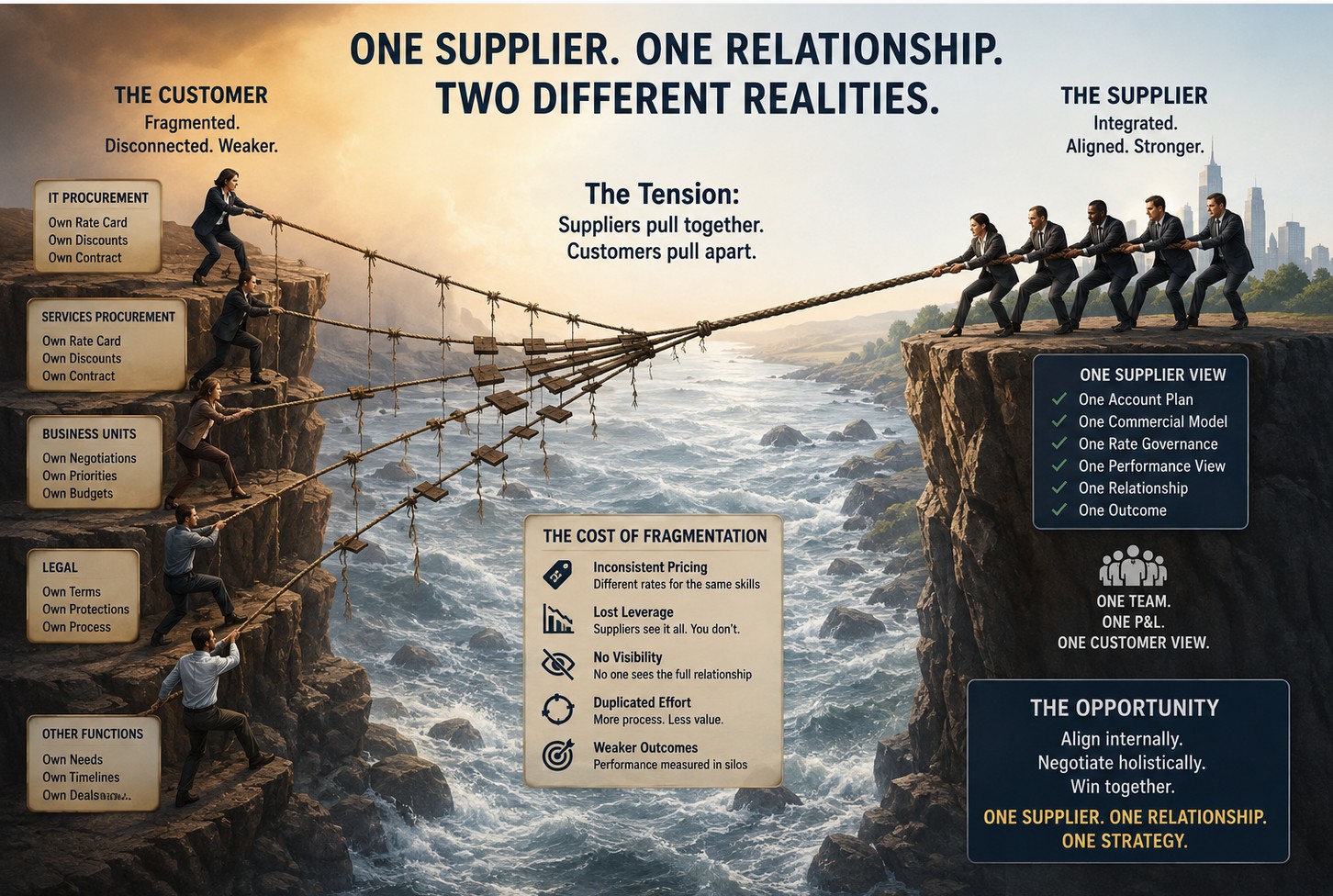
13 - The Rate Card Fallacy contextualized with Outcome based Pricing
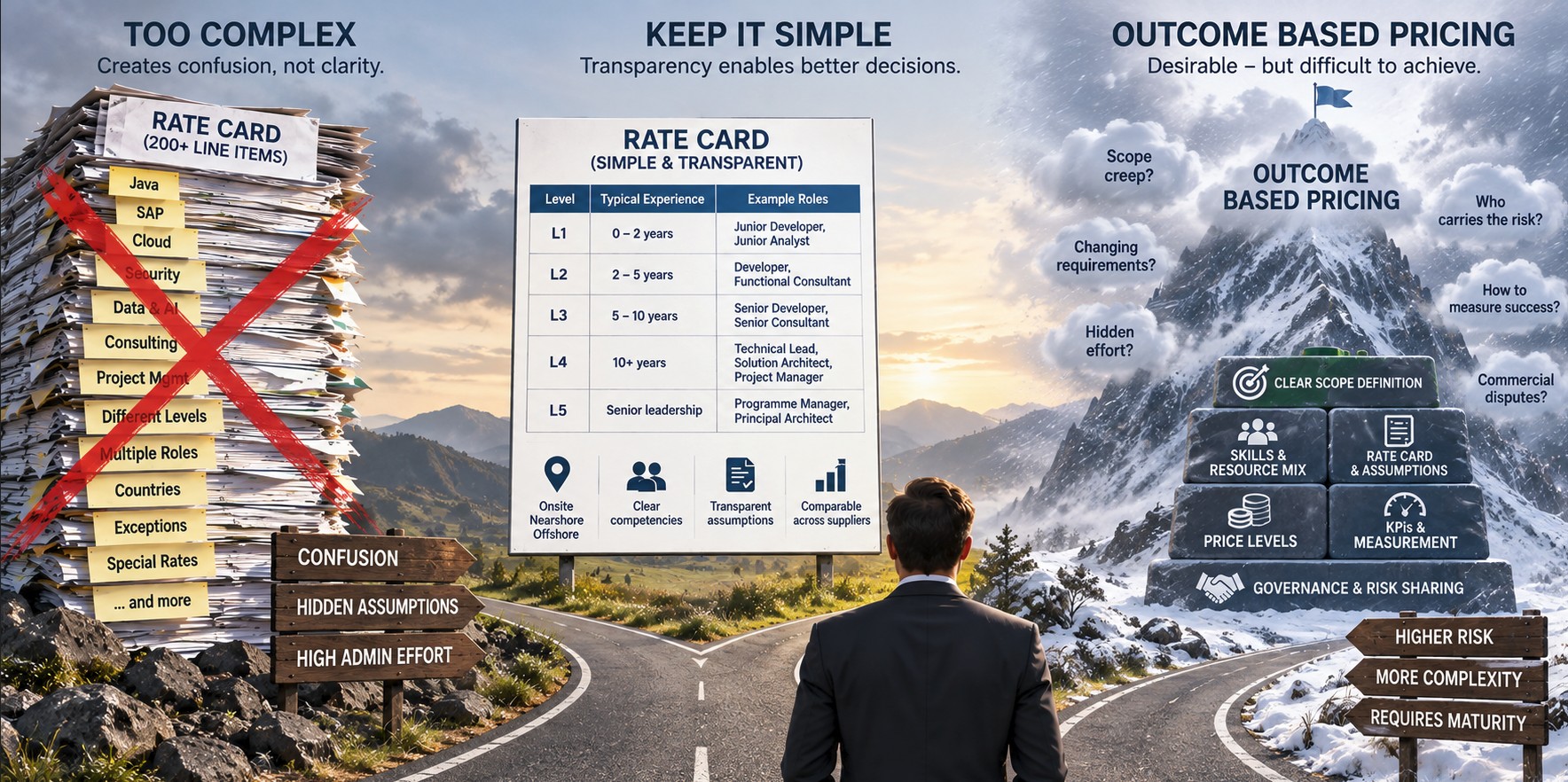
14 - When the Savings Opportunity Exists but the Business Says No

15 - When Your Own Organization Undermines the Negotiation
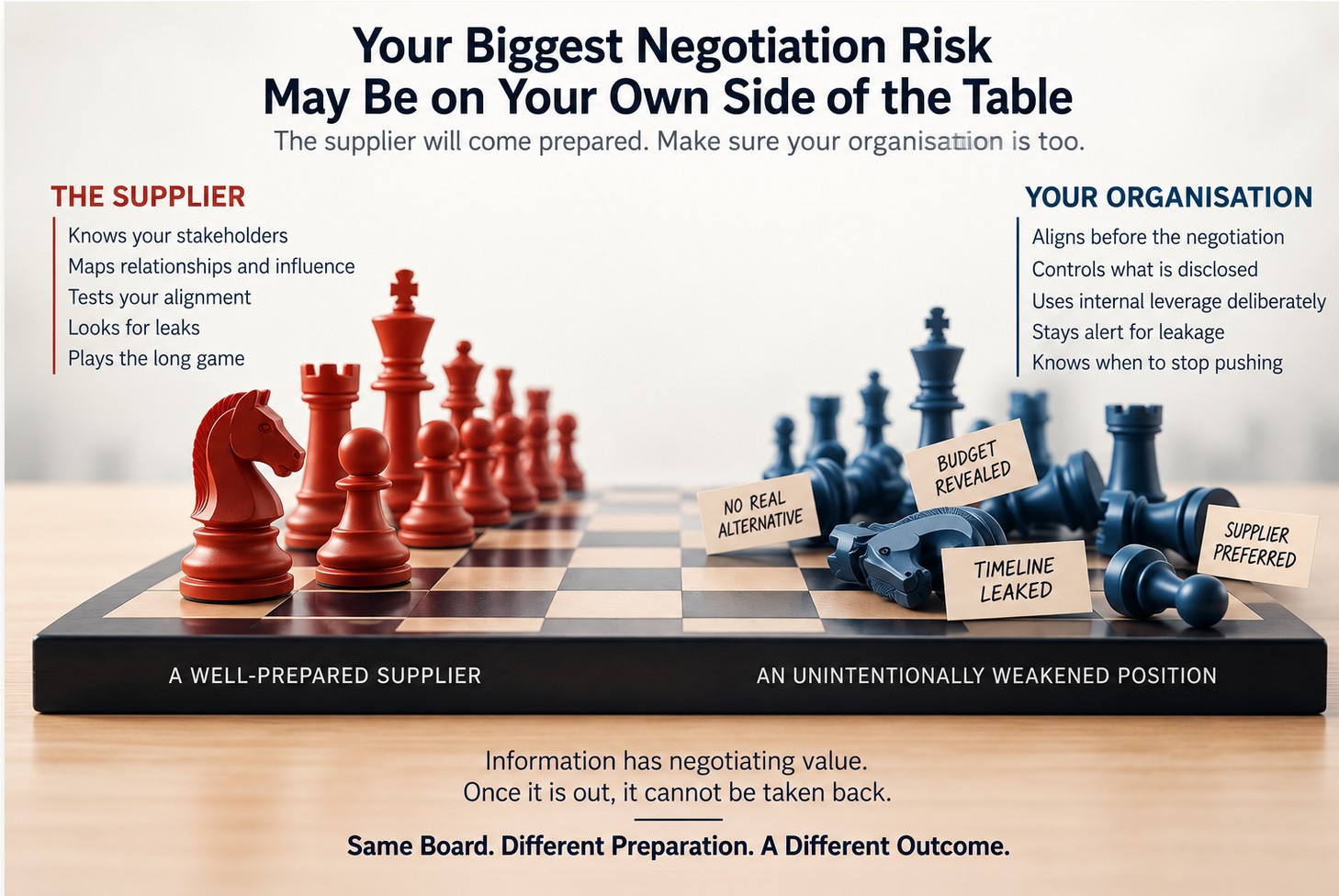
16 - Reciprocity: When Selling and Buying Collide
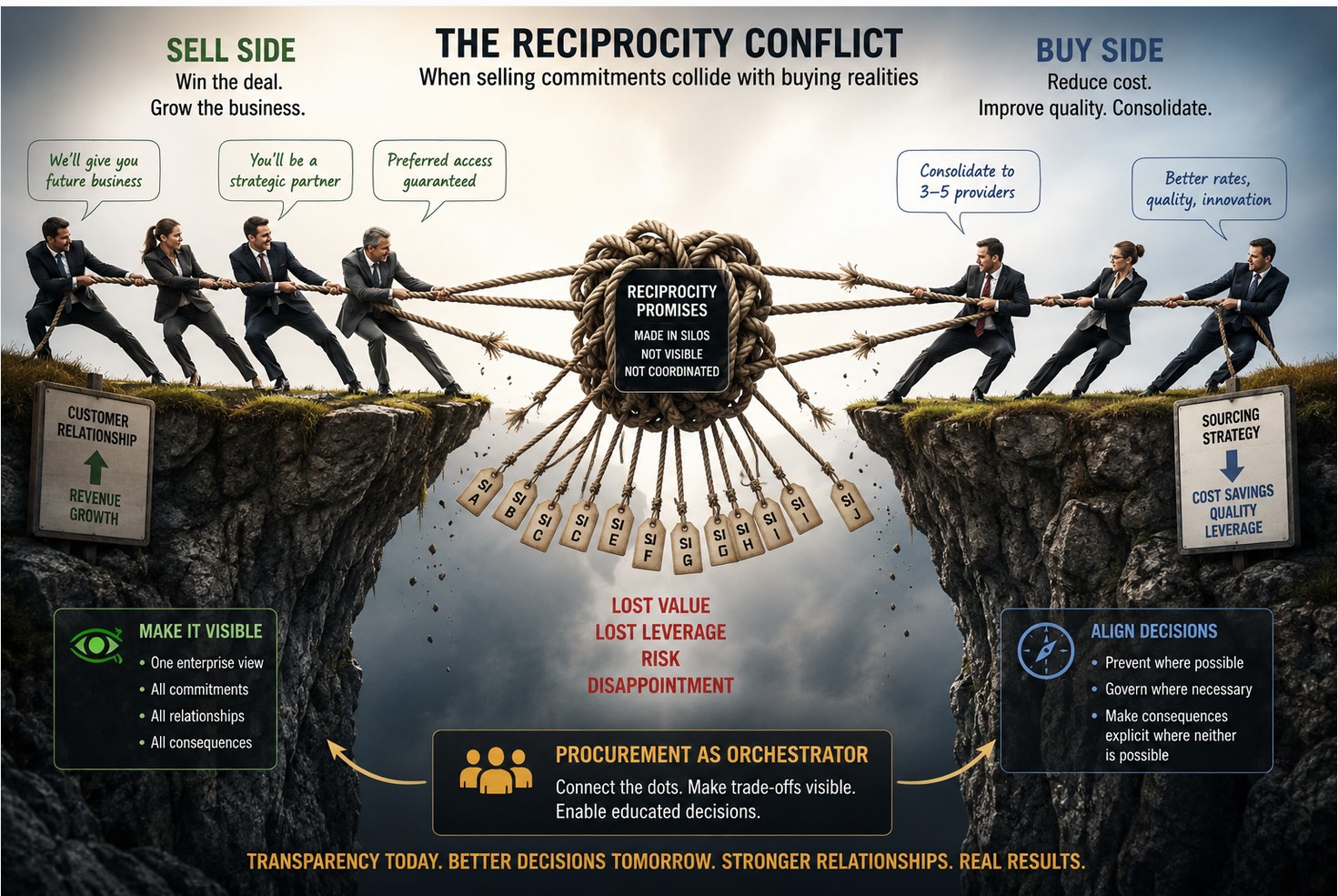
17 - Perception Is Reality – The Watermelon Effect
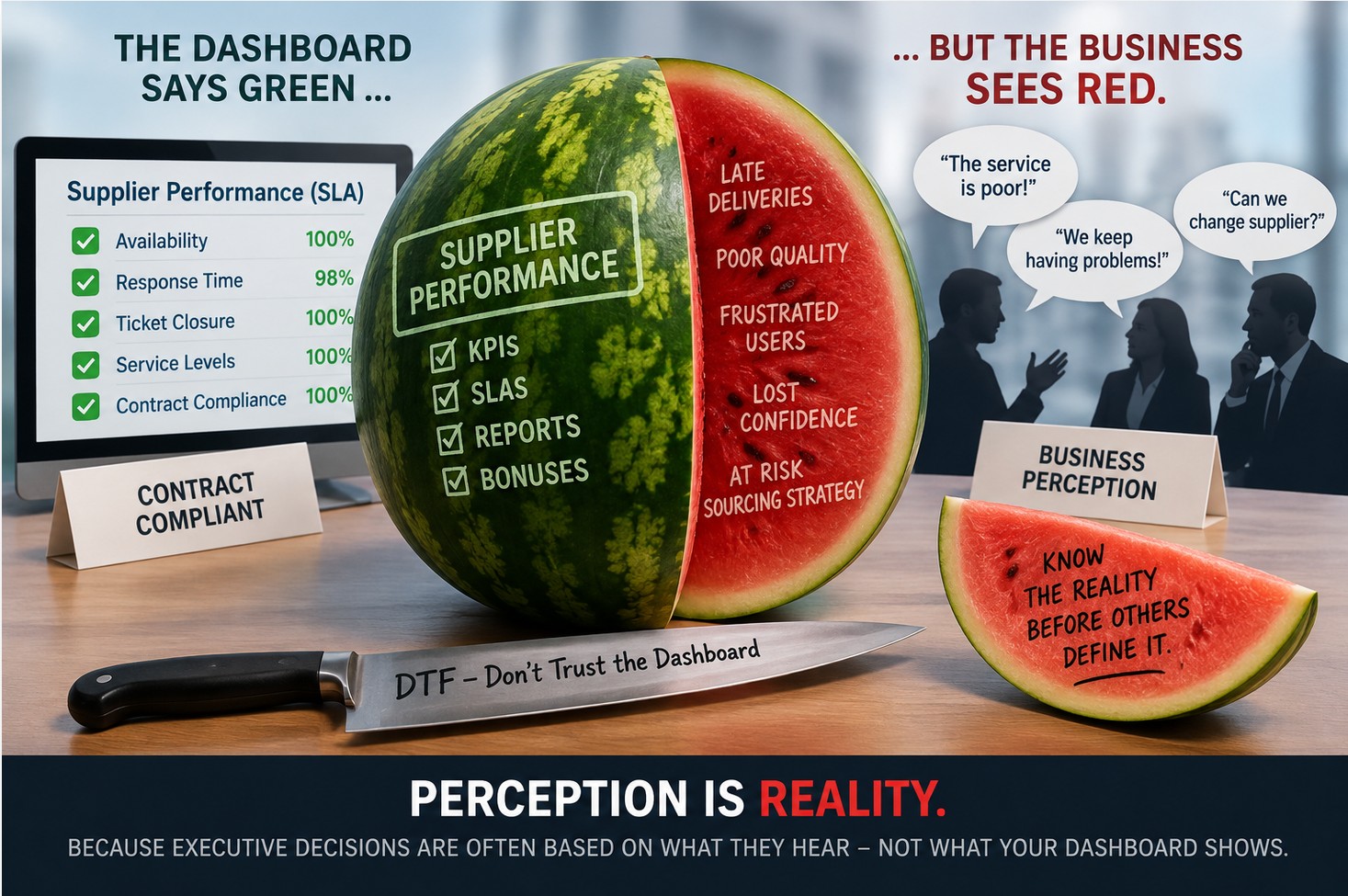
18 - Procurement Needs to Become the Better Sales Organization
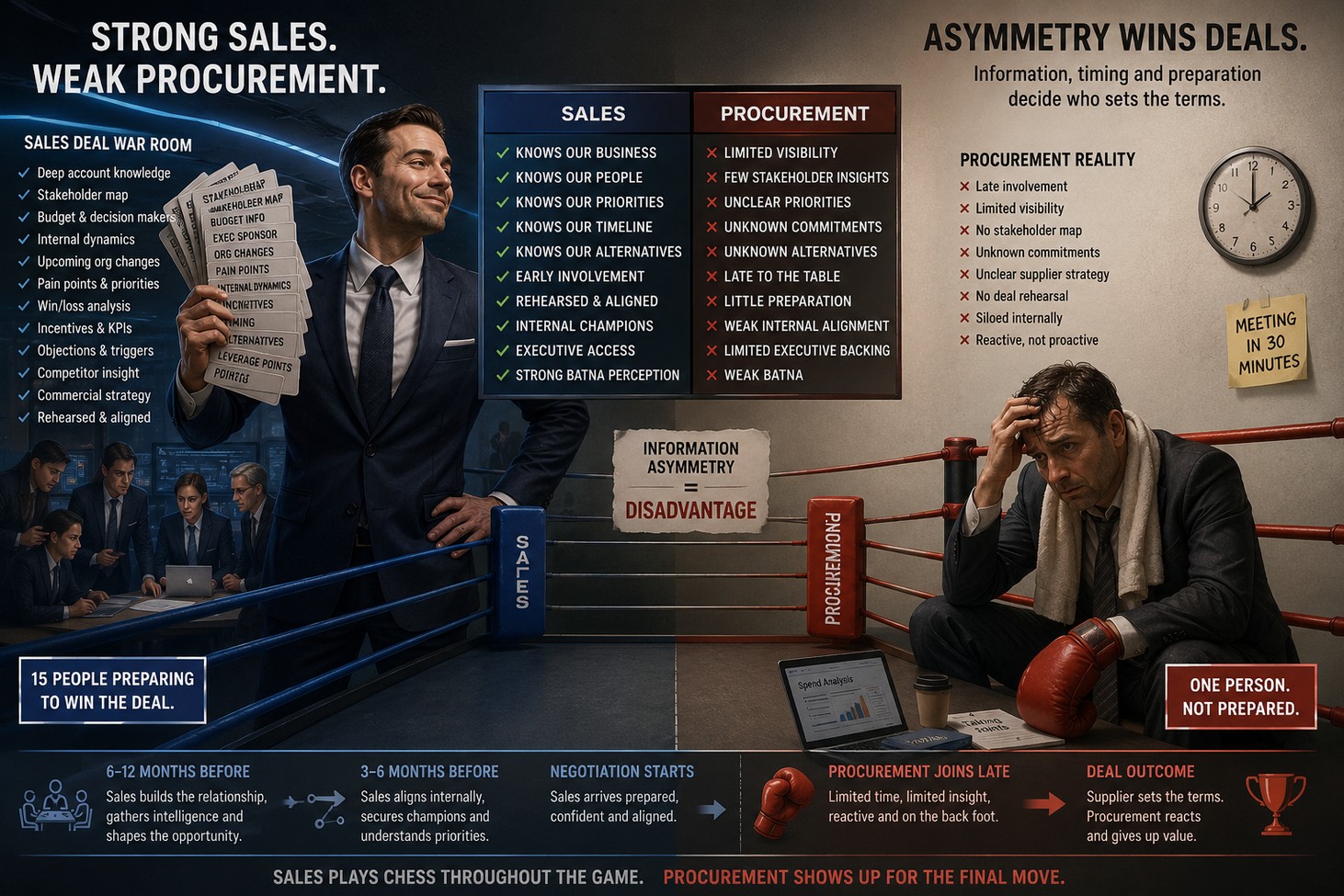
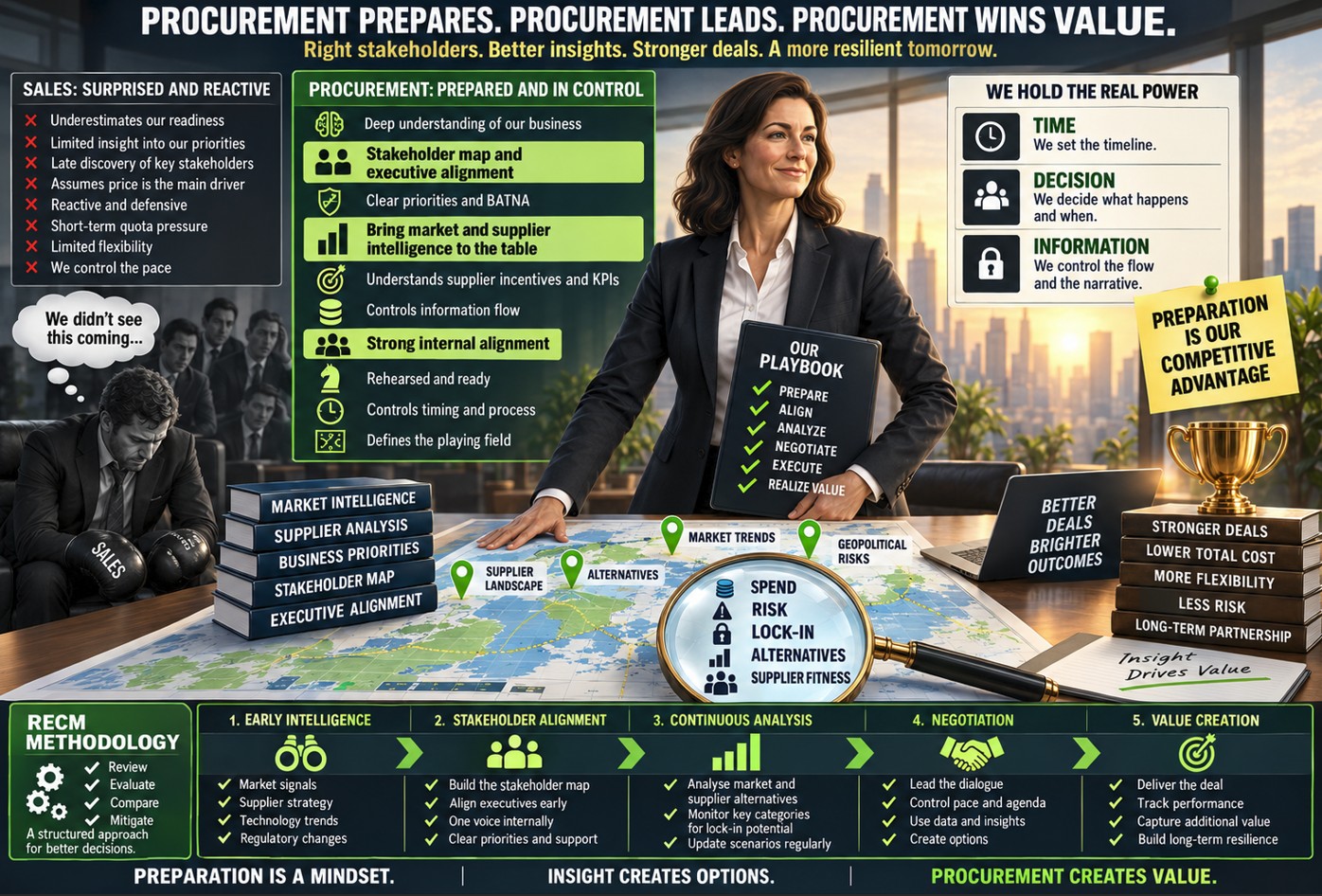
19 - Procurement Technology: From Cost Centre to Strategic Capability
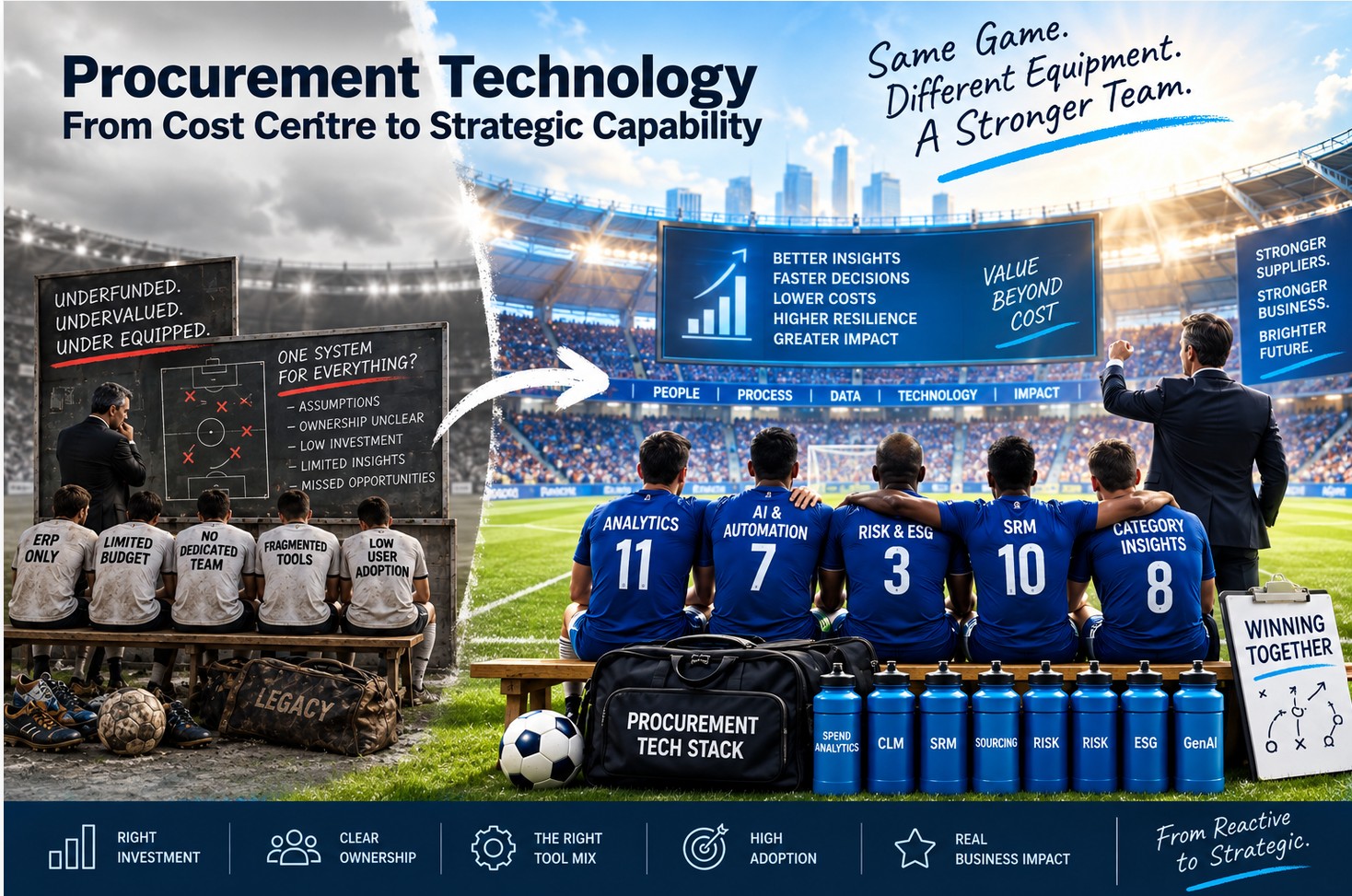
20 - The Art of No
Courage, Clarity and Accountability
NO
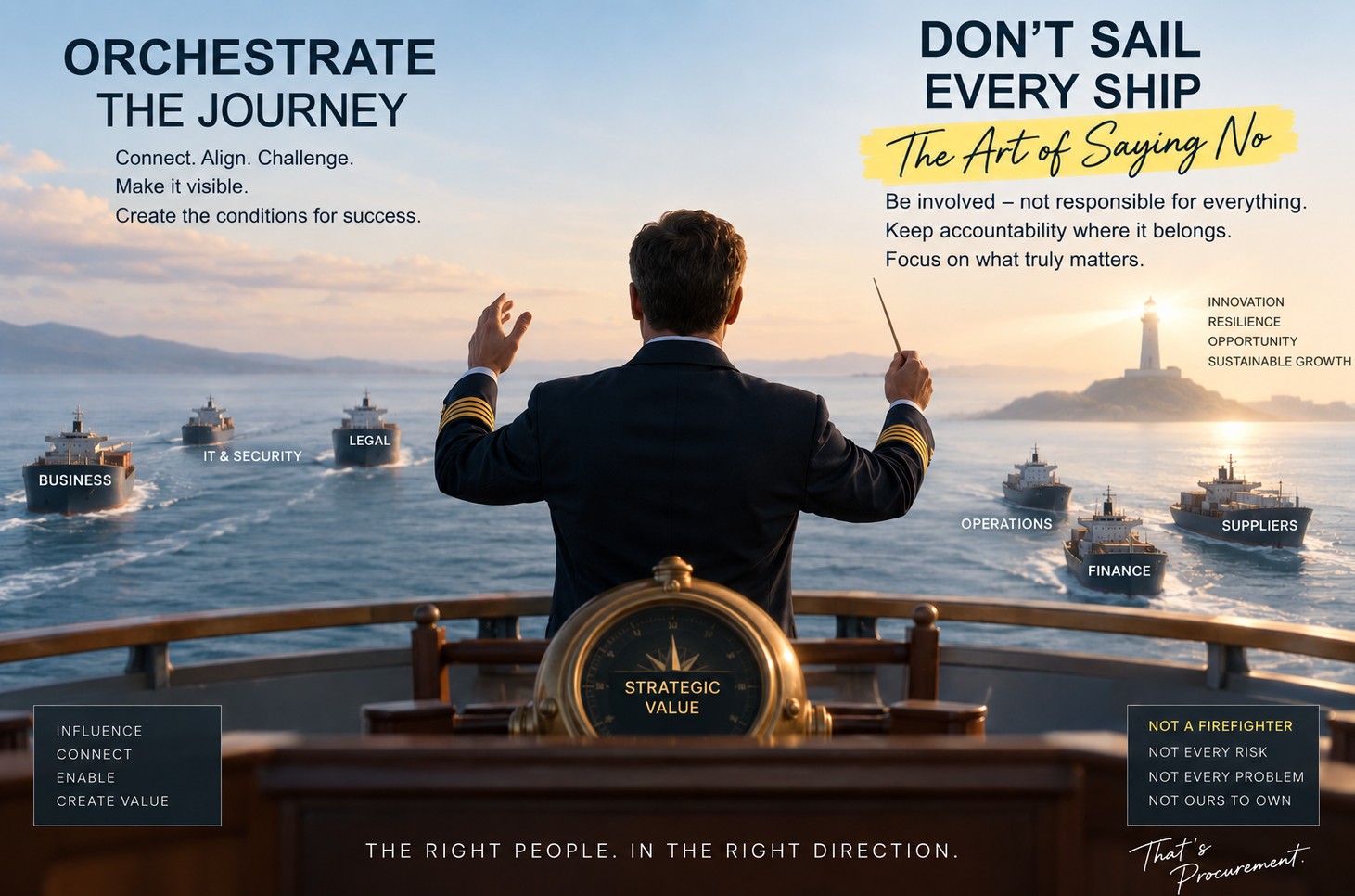
What has been asked of you throughout this book may at times seem daunting.
It is not. At its core, it is about bringing meaning to a job.
Done well, Procurement is not about creating more process, more meetings, more slides or more discussions. Quite the opposite. Great Procurement eliminates fruitless discussions because questions have been answered before they are raised. Risks and opportunities have been identified. Decisions have been made transparent. And, critically, accountability has been placed where it belongs.But doing this requires something much harder than mastering a process or running a negotiation.
It requires the ability to say NO.
This chapter explores when and how to say NO without compromising your ambition or becoming known as the person who stands in the way.
It is about challenging when you must, maintaining the goodwill of your stakeholders, making consequences transparent — and ensuring that responsibility and accountability remain exactly where they belong.
Because sometimes the most valuable thing you can do for your company, your stakeholders and your own career is not to say yes.
It is to know when — and how — to say NO.
PART V – Executive Playbooks
PART VI – Abbreviations and Appendixes
About Joachim

Joachim Schlander brings more than 30 years of international experience in procurement, sourcing and vendor management — but The Dependency Economy is not simply a book about procurement. It is the result of years spent observing how technology, supplier power, AI, geopolitics, ESG and digital sovereignty are fundamentally changing the way organizations operate.
His career has taken him through senior sourcing and procurement roles at international companies including DuPont, CSC/DXC, ABB, adidas and Boehringer Ingelheim. Over the past seven years at Gartner, he has advised Heads of Procurement and Vendor Management at leading organizations across Europe and the Middle East and Africa, working with executives on strategy, leadership, organizational design, transformation and complex supplier ecosystems. This combination of operational leadership and executive advisory work has given Joachim a perspective that reaches beyond individual companies and industries. Again and again, the same fundamental questions emerge: How much dependency is acceptable? Who really controls technology decisions and their consequences? How should organizations respond when AI, cloud platforms and powerful technology suppliers become embedded in the way they operate? And what role should procurement play when the issues at stake extend far beyond cost?
Joachim is particularly passionate about emerging technologies and Generative AI — and equally about their responsible use. He advocates for technology strategies that respect data privacy, user rights and organizational control, while questioning whether innovation without appropriate governance ultimately creates new forms of dependency. The same principle shapes his perspective on ESG: sustainability should create measurable impact rather than become an exercise in reporting, terminology or corporate positioning.
Digital sovereignty is an especially important part of his thinking. Joachim believes that the ability of organizations and societies to retain meaningful control over their technology, data and critical capabilities is becoming a prerequisite not only for economic competitiveness, but ultimately for the preservation of European values and democratic autonomy. With international business experience and academic studies in economic sciences at American and British universities, he brings a global and intercultural perspective to these questions.
The Dependency Economy brings these experiences together. It is an invitation to rethink procurement not merely as a function that negotiates suppliers and manages cost, but as steward of resilience, responsible technology adoption, sustainable value creation and strategic independence — and therefore as a function that can help shape the future of the organizations and societies it serves.
Latest Insights & Discussion
The world of procurement is changing faster than many of the structures, practices and assumptions we still rely on. AI is reshaping how we work and lead. Technology dependency is becoming a question of sovereignty and resilience. Supplier power is shifting commercial boundaries and geopolitics is entering technology decisions, same time expectations around governance, responsibility and sustainable value creation continue to rise.
The articles and reflections collected here explore these developments from different angles. Some offer practical approaches. Others challenge established thinking, raise uncomfortable questions or deliberately put forward a hypothesis worth debating. They are not intended to provide all the answers. They are intended to start the right conversations.
Explore the five themes, follow the link to select one of the five topics and find leads to the original articles and discussions, and join the debate.
Further Reading
Ideas rarely develop in isolation.
The books and publications collected here have challenged my thinking, provided new perspectives, or helped shape some of the arguments explored across Procurement-Consult and the book. They are not endorsements of every conclusion — but recommendations for anyone interested in exploring these subjects further. They are good food for thought - some playing with scenarios, that unfortunately are close to reality or not unlikely...
You may wonder why several recommendations relate to individuals. This is a reflection o new realities. Musk, Zuckerberg, Bezos, Thiel, Nadella... - all meanwhile influence society and act beyond state borders. The shape our future, determine what we see and can influence things up to whether drones can fly , or not. As such it is important to understand the Agendas of those players that dominate the tech world. This goes beyond 'Procurement'.
These observations and many many dialogues shaped my fostered my determination to suggest and see Procurement as a (small but) influencing, yes maybe even a driving force for a more sustainable and healthy future. Too many people stand at the side line saying; well I can't influence matters. This is deadly wrong. We shape our destiny - every day...